
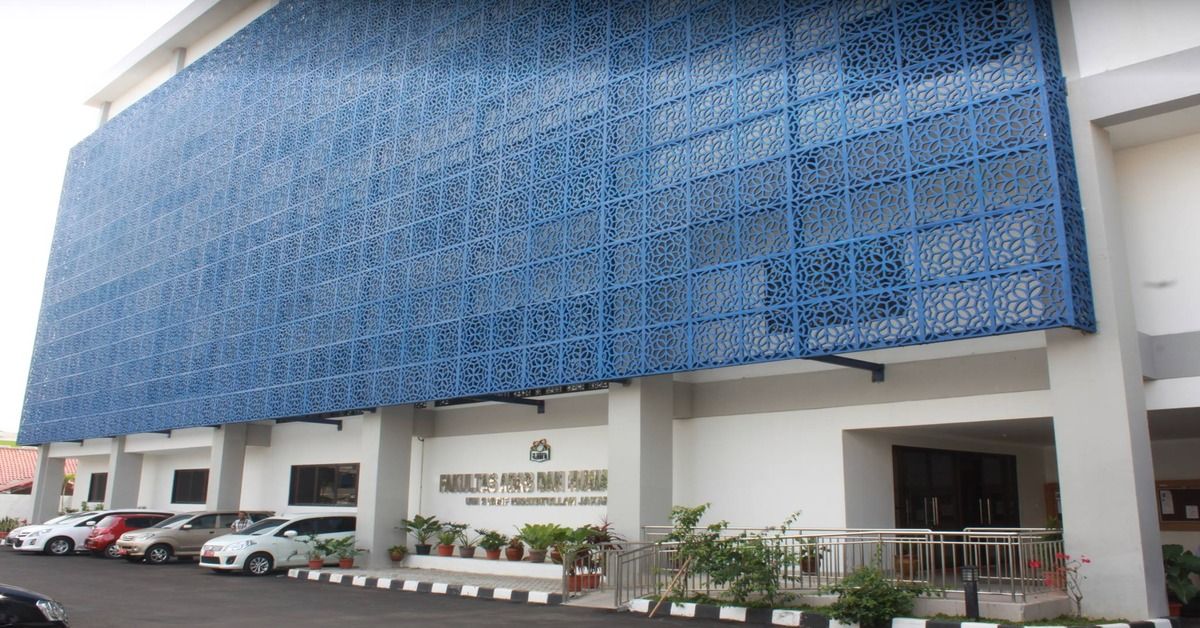
Discovering FAH UIN Jakarta: From Ciputat to World Civilization
Author: Andika Pratama
When people mention the names Nurcholish Madjid or Azyumardi Azra, Indonesians recognize them as Muslim thinkers whose ideas went far beyond the boundaries of lecture halls. What the public does not always know is that both figures emerged from the same institution, namely the Faculty of Adab and Humanities (FAH), Syarif Hidayatullah State Islamic University Jakarta. If a faculty is capable of producing intellectuals of such caliber, then something significant must be taking place within it, and that is precisely what anyone considering where to pursue higher education needs to know.
From ADIA to FAH: The Long Journey of an Institution
The Faculty of Adab and Humanities of UIN Syarif Hidayatullah Jakarta was established on June 1, 1957, as part of the Akademi Dinas Ilmu Agama (ADIA), which was founded at the same time based on the Decree of the Minister of Religious Affairs Number 1 of 1957. At that time, only two faculties were operating, namely the Faculty of Adab and the Faculty of Tarbiyah, making this institution one of the earliest foundations of Indonesia’s higher Islamic education system. When ADIA transformed into the State Islamic Institute (IAIN) in 1960 through the Decree of the Minister of Religious Affairs of the Republic of Indonesia Number 35 of 1960, the Faculty of Adab was officially established, with Prof. Dr. Bustami Abdul Gani serving as its first dean.
The process of transformation did not stop there. In 2002, the faculty transformed into the Faculty of Adab and Humanities, accompanied by the addition of three new study programs related to the humanities. Two master’s programs followed in 2012. This change of name was not merely a matter of nomenclature, as every addition of a study program reflected the institution’s response to the needs of society and the development of knowledge. Thus, FAH today is the result of more than six decades of accumulated experience in managing humanities education rooted in Islamic and Indonesian values.
Study Programs, Curriculum, and Academic Excellence
Currently, FAH offers seven study programs, consisting of five undergraduate programs and two master’s programs. The five undergraduate programs are Arabic Language and Literature, established in 1960; History and Islamic Civilization, established in 1960; Translation, established in 1999; Library Science, established in 1999; and English Literature, established in 2000. Meanwhile, the two available master’s programs are the Master’s Program in Arabic Language and Literature and the Master’s Program in Islamic History and Culture, both of which have been active since 2012.
The curriculum of each study program is designed through an approach that does not separate religious knowledge from general knowledge. FAH emphasizes a holistic and interdisciplinary approach to explore students’ intellectual potential, enrich their academic insight, and stimulate critical thinking, with a focus on studies related to human aspects such as language, culture, history, philosophy, and literature. This approach distinguishes FAH from humanities faculties at general universities, because Islamic values are not inserted merely as a complement, but serve as the foundation of perspective in every field of study. The curriculum, together with lecturers who are graduates of leading universities around the world, forms the basis of FAH’s excellence in providing humanities education based on the integration and contextualization of knowledge with Islam and Indonesian identity.
A Global Vision with Strong Islamic Roots
If there is one thing that distinguishes FAH from many similar institutions in Indonesia, it is its long-term vision, which is internationally oriented without abandoning its Islamic identity. The vision of the Faculty of Adab and Humanities is to become a globally reputable faculty of humanities studies with excellence in the integration of Islamic knowledge, Indonesian values, and science. This vision is not merely a written statement, as its implementation can be seen in the track record of its alumni and the international networks built by the faculty. FAH collaborates with international professors, universities, embassies, and various initiatives to share expertise, best practices, and experiences through webinars and international conferences.
One of the most frequently cited academic achievements is the regional recognition received by the History and Islamic Civilization Study Program. In 2017, FAH gained recognition as a faculty acknowledged at the Southeast Asian level, represented by its undergraduate program in History and Islamic Civilization. This recognition is important because it shows that the academic standards applied by FAH are not only relevant at the national level, but are also taken into account within the landscape of humanities education in the ASEAN region. All study programs have been nationally accredited by BAN-PT, while the History and Islamic Civilization program has also received recognition from AUN-QA.
Producing Intellectuals, Not Merely Graduates
The quality of a faculty is most clearly reflected in the people who have studied there. Several prominent Indonesian Muslim intellectuals emerged from FAH UIN Jakarta, including Azyumardi Azra, Nurcholish Madjid, and Fachry Ali, whose works on inclusive Islam within the tradition known as the “Ciputat School” have had influence both nationally and internationally. Nurcholish Madjid is known as a leading figure in the renewal of Islamic thought in Indonesia, while Azyumardi Azra became an internationally recognized scholar of Islamic History and Civilization. He was also the first Indonesian to receive the CBE award, Commander of the Order of the British Empire, from the British monarchy for his contribution to strengthening interreligious relations on the global stage.
This intellectual legacy has not stopped with the founding generation. Today, FAH has a number of active professors who are productive in research and publication, including Prof. Dr. Oman Fathurrahman, known for his studies on Islamic manuscripts of the Indonesian archipelago; Prof. Amelia Fauzia, known for her studies on Islamic philanthropy; and Prof. Dr. Sukron Kamil, known for his expertise in literature and Islamic thought. The presence of these professors creates an academic ecosystem that encourages students to think seriously and produce meaningful research.
In the end, choosing a place to study is a decision that influences the direction of a person’s life in the long term, and that choice cannot be separated from the question of what values one wishes to carry and what competencies one wishes to develop. FAH UIN Jakarta presents itself as an answer for those who seek to understand the world through the lenses of language, history, and literature, while at the same time refusing to lose their grounding in Islamic and Indonesian values throughout their academic journey. With a track record of more than six decades, real international networks, and alumni who have shaped national discourse, FAH is not merely a place to acquire knowledge, but a space where one can grow into an intellectual who contributes meaningfully to civilization.
References
Azra, A. (2004). The Origins of Islamic Reformism in Southeast Asia: Networks of Malay-Indonesian and Middle Eastern 'Ulama' in the Seventeenth and Eighteenth Centuries. Allen & Unwin and University of Hawaii Press.
Effendy, B. (Ed.). (1993). Dekonstruksi Islam Mazhab Ciputat. Zaman.
Fakultas Adab dan Humaniora UIN Jakarta. (2023). Profil FAH. https://fah.uinjkt.ac.id/id/profil
Fakultas Adab dan Humaniora UIN Jakarta. (2023). Sejarah FAH. https://fah.uinjkt.ac.id/id/sejarah
Fakultas Adab dan Humaniora UIN Jakarta. (2021). Visi, Misi, dan Tujuan. https://fah.uinjkt.ac.id/visi-misi-dan-tujuan
Madjid, N. (1992). Islam, Doktrin, dan Peradaban. Paramadina.
UIN Syarif Hidayatullah Jakarta. (2022). Adab dan Humaniora. https://www.uinjkt.ac.id/fakultas-adab-dan-humaniora
UIN Syarif Hidayatullah Jakarta. (2024). Mazhab Ciputat: A Reconstruction. https://uinjkt.ac.id/en/mazhab-ciputat-a-reconstruction