
Two Scholars, One Ideal: The Legacy of Hasyim Asy’ari and Ahmad Dahlan’s Struggle That Still Lives Today
By: Muhammad Anizi Riziq
Student of the Islamic History and Civilization Study Program, Faculty of Adab and Humanities, UIN Syarif Hidayatullah Jakarta
Some people say history is only a record of the past. But for Indonesian Muslims, the names K.H. Hasyim Asy’ari and K.H. Ahmad Dahlan are not merely two lines in a textbook. They are the architects of two major pillars that continue to support religious life, education, and nationalism in Nusantara today.
They grew up in the same era, a time when the Dutch firmly controlled Java, when poor people were illiterate, and when Muslims were divided and lacked direction. Yet from two different pesantren traditions, these two figures rose in their own ways and moved something far greater than themselves.
The 13-Year-Old Boy Who Was Already Teaching Santri
The story of Hasyim Asy’ari begins with something unusual. Even before he was born, he was already believed to be special. His mother, Nyai Halimah, dreamed that the moon fell into her womb, a sign that in Javanese tradition was believed to indicate the coming of a great leader. The baby, later named Muhammad Hasyim, remained in the womb for 14 months.
Furthermore, Hasyim Asy’ari’s lineage was no ordinary lineage. His ancestry was connected to the Majapahit Kingdom through Brawijaya VI and to the Demak Sultanate through Joko Tingkir. This means that two great legacies of Nusantara flowed within him at once: the glory of the pre-Islamic kingdom and the strength of the first Islamic sultanate in Java. It was a combination that seemed to prepare him to become a bridge between two major eras in the nation’s history.
Born on April 10, 1875, in Gedang Village, Jombang, young Hasyim grew up in a strong scholarly environment. His father, Kiai Asy’ari, and his grandfather, Kiai Usman, were respected scholars. It is no surprise that at the age of 13 he was already trusted to teach santri at Pesantren Keras, an age when most children today are still busy playing with gadgets.
His thirst for knowledge led him to travel to various pesantren in Java and Madura. For five years, he studied under Syaikhona Kholil Bangkalan, a charismatic scholar known for his extraordinary spiritual depth. His intellectual journey reached its peak when he arrived in Mecca, where he studied under Sheikh Mahfudz at-Tarmasi and Sheikh Ahmad Khatib Al-Minangkabawi. He did not only study there; he was also trusted to teach at the Grand Mosque. This was an honor that not everyone could achieve.
When he returned to his homeland, he did not bring ordinary souvenirs. In 1899, he founded Pesantren Tebuireng in Jombang, which later became one of the most influential pesantren in Indonesia. In 1926, he initiated the establishment of Nahdlatul Ulama, or NU, an organization that now has tens of millions of members and has become one of the largest Islamic organizations in the world.
“Love for the homeland is part of faith.” This spirit inspired the entire struggle of K.H. Hasyim Asy’ari.
But his struggle did not stop at the pesantren pulpit. When Japan came and required seikerei, a form of respect to Emperor Hirohito by bowing toward Tokyo, Hasyim Asy’ari firmly refused. For him, bowing to anyone other than Allah was an insult to faith. He was willing to be arrested and tortured for this principle.
The peak came on October 22, 1945, one week after the proclamation of independence, when he issued the Jihad Resolution. It was a historic fatwa declaring that defending Indonesia’s independence from Allied forces who wanted to restore colonial rule was a religious obligation. This call ignited the spirit of the people of Surabaya and its surroundings, leading to the battle of November 10, which we now commemorate as Heroes’ Day.
Beyond his political role, Hasyim Asy’ari was also known as a productive writer. He left behind several important works, such as Adabul ‘Alim wal Muta’allim, which discusses the ethics of students and teachers. This work remains a reference in many traditional pesantren today. For him, knowledge without manners was meaningless. This principle was reflected in all his actions, whether as a teacher, organizational leader, or mobilizer of resistance.
Muhammad Darwis Who Returned with Renewal

Figure 2. K.H. Ahmad Dahlan, Founder of Muhammadiyah (1868–1923)
While in Jombang, Hasyim grew up among classical Islamic texts and the pesantren environment, in another corner of Java a boy named Muhammad Darwis was born in Kauman, Yogyakarta, in 1868. He was the son of K.H. Abu Bakar, the preacher of the Grand Mosque of the Yogyakarta Sultanate. This meant that from infancy, he lived in an environment close to both power and scholarship.
His lineage was also no ordinary lineage. His ancestry was connected to Sunan Giri and Maulana Malik Ibrahim, two great saints who spread Islam in Java. After studying with his father and later with K.H. Saleh Darat in Semarang, young Muhammad Darwis went to Mecca to perform the pilgrimage and seek knowledge.
At this point, destiny indirectly brought these two great figures together. Under the guidance of K.H. Saleh Darat, Ahmad Dahlan and Hasyim Asy’ari were fellow students. They were two students of the same teacher, yet later they would establish two different organizations that continue to shape Indonesian Islam today.
During his five years in Mecca, Darwis changed his name to Ahmad Dahlan, a name given by his teacher, Sayyid Bakri. More than a new name, he also brought home new ideas. He was exposed to the Islamic reformist thoughts of Muhammad Abduh and Rashid Rida, two Egyptian thinkers who encouraged Muslims to return to the Qur’an and Hadith, leave practices without proper religious basis, and open themselves to modern knowledge.
When he returned to Indonesia, he applied those ideas. It was not without resistance. A society accustomed to old traditions did not easily accept change. But Ahmad Dahlan remained patient. He founded schools that taught both religious and general knowledge, something considered unusual at the time. He also established clinics and orphanages for the poor, who had long been neglected.
On November 18, 1912, he officially founded Muhammadiyah. It was an organization that did not only speak about rituals, but also about health, education, and community empowerment. Today, more than a century later, Muhammadiyah has thousands of schools, universities, and hospitals spread across Indonesia.
One of the most remembered stories about Ahmad Dahlan is the way he taught Surah Al-Ma’un. It is said that he repeated the discussion of this short surah many times to his students, until one of them asked in confusion. Ahmad Dahlan’s answer was simple but powerful: he did not want the surah to be merely memorized, but practiced. From this teaching emerged real movements, such as the establishment of orphanages and health clinics for the poor and orphans. It was an interpretation of the Qur’an expressed through action, not only words.
Ahmad Dahlan was also known as an open-minded figure for his time. He did not hesitate to adopt the Western-style education system, such as desks, blackboards, and structured curricula, which some people at the time considered taboo because they saw it as imitating non-Muslims. But for Ahmad Dahlan, tools and methods were not the problem, as long as the values and goals remained rooted in Islam. This principle allowed Muhammadiyah schools to compete and survive until today.
Different Paths, One Goal
It is easy to place NU and Muhammadiyah in opposition, as two organizations born from different views about how Islam should be practiced. But what is often forgotten is that their founders respected one another and maintained brotherhood.
Hasyim Asy’ari chose the path of tradition: preserving the intellectual heritage of classical scholars and maintaining a balance between Islamic law and local Nusantara wisdom. Ahmad Dahlan chose the path of renewal: purifying practices he considered deviant and opening Islam to the progress of the age.
Their approaches were different, but both fought for the same goal: to elevate the dignity of Indonesian Muslims who had been oppressed by colonialism for hundreds of years.
Hasyim Asy’ari mobilized physical resistance through the Jihad Resolution. Ahmad Dahlan mobilized intellectual resistance through education and reform. The two complemented each other. Without physical resistance, independence would never have been achieved. Without intellectual reform, independence would only produce a nation that was politically free but still intellectually backward.
A Mirror for Today’s Preachers and Scholars
Reading again the journeys of Hasyim Asy’ari and Ahmad Dahlan, it is difficult not to compare them with the face of religious preaching today. In the past, Hasyim Asy’ari was willing to travel for years, moving from one pesantren to another, until he studied directly at the Grand Mosque in Mecca before finally daring to speak before the people. Ahmad Dahlan did the same. He spent five years being trained in Mecca before daring to initiate reform in his own hometown.
Compare this with some preaching phenomena in today’s social media era, where religious authority is often built not from the depth of scholarly transmission, but from the number of followers, the ability to create viral content, or the courage to make controversial statements. Many sudden preachers seem busier maintaining their image on screen than seeking knowledge in the circles of true scholars.
This is not meant to generalize all scholars and preachers today. Many still consistently preserve scholarly traditions while adapting to the times. However, the phenomenon of “instant scholars” who rely more on the stage than on scholarly transmission deserves collective reflection, both for preachers and for the public who choose whom they should listen to.
Hasyim Asy’ari and Ahmad Dahlan taught that true religious authority is born from a long process: learning, serving, and only then speaking. Not the opposite, speaking first and learning later, or even not learning at all. Amid the strong current of digital preaching, this spirit deserves to be remembered: depth of knowledge and moral example remain foundations that cannot be replaced by popularity alone.
A Living Legacy
Today, when we speak about tolerance, Islamic education, or national spirit, we are actually speaking about the legacy of these two figures. NU and Muhammadiyah, which are often seen as being opposed to each other, are in fact two wings of the same body: Indonesian Islam.
In the digital era, filled with noisy information, threatening radicalism, and divisions that are easily provoked, the message of Hasyim Asy’ari and Ahmad Dahlan becomes even more relevant: a strong Islam is not a harsh Islam, but an Islam rooted in knowledge, noble character, and unity.
They have shown the way. Now it is our turn to continue it.
Image Sources
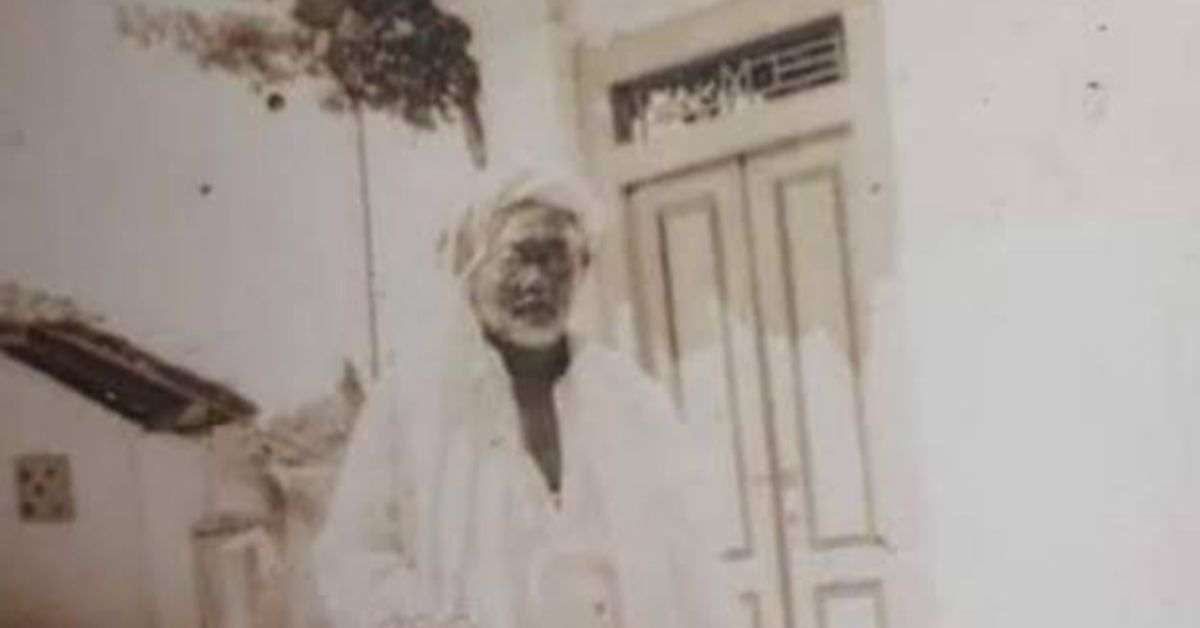
Figure 1: @ltn_numakassar, family archive documentation of KH. Amir Ilyas/Annuqayah
Figure 2: PP Muhammadiyah via PWMU.CO
Bibliography
- Anam, Choirul. (1985). Pertumbuhan dan Perkembangan Nahdlatul Ulama. Surabaya: Jatayu.
- Asrofie, M. Yusron. (1983). Kyai Haji Ahmad Dahlan: Pemikiran dan Kepemimpinannya. Yogyakarta: MPKSDI PP Muhammadiyah.
- Dhofier, Zamakhsyari. (1982). Tradisi Pesantren: Studi tentang Pandangan Hidup Kyai. Jakarta: LP3ES.
- Federspiel, Howard M. (1970). Persatuan Islam: Islamic Reform in Twentieth Century Indonesia. Ithaca: Cornell University Press.
- Khuluq, Lathiful. (2000). Fajar Kebangunan Ulama: Biografi K.H. Hasyim Asy’ari. Yogyakarta: LKiS.
- Mulkhan, Abdul Munir. (1990). Pemikiran K.H. Ahmad Dahlan dan Muhammadiyah dalam Perspektif Perubahan Sosial. Jakarta: Bumi Aksara.
- Noer, Deliar. (1980). Gerakan Modern Islam di Indonesia 1900-1942. Jakarta: LP3ES.
- Ricklefs, M.C. (2008). Sejarah Indonesia Modern 1200-2008. Jakarta: Serambi.
- Iskandar, Mohammad. (2001). Para Pengemban Amanah: Pergulatan Pemikiran Kiai dan Ulama di Jawa Barat. Yogyakarta: Mata Bangsa.
- Rais, M. Amien. (1987). Cakrawala Islam: Antara Cita dan Fakta. Bandung: Mizan.