
Technologically Outmatched: Assessing the Failure of Pati Unus’s Fleet in Malacca
By: Syarieq Daffa Aqshal
Student of the Islamic History and Civilization Study Program
Faculty of Adab and Humanities
UIN Syarif Hidayatullah Jakarta
Introduction
Ideally, maritime sovereignty and strong regional trade networks must be defended with every possible effort through mature geopolitical unity. In reality, however, history records a major anomaly in the Strait of Malacca in the early sixteenth century. This event was the failure of the first naval military expedition of the Islamic Sultanate of Demak, led by Pati Unus in 1513 CE.
This fierce naval battle took place in the waters of the Malacca Sultanate, which had fallen under Portuguese control. It involved a combined fleet of Javanese Muslim forces from Demak, Jepara, Cirebon, and Banten, with additional support from Palembang. They moved together to fight the Portuguese Catholic maritime forces under the command of Fernao Peres de Andrade.
The fundamental question is why the massive Nusantara fleet, which was quantitatively powerful, suffered a crushing defeat, and how the military confrontation unfolded until Demak was forced to retreat. This article examines the main subject of the study within the dynamics of the 1513 battle to identify the unequal mastery of weapons technology as the main determinant of defeat. This historical reality has not been explored in depth in contemporary mass media narratives.
Discussion and Conflict Process
Using a military history approach and an analysis of ancient weapons technology, the chronology and tactical data of this battle can be explained clearly. In response to the fall of Malacca on 5 August 1511 CE to the Portuguese, Sultan Fattah immediately ordered Pati Unus to lead the i'dad, or preparation for war.
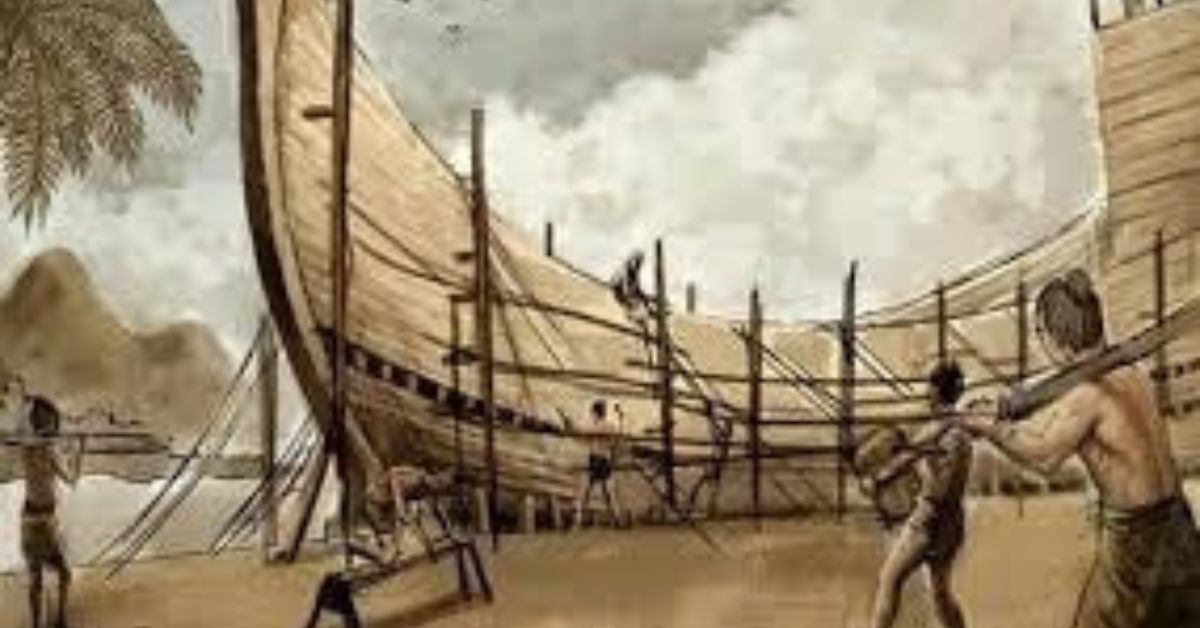
Pati Unus, who was granted the title Senopati Sarjawala, then collaborated with Raden Husen or Kin San, Sunan Kalijaga, and Ja'far Shodiq or Sunan Kudus at the Semarang shipyard. For three years, from 1509 to 1513 CE, they produced large Jung-type ships weighing up to 500 tons and equipped with cannons.
In fact, the Portuguese historian de Barros recorded in a letter dated 22 February 1513 CE that Pati Unus’s command flagship was remarkably large. It had three layers of protective plating as thick as a cruzado and could carry 1,000 soldiers.
The total force deployed from the Port of Jepara to Malacca, passing through Palembang and the Kampar River, reached 100 Jung ships with an estimated 12,000 combined military personnel.
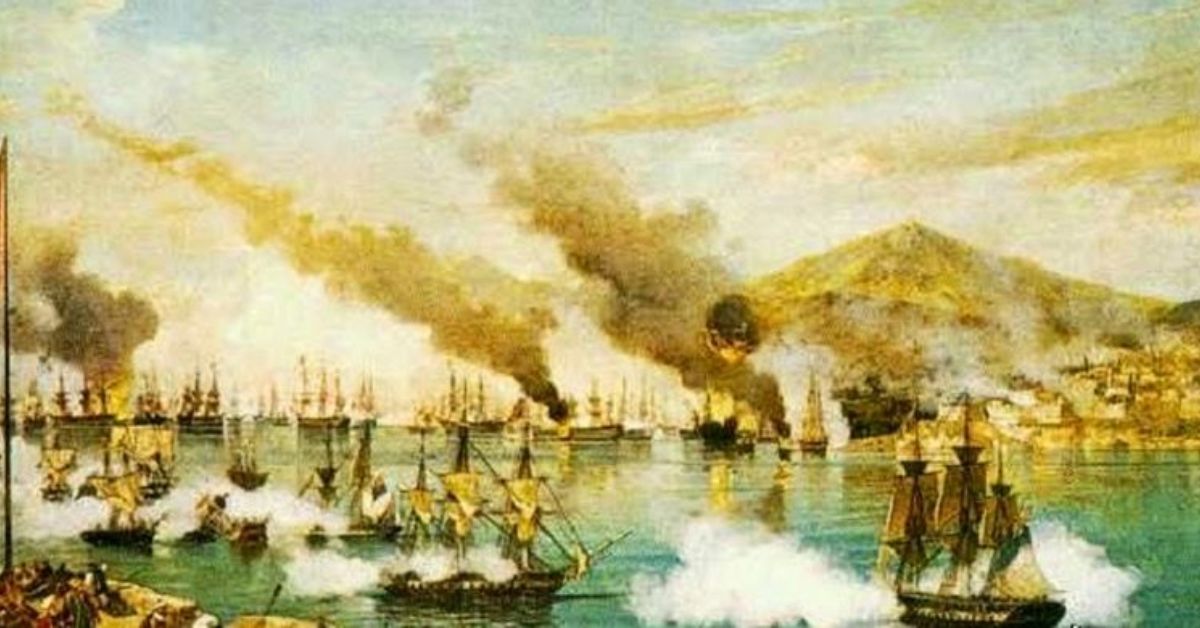
Illustration of Demak Forces vs. the Portuguese in the Strait of Malacca. Photo: Intisari.
The Portuguese, under the maritime command of Ferdinando Perez, intercepted this movement by deploying 17 ships and 350 European soldiers, along with assistance from local indigenous forces. Although they were far inferior in quantity, the Portuguese possessed remarkable tactical superiority because they had positioned long-range cannon muzzles at A Famosa Fortress or Fortaleza, which directly faced south.
When the naval battle erupted, the fundamental weakness of Demak’s conventional maritime fleet was immediately exposed. Firing cannons from Jung ships that swayed due to ocean waves made the accuracy of the Muslim forces’ shots unreliable. In contrast, the Portuguese cannons, which stood firmly on the fortress ground, could accurately fire hundreds of flaming iron cannonballs from hundreds of meters away, even before the Javanese ships could approach.
As a result, the Portuguese succeeded in forcing the Javanese fleet to retreat and drove them toward the Muar River. There, they burned and sank around 30 Demak Jung ships, causing the deaths of 4,000 Muslim soldiers. Recognizing the superiority of the enemy’s defensive strategy, Pati Unus was forced to make a tactical decision to withdraw the remaining 60 ships and 8,000 troops back to Java.
Impact of the Problem
Through this examination of historical data, the author takes the position of explaining and proving that nationalism, religious solidarity, and massive troop numbers can collapse when confronted with a failure to adapt to modern technology. The defeat of Pati Unus in 1513 CE caused a massive economic crisis for the Nusantara region. International trade relations between Java and Malacca, India, China, Bengal, and the Middle East deteriorated further. The surplus of agricultural harvests from the Javanese interior could no longer be exported to Malacca, thereby crippling the macroeconomic profits of the Demak Sultanate at that time.
Conclusion
The reality of 1513 CE reflects the phenomenon of technology warfare that continues to occur in the modern era. Global competition in the twenty-first century no longer relies solely on physical military confrontation, but on the mastery of artificial intelligence, economic digitalization, and cyber sovereignty.
If today’s young generation in Indonesia relies only on courage, emotional enthusiasm, and nationalist slogans without recognizing the urgency of mastering advanced technological competence, we will experience a repetition of history: being colonized and marginalized economically and digitally by global penetration. Demak’s maritime history firmly teaches students and all young people that technological mastery is an absolute key to preserving the existence and dignity of a nation.
References
- Main Book: Abdullah, Rachmad. (2015). Kerajaan Islam Demak: Api Revolusi Islam di Tanah Jawa (1518-1549 M). Ninth Printing, July 2022. Solo: Al-Wafi Publishing. Especially Chapter III: “Pati Unus Memerangi Portugis,” Sub-chapter 1.1 “Persiapan Perang” and Sub-chapter 1.2 “Perang Laut Berkecamuk di Perairan Malaka (1513 M),” pp. 41-49.
- Classical Portuguese Letter Document, cited in the book: Letter from the Portuguese fleet captain, Fernao Peres de Andrade, to Afonso de Albuquerque, dated 22 February 1513 CE. Cartas, III, 59; Barros II, ix, 4. Carteseo, p. 152.
- Supporting Contemporary Records, cited in the book:
Pires, Tome. Suma Oriental. Discusses the geographical condition of the Kampar River and the economic impact after the 1513 war.
Muljana, Slamet. (2005). Runtuhnya Kerajaan Hindu-Jawa dan Timbulnya Negara-negara Islam di Nusantara. PT LKIS Pelangi Aksara.
Shiddiq, Abdul Rasyad. (1997). Sunan Kudus. PT Gunara Kata.
Photo Source: Illustration of Pati Unus’s shipbuilding. Photo: Nyala Nusantara.