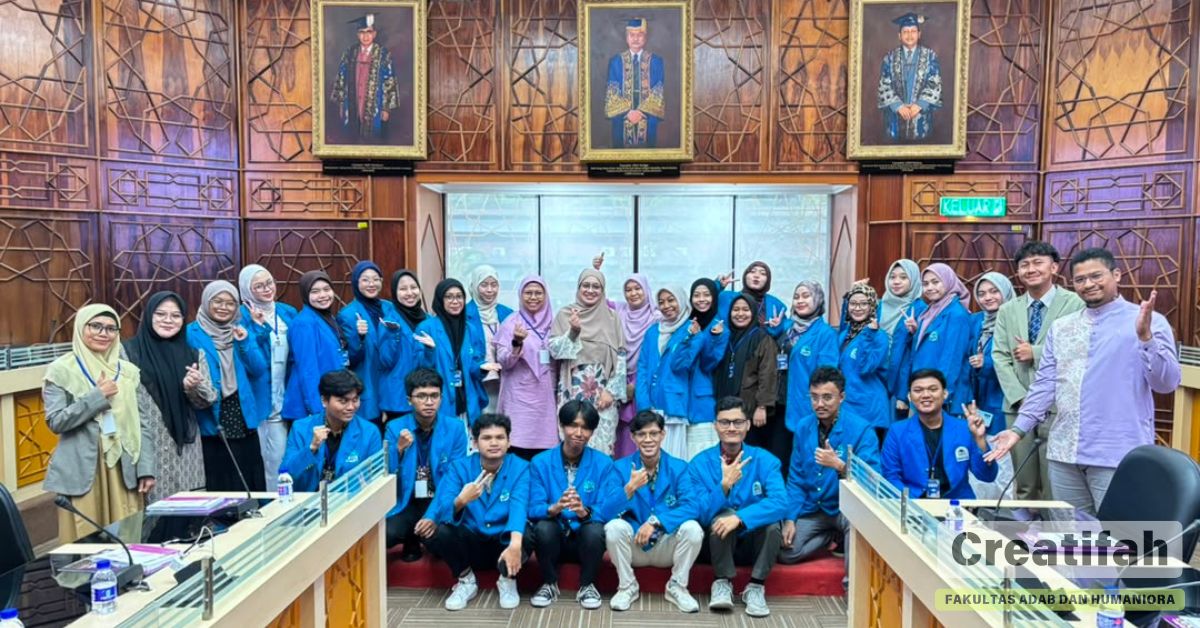
Students of the Faculty of Adab and Humanities, UIN Syarif Hidayatullah Jakarta, Participate in the 5th Regional Seminar on Islamic Civilization (SSPI 2026) at Universiti Kebangsaan Malaysia (UKM)
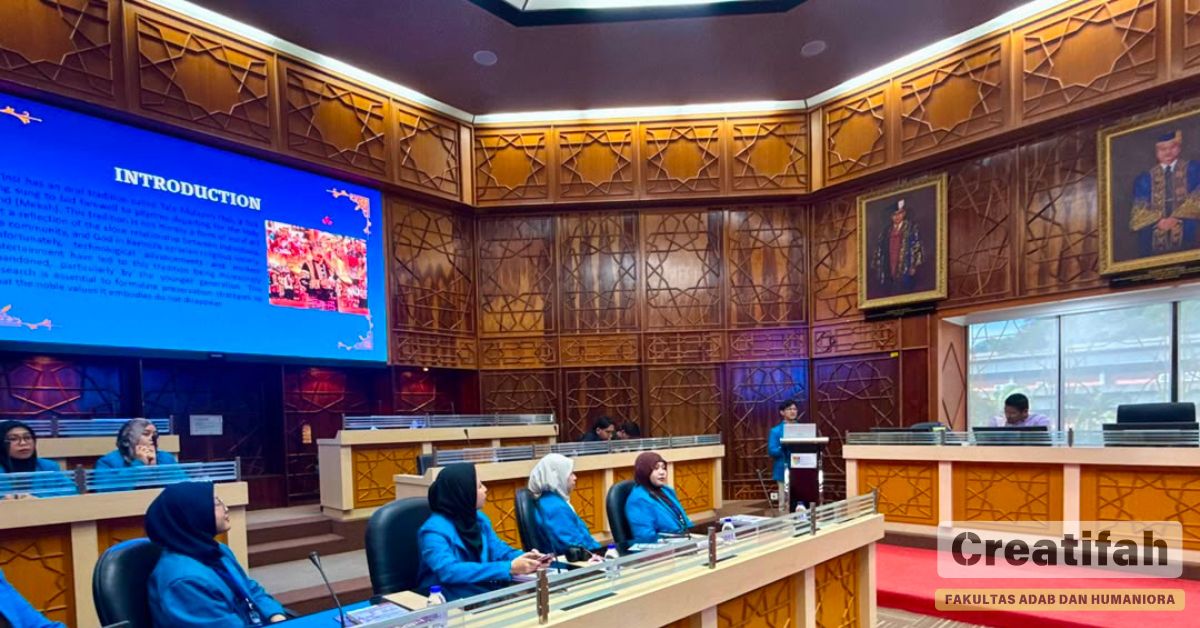
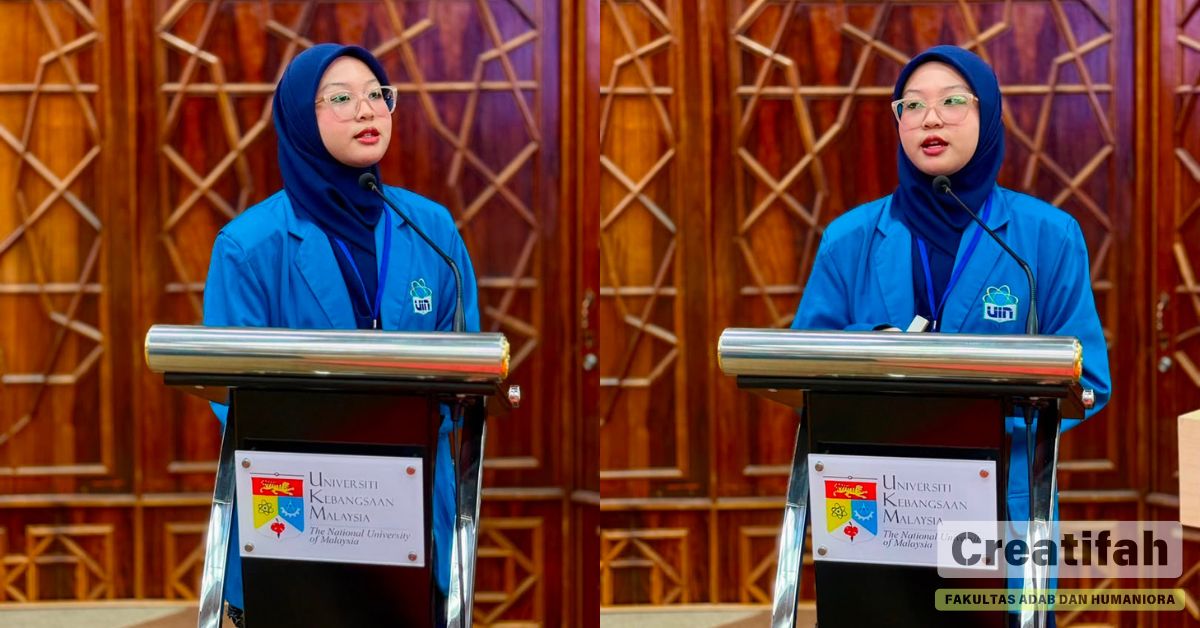
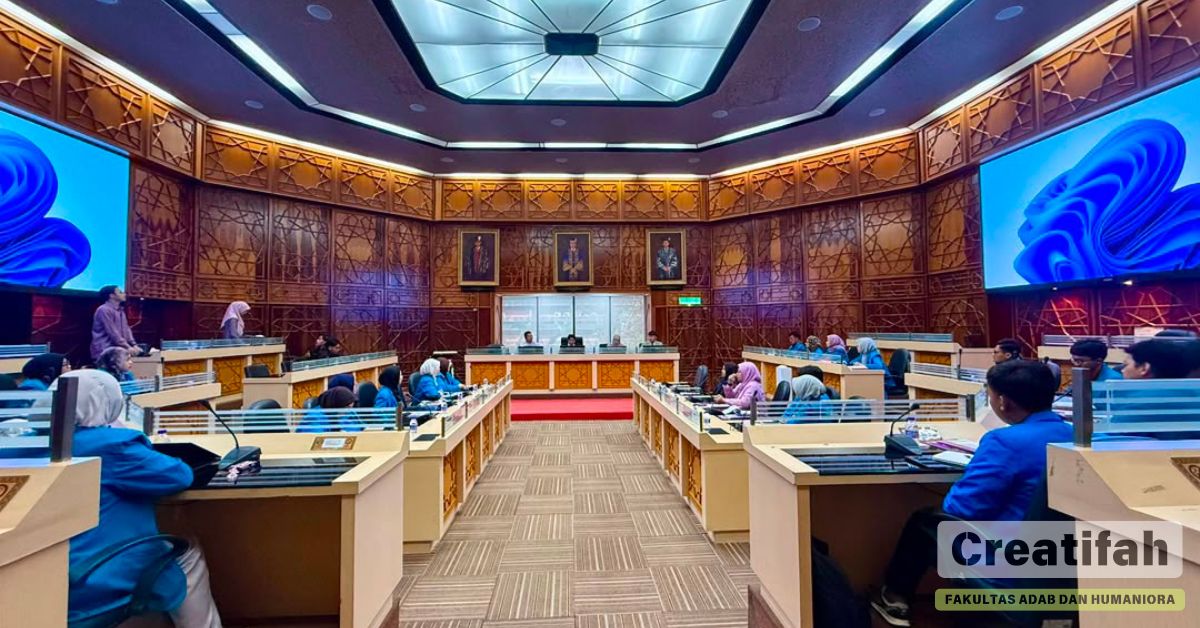
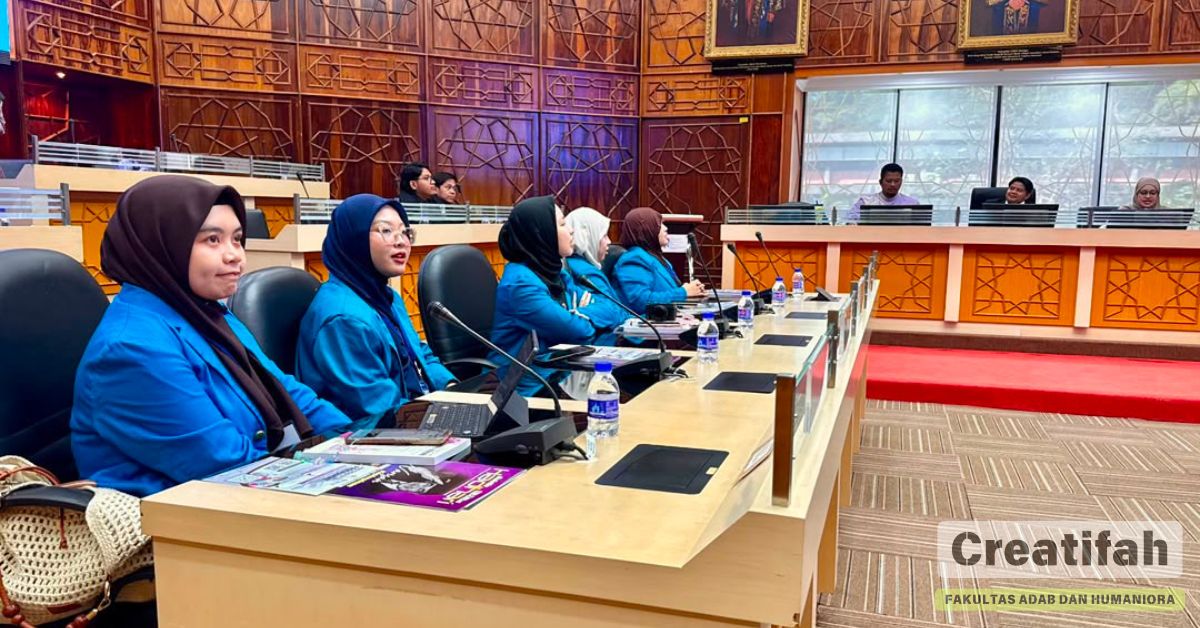
Malaysia, FAH Online News – Under the theme "Diverse Ideas, Cultural Heritage, and New Perspectives in Islamic Civilization Studies," the intellectual atmosphere came alive once again during the 5th Regional Seminar on Islamic Civilization (SSPI 2026). Held at the Bilik Majlis, the seminar brought together academics, researchers, and students from various institutions to exchange ideas, share perspectives, and enrich scholarly discourse through two parallel sessions moderated by En. Hifdzi Zaim Zamri, En. Muhamad Asyraaf Hasmidi, and Siti Maryam Hanis Hamzah.
The program commenced with an academic briefing on the study programs offered by the Institute of Islam Hadhari, delivered by Dr. Mohd Faizul Azmi. Through his presentation, participants were introduced to the institute's academic opportunities and research directions. The session served not only as an informative introduction but also as an inspiration for participants to further develop research that contributes to the advancement of Islamic civilization.
The first parallel session opened with a presentation by Angga Putra, S.Hum., entitled "Preserving the Islamic Cultural Heritage of the Indonesian Archipelago: A Case Study of Tale Mulapeh Haji in Kerinci, Jambi." His research emphasized that oral traditions are not merely relics of the past but living cultural heritage that continues to shape community identity.
Literary studies then took center stage through Najwa Lathiifah Saepudin's presentation on "The Representation of Humanitarian Values and Social Class During Times of Crisis in No Greater Love by Danielle Steel." Her study demonstrated how literary works capture human experiences while reflecting the social dynamics that emerge during periods of crisis.
The intellectual journey continued with Nur Aziz Abdillah, Ulil Abshar, and Nur Azlia Rahmantya, who presented "Reinterpreting the Indonesian Folktales Malin Kundang and Timun Mas: Between Morality and Generation Z Criticism." Their research offered a fresh perspective, illustrating that classical folktales continue to engage meaningfully with contemporary generations.
The first session concluded with a presentation by Novi Supriani and Tuty Handayani, entitled "Language, Power, and Diplomacy in the Oval Office Meeting Between Trump, Vance, and Zelensky (2025): A Critical Discourse Analysis." Their study highlighted how language functions not only as a medium of communication but also as a powerful instrument in shaping political authority and international diplomacy.
The enthusiasm continued during the second parallel session, which featured equally engaging research topics. Rizka Khairianur opened the session by discussing the transformation of multicultural values found in Surah Yusuf into the television drama series Yousuf Payambar, demonstrating how Qur'anic messages can be conveyed through artistic and popular cultural media.
The discussion on cross-cultural translation followed with Surya Ananta Wijaya Kusuma and Karlina Helmanita, who examined speech acts in the poem Yartah Qalbi by Muhammad bin Hasan. Their research emphasized that translation is more than linguistic transfer; it also serves as a bridge connecting meanings, cultures, and universal human values.
Indonesia's cultural diversity once again became the focus as Alyya Azzahra and Awalia Rahma presented their study on the resilience of Lawa Lete Mena Hetu Jazirah as a symbol of unity within the Hitu community of Maluku. Their findings demonstrated that local traditions continue to function as important instruments of social cohesion amid changing times.
The following presentation, delivered by Zahra Tsania Muflihah and Karlina Helmanita, introduced the concept of Soft Translation through their study of the children's story Abu Hasan by Kamil Kailani. Their approach offers an innovative way of preserving cultural values while ensuring accessibility for readers from diverse cultural backgrounds.
Concluding the day's presentations, Devita Nada Prihatin and Hikmah Irfaniah presented "Students' Motivation in Archival Volunteerism: A Case Study of the Records Centre of the Faculty of Adab and Humanities." Their research demonstrated that student participation in archival volunteer activities not only strengthens academic culture but also reflects a meaningful commitment to preserving institutional memory.
Throughout the seminar, lively discussions emerged as participants actively exchanged questions, comments, and insights, reflecting a strong spirit of academic collaboration. Although each paper explored a distinct perspective, they shared a common objective: enriching the understanding of Islamic civilization through approaches that are inclusive, contextual, and responsive to contemporary challenges.
Through these scholarly sessions, SSPI 2026 once again reaffirmed its role as a meeting point for ideas, where historical heritage encounters contemporary innovation, and where new perspectives emerge to contribute to the advancement of knowledge and the development of Islamic civilization across the region.
Written by: Yoga Difa Perdana
Documentation: