
Ramadan as Syahrul Qur'an: Prioritizing the Quality of Tartil in the Holy Month
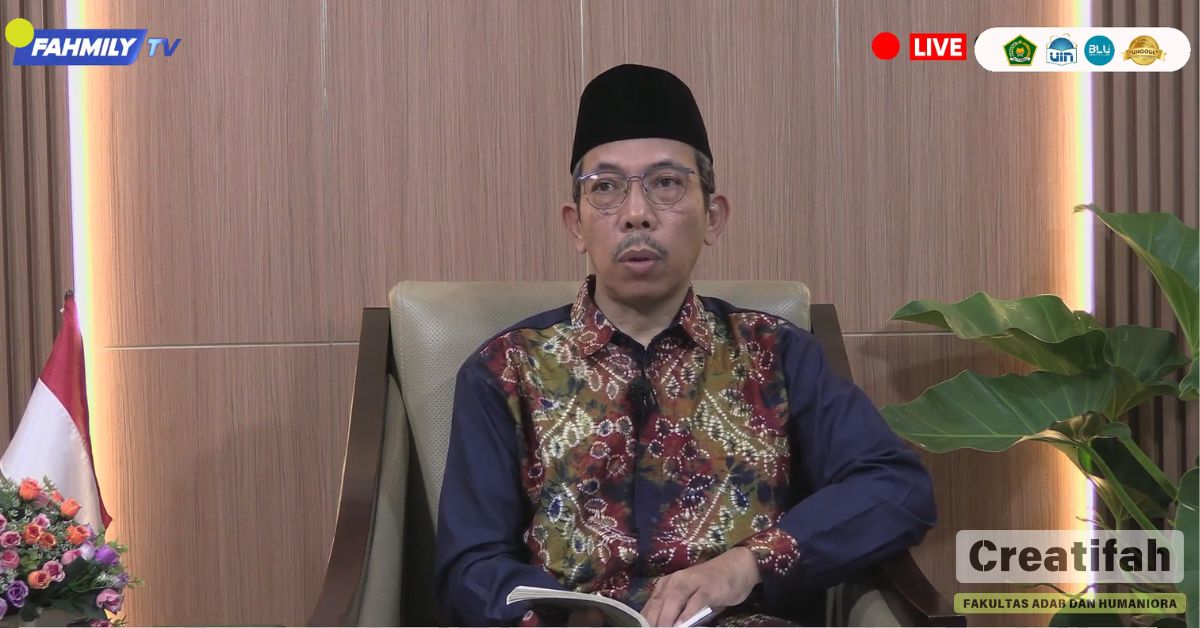
South Tangerang, FAH News Online - The Mutiara Ramadhan program is back every day during the holy month of Ramadan via the official YouTube channel. This program is broadcast regularly every 17.00 WIB as a loyal friend before breaking the fast. In the second day of fasting edition (20/02/2026), M. Husni T, MA was present to convey in-depth material regarding the meaning of Ramadan as the month of the Koran.
In his presentation, M. Husni emphasized the importance of maximizing the remembrance service through reading the Koran during this holy month. The naming of Ramadan as Syahrul Qur'an itself refers to Surah Al-Baqarah verse 185, which states that in this month the Qur'an was revealed as a guide for mankind, an explanation, and a distinction between what is right and what is false.
The motivation of Muslims to recite the Koran this month is based on the promise of extraordinary rewards. Based on the hadith of the Prophet SAW, every sunnah worship performed in the month of Ramadan is equivalent to obligatory worship in other months, while obligatory worship has its reward multiplied up to 70 times. Furthermore, one letter of the Koran that is read brings ten good things. For example, just reading "Alif Lam Mim" gives 30 rewards, because Alif, Lam, and Mim each count as one letter.
Even though the enthusiasm for reciting the Koran is very high, Husni reminded Muslims not to be trapped in just pursuing the quantity or speed of reading. As commanded in Surah Al-Muzzammil verse 4, "Warattil qurana tartila", which means read the Qur'an with superior tartil quality. He emphasized that when reading the Koran, what we should pursue is how long we interact and read the Koran, not how many pages or juz we have to reach. This is important so that readers remain focused on the accuracy of the sound and the law of recitation.
Regarding the importance of accurate reading, Husni quoted a statement from the qiraat expert, Sheikh Ibn Al-Jazari, who emphasized that reading the Koran with tajwid is a common obligation. In fact, people who read the Koran without using tajwid will sin because they can remove or change the meaning of the verse. In line with this, the scholars attribute an expression from Imam Ali which explains that tartil is "Tajwidul letter wa ma'rifatul wukuf", namely reading letters according to their makhraj and knowing where to stop and start reading.
Husni pays special attention to several pronunciation errors that often occur but have a fatal impact on meaning. For example, in the word Alhamdulillah, using the letter Ha big which replaces Ha small can change the meaning of "all praise" to "silence" or "extinguished fire". Similar errors are often found in the pronunciation of Al-Alamin, where the replacement of the letter Ain to Hamza can remove the original meaning of the word.
In conclusion, Husni invites all Muslims to never be embarrassed about learning to improve their reading of the Koran. He cited the principle that knowledge would not be gained by two types of people: people who are ashamed to learn and people who are arrogant. Whatever our status in society, improving the quality of reading according to tajwid is the main key in glorifying Ramadan as the month of the Koran.
Author: Nadhira Sonja Isinbayeva.