
Ramadan and Patience: Discovering the Classic Interpretations Behind Fasting
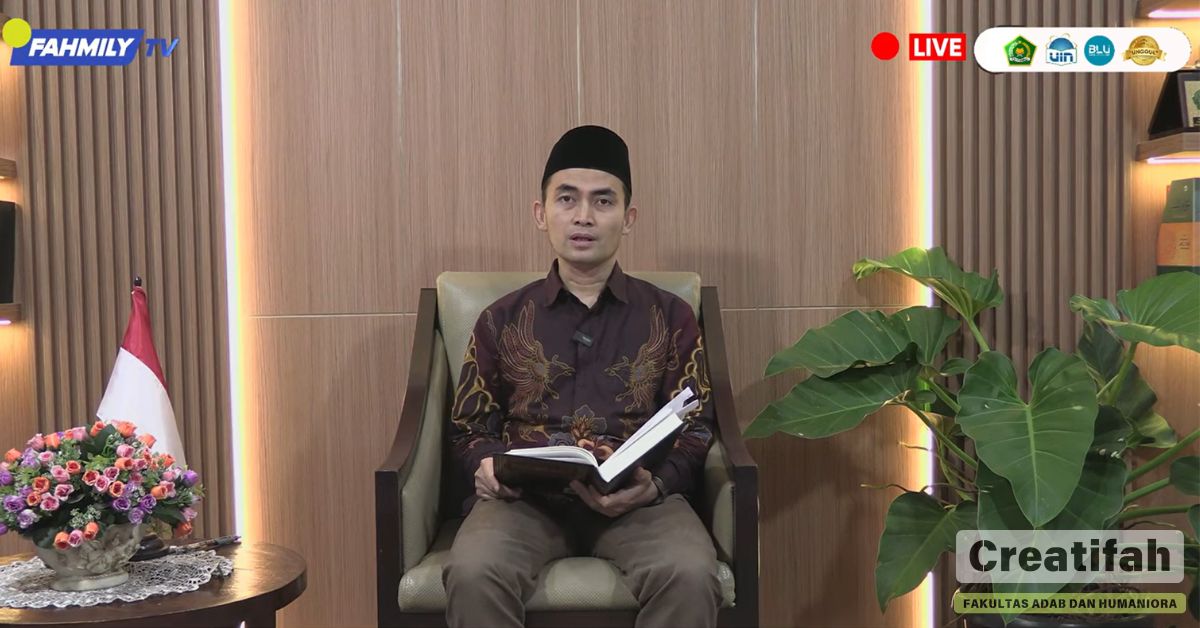
South Tangerang, FAH News Online - In order to welcome this blessed holy month, on this date (21/02/2026), Muhammad Zacky Mubarok, MA, delivered an in-depth message regarding the close relationship between Ramadan and the value of patience. He explained that Allah SWT has divided the inhabitants of heaven into two large groups, namely believers who are always grateful and believers who have high patience in facing all the tests of life.
Ramadan is often nicknamed the month of patience because the fasting carried out by Muslims is actually a real practice to train and encourage someone to continue to be patient. In his delivery, he quoted an authentic hadith narrated by Imam Ahmad which stated that fasting in the month of patience (Ramadan) and coupled with fasting for three days in each month, the value was the same as fasting for a whole year. He also emphasized that fasting is half of patience, where this includes three main aspects, namely patience in obedience to Allah, patience in avoiding everything that is forbidden and lust, and patience in facing physical difficulties during fasting such as hunger, thirst, and a declining body condition.
Furthermore, he explained the interpretation of surah Al-Baqarah regarding the command to ask for help through patience and prayer. When referring to classical books such as Tafsir At-Thabari, Tafsir Ar-Razi, and Tafsir Al-Qurtubi, scholars interpret that what is meant by asking for help through patience is through fasting. Patience is considered the key to opening the door to Allah SWT's help, so that people who are patient get a special position because Allah promises to always be with them. This patience is not just passive restraint, but an active effort to improve the quality of life in accordance with the guidance of reason and the Shari'a.
He also presented an authentic Hadith Qudsi which emphasized the privileges of fasting compared to other acts of worship. In this hadith, Allah SWT says that every deed of Adam's children will have its reward multiplied from ten to seven hundred times, except fasting. Allah states, "Fasting is for Me and I myself will reward it." This shows that the reward for fasting is opened without limits and the amount is immeasurable because fasting is a secret between the servant and his Lord. In fact, the reward for fasting is something that cannot be taken by other people when someone is prosecuted in the afterlife because of their injustice, in contrast to the reward for prayer or Hajj which can change hands.
Interestingly, the nature of patience is visualized through the philosophy of cactus plants which are able to survive amidst the harshness of the desert. Like a cactus whose roots plunge in search of water and whose thorns protect themselves, true patience is active and full of struggle, not surrender like a corpse. Patience is the art of living to remain upright and triumph in the most difficult conditions, which ultimately breeds the nature of optimism as exemplified by the Apostles in facing their tests.
In conclusion, it is emphasized that the reward for people who fast and are patient does not have certain limits. In contrast to other acts of worship whose rewards have been determined in multiples, the reward for fasting is promised directly by Allah SWT without calculation. Through the momentum of Ramadan, it is hoped that Muslims can improve the quality of their patience in order to get double the pleasure and blessings from Allah SWT.
Author: Nadhira Sonja Isinbayeva.