National Seminar: Lebanon Amid Middle Eastern Geopolitics: History, Conflict, and Diplomacy
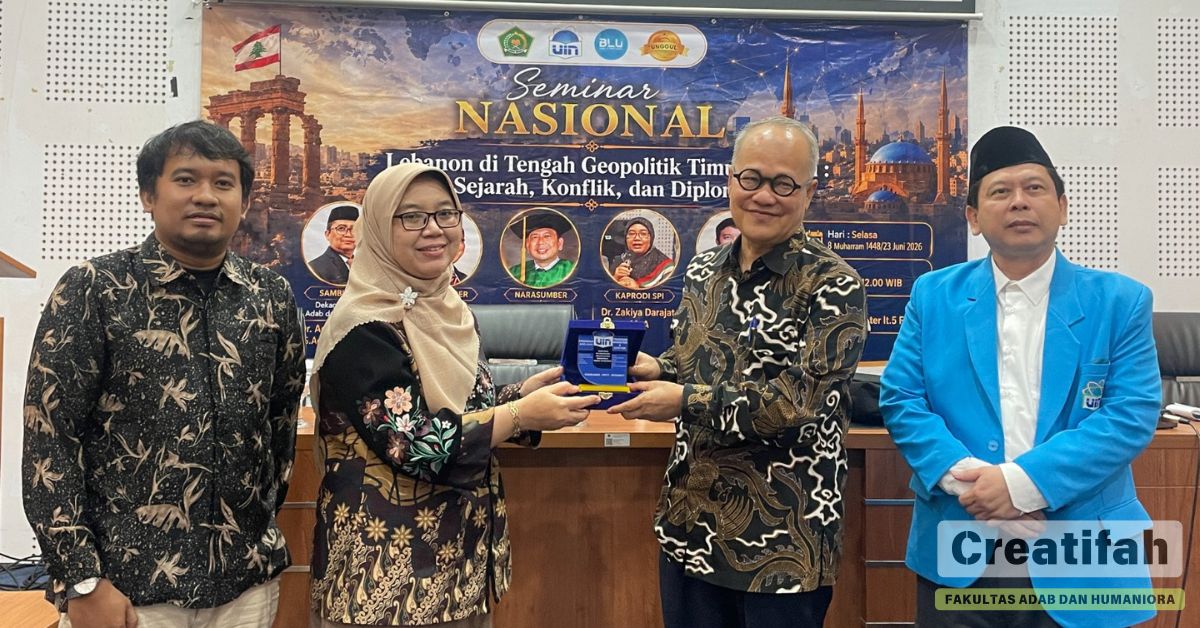
South Tangerang, FAH Online News — The Islamic History and Civilization Study Program (SPI), Faculty of Adab and Humanities (FAH), UIN Syarif Hidayatullah Jakarta, held a National Seminar entitled “Lebanon amid Middle Eastern Geopolitics: History, Conflict, and Diplomacy” on Tuesday, 8 Muharram 1448 H, corresponding to June 23, 2026.
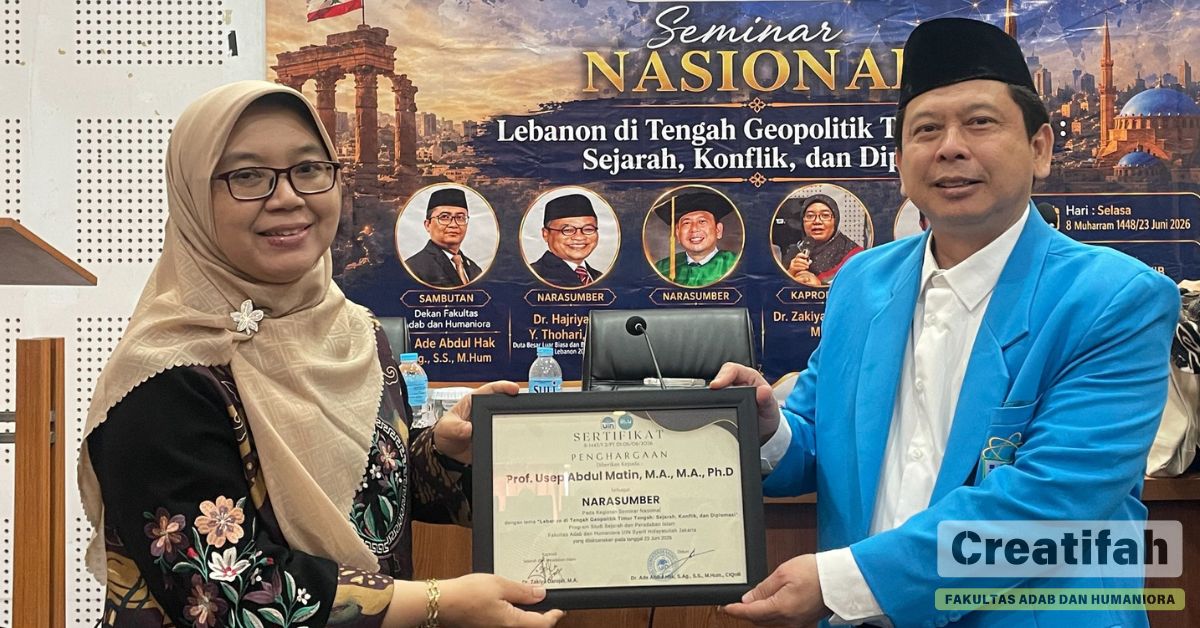
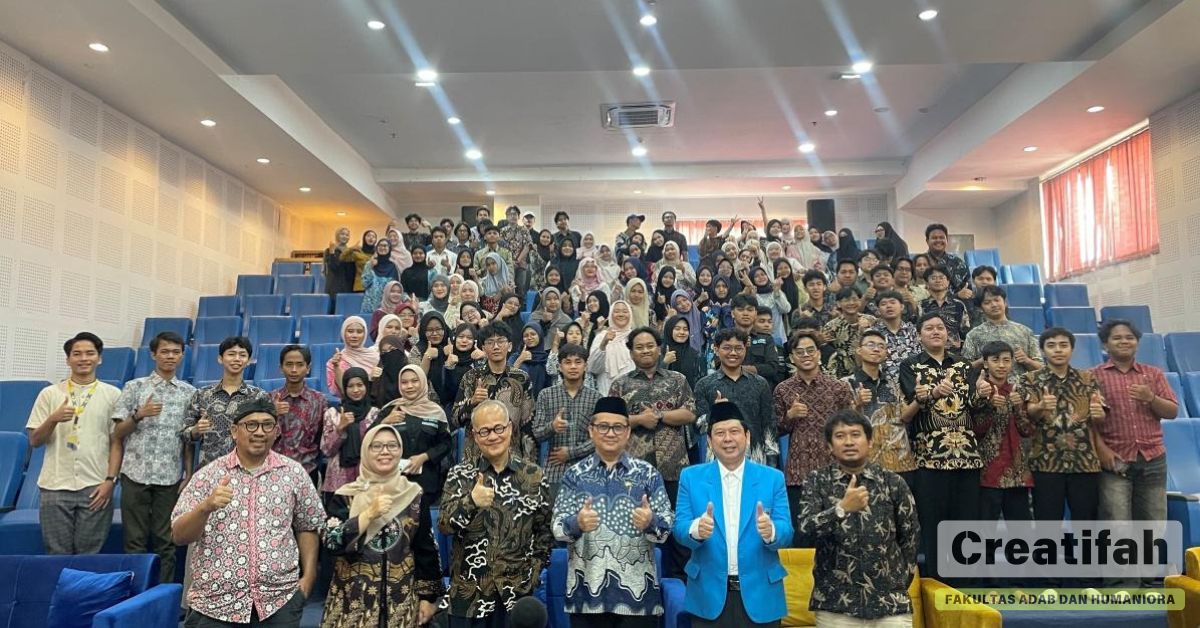
The event, which took place in the Theater Room on the 5th Floor of the Faculty of Adab and Humanities, featured two speakers: Dr. Hajriyanto Y. Thohari, Ambassador Extraordinary and Plenipotentiary of the Republic of Indonesia to Lebanon for the 2019–2025 period, and Prof. Usep Abdul Matin, S.Ag., M.A., Ph.D., Professor of Islamic History and Civilization as well as Vice Dean III. The seminar was moderated by Dr. Faizal Arifin, M.Hum., a lecturer of the SPI Study Program, and was attended enthusiastically by students of the Islamic History and Civilization Study Program.
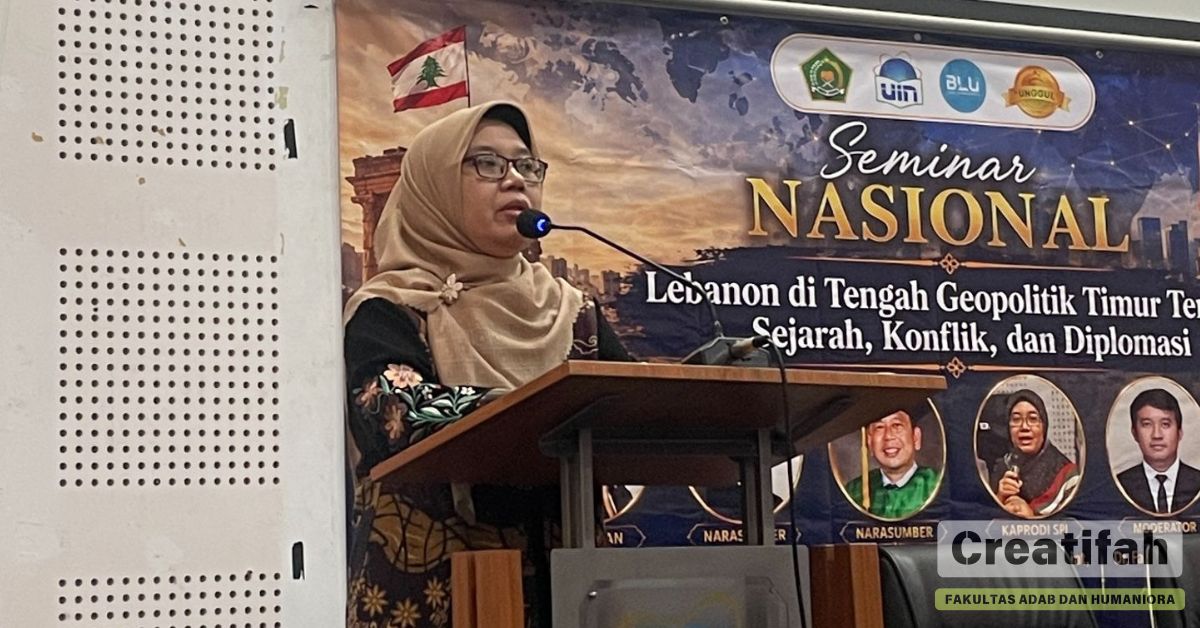
In her opening remarks, Dr. Zakiya Darajat, M.A., Head of the SPI Study Program, emphasized that the seminar was not merely intended to discuss international political dynamics or the development of conflicts in the Middle East. More than that, the activity was part of the commitment of the Islamic History and Civilization Study Program to provide a learning space that connects historical studies with contemporary realities currently taking place in the Islamic world.
“As students of Islamic History and Civilization, it is important for us to have a global perspective and to understand that various events occurring today do not emerge suddenly. Conflicts, diplomacy, and geopolitical changes in Lebanon and the Middle East have long and complex historical roots. Therefore, understanding history is not only about remembering the past, but also about reading the present and preparing for the future,” said the Head of the SPI Study Program.
Through this seminar, she also hoped that students would become more aware of developments in the Islamic world globally, not only focusing on local issues, but also showing concern for humanitarian, political, social, and cultural issues occurring in various parts of the Islamic world. In addition, she emphasized the importance of fostering and strengthening ukhuwah Islamiyah. According to her, the sense of brotherhood among Muslims should not be built solely on emotional ties, but also through a proper understanding of the conditions faced by fellow Muslims in different countries.
“When we understand the historical background and realities they face, the solidarity that grows will become more meaningful and knowledge-based,” she added.
Meanwhile, Dr. Ade Abdul Haq, S.S., M.Hum., Dean of FAH, stated in his remarks that the seminar was very important, especially in understanding issues currently developing in the global world. When the issue of Lebanon rises in global attention, other issues tend to decline. Therefore, it is important to understand current global issues through the perspectives of history, conflict, and diplomacy.
“As a community that loves peace, we deeply regret the occurrence of this conflict. However, on the other hand, this conflict can become a lesson for us, from which we can take wisdom as students of Islamic History and Civilization,” he said.
Background of Lebanon
The first speaker, Dr. Hajriyanto Y. Thohari, M.A., who served as Ambassador Extraordinary and Plenipotentiary of the Republic of Indonesia to Lebanon from 2019 to 2025, opened the discussion by explaining that Lebanon is a beautiful country surrounded by beaches and mountains, with a society known for its charm. Lebanon has even earned the nickname “Paris of the Middle East.” Lebanese society is also known for its ability to speak various foreign languages, including French.
“Speaking about Lebanon is very interesting because it is a beautiful country. It does not have deserts, but it has beaches, mountains, and people with charming appearances. Lebanon is even known as the Paris of the Middle East. In addition, children in Lebanon are skilled in using foreign languages, especially French, because the country was once colonized by France. Many schools in Lebanon use French as the language of instruction, such as Saint Joseph University and others. Although Lebanon is a small country, it plays an important role in Middle Eastern geopolitics. Lebanese society is also different from other Arab societies. In many Arab countries, the majority of the population is Muslim, while in Lebanon the population is almost evenly divided between Christians and Muslims living together in one small country,” he explained.
Lebanon’s Influence in the Middle East
Hajriyanto further stated that Lebanon is home to many American universities with branches in the Middle East, and many Arab leaders hold Ph.D. degrees from American institutions.
“Lebanon has the American University of Beirut (AUB), which was founded by missionaries and for decades ranked as the best university in the Middle East. Only in the last six years has its position been surpassed by King Fahd University and King Abdulaziz University from Saudi Arabia. Arab societies have suffered many disadvantages due to America, and many are anti-American. However, in the field of education, it was America that established university branches in the Middle East, and many governments in the region are led by people who earned Ph.D. degrees from American institutions. Many leaders of Arab countries are Muslims, except in Lebanon, where the president must be Christian. The prime minister must be a Sunni Muslim, the speaker of parliament must be Shi’a, the cabinet must consist of half Muslims and half Christians, and the parliament must also be half Muslim and half Christian. This is what greatly shapes Lebanon. Lebanon is the only Arab country that is democratic compared to other Arab countries,” he said.
The History of the Middle East
The term Middle East itself only emerged around 100 years ago, after the collapse of the Ottoman Empire following its defeat in World War I.
“The term Middle East only appeared about 100 years ago. It is a new terminology that emerged when the Ottoman Empire was defeated in World War I, and today’s Arab countries were formerly territories under Ottoman rule. Looking further back, the Arab region was not yet called the Middle East because at that time it existed in the form of dynasties after the era of the Rightly Guided Caliphs. Only after the Ottoman defeat in World War I did the territories under its control fall into the hands of Western countries. Under Western colonial rule, Westerners referred to the region as the East that was far away yet located in the middle of the world. The term Middle East was a symbol of Western colonialism at that time,” said the former Indonesian Ambassador to Lebanon.
The Prominence of the Middle East
Conflicts in the Middle East can occur because the region is one of the world’s largest sources of oil and the birthplace of major religions. Besides being identified with Islam, the Middle East is also a gathering place for followers of Judaism. This was conveyed by Dr. Hajriyanto Y. Thohari, M.A.
“First, the Middle East became very well known because it is a region with the largest oil resources in the world, which are needed by industrial countries today. Second, it is the birthplace of major religions. Third, it is home to many civilizations, and broadly speaking, many political policies in today’s world originate from the Middle East. Fourth, it is a gathering place for Jews. International Jews meet in the Middle East, namely in the State of Israel. Fifth, it is identified with Islam. Therefore, when the Western world wants to engage in dialogue with the Islamic world, it turns to the Middle East. This is what makes the Middle East the center of the Islamic world and a very important region in the global arena. Every conflict that occurs in any part of the Middle East involves the dimension of the global Islamic world,” he said.
Therefore, conflict in the Middle East becomes a very important variable in the Arab world because it can trigger connections with the global Islamic world.
“The current conflict in Lebanon is not only between Lebanon and Israel, but it can expand into a conflict between the Arab world and Israel, or even become a more severe conflict between the global Islamic world and Israel,” he stated.
In line with the first speaker, Prof. Usep Abdul Matin, S.Ag., M.A., Ph.D., Vice Dean III of the Faculty of Adab and Humanities and Professor of the SPI Study Program, explained that Lebanon is currently experiencing great destruction and loss within its own country. Referring to Albert Hourani’s 1991 book, he explained that Lebanon’s destruction occurred due to internal decay. A civilization can collapse not because of external influence, but because of damage occurring from within. Thus, the current conflict in Lebanon is the result of destruction that has taken place inside the country itself.
Therefore, the presence and concern of students are needed to help fellow human beings who experience injustice due to Israel’s expansion in the Middle East and to critically examine the possible consequences if this conflict continues.
Before the seminar concluded, the event continued with a question-and-answer session. Three second-semester SPI students asked critical questions to both speakers, which were then answered clearly and comprehensively. The seminar ended with a performance by the SPI Band, which sang “We Will Not Go Down” by Michael Heart and “Sesi Potret” by Enau, closing the series of activities of the national seminar.
Writer: Ahmad Daffa Rasyidi / Dr. Zakiya Darajat, M.A.
Documentation: