
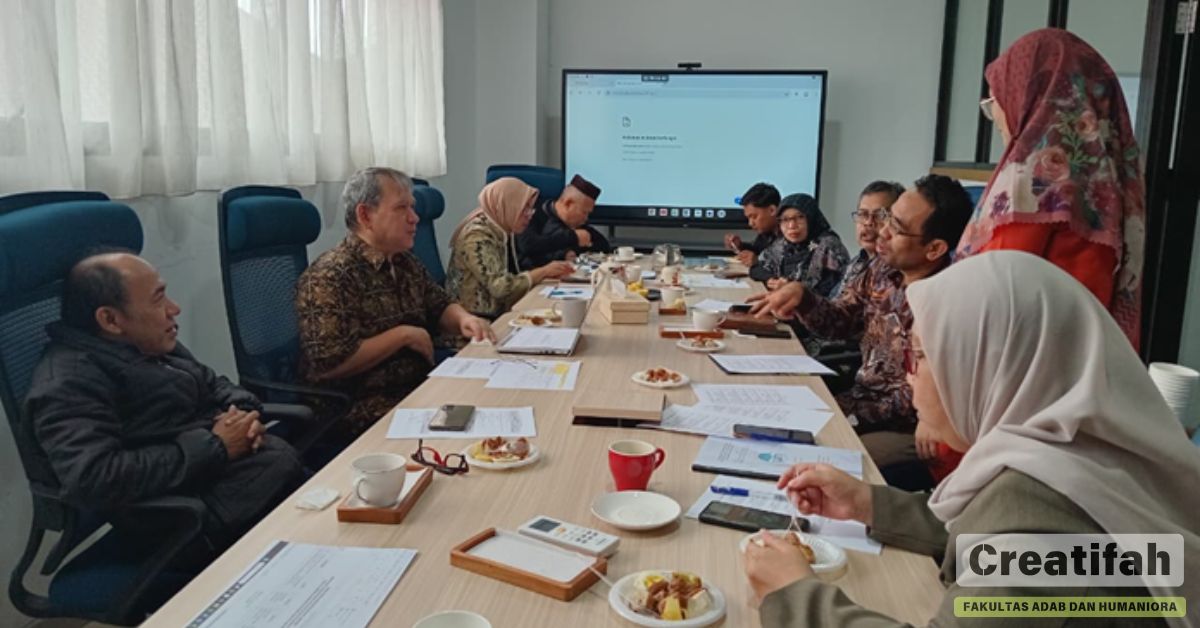
MSKI–DSPI Lecturer Discussion: Arranging Academic Direction, Strengthening Curriculum, and Aligning Steps
South Tangerang, FAH News Online - The Master of Islamic History and Culture (MSKI) and Doctor of History of Islamic Civilization (DSPI) Study Program, Faculty of Adab and Humanities, UIN Syarif Hidayatullah Jakarta, held another academic discussion on Thursday, February 5 2026. Located in the S3 SPI Room, Floor 3, discussions took place from 09.00 to 12.00 WIB and became an important forum for evaluating lectures, perfecting the curriculum, and aligning the steps forward.
The discussion was chaired by Prof. Dr. Jajat Burhanuddin, MA, and attended by senior lecturers and study program managers. Present on this occasion included Prof. Dr. Imam Subchi, MA, Prof. Usep Abdul Matin, S.Ag., MA, MA, Ph.D., Prof. Dr. Sudarnoto Abdul Hakim, MA, Prof. Amelia Fauzia, Ph.D., Prof. Dr. Oman Fathurrahman, M.Hum., Prof. Drs. H. Amirul Hadi, MA, Ph.D., and Prof. Drs. Jajang Jahroni, MA, Ph.D. Also present was Dr. Mauidlotun Nisa’, M.Hum., Dr. Gunawan's blessing, Dr. Zakiya Darojat, MA, Dr. Awalia Rahma, MA, Dr. Halid, M.Ag., Dr. Imas Emalia, M.Hum., Dr. Amurwani Lestariningsih, M.Hum., Saiful Umam, MA, Ph.D., and Fuad Jabali, MA, Ph.D. Also participating as a representative for Masters students is Yoga Difa Perdana, S. Hum, as well as academic support units such as KKN in Campus and Field Work Practices (PKL). The presence of this element of students and support units gives a special colour to the discussion, as it allows for the exchange of views from different sides.
One of the main agenda items for the discussion was the evaluation of the odd semester lectures for the 2025/2026 Academic Year. In this discussion, it was stated that a number of Masters and Doctoral students had submitted research proposals. However, the lecturers emphasize the importance of mentoring from the start so that students have clarity on themes, study focus, approach and theoretical framework in thesis and dissertation research.
The discussion also paid special attention to strengthening the DSPI Program at the doctoral level. With the number of students now reaching around ±10 people from diverse academic backgrounds, participants agreed that strengthening the syllabus was an urgent need. A more mature syllabus is considered essential to maintain academic quality while responding to the multidisciplinary challenges faced by doctoral students.
Regarding the admission of new students, the discussion recommended that the admission of DSPI S3 students should only take place at the beginning of the academic year, with a maximum number of 10 people. This policy is expected to maintain the intensity of guidance and the quality of the academic process.
The issue of scientific publications was also part of the discussion. The lecturers agreed that publishing articles was not made a formal obligation, but rather a strategic means to help students recognize their interests, research direction, and strengthen their readiness to write theses and dissertations.
In another session, this discussion highlighted the issue of Semester Learning Plans (RPS). It was found that not all students obtained RPS evenly. Therefore, it was agreed that all RPSs be collected through the Regional Head or Regional Secretary, so that they are more accessible to students and make it easier to manage study program administration.
In conclusion, the importance of coordination between lecturers in the determination of course material was emphasized. This coordination is seen as crucial to avoid overlapping materials while strengthening the integration of the MSKI and DSPI curricula. The meeting closed at 12.00 WIB with a shared enthusiasm to continue strengthening the academic quality and governance of the MSKI and DSPI Study Programs so that they are more responsive to student needs and scientific developments.