
MSKI Alumnus Produces Monumental Book Work: Collaboration between Lecturers and Students
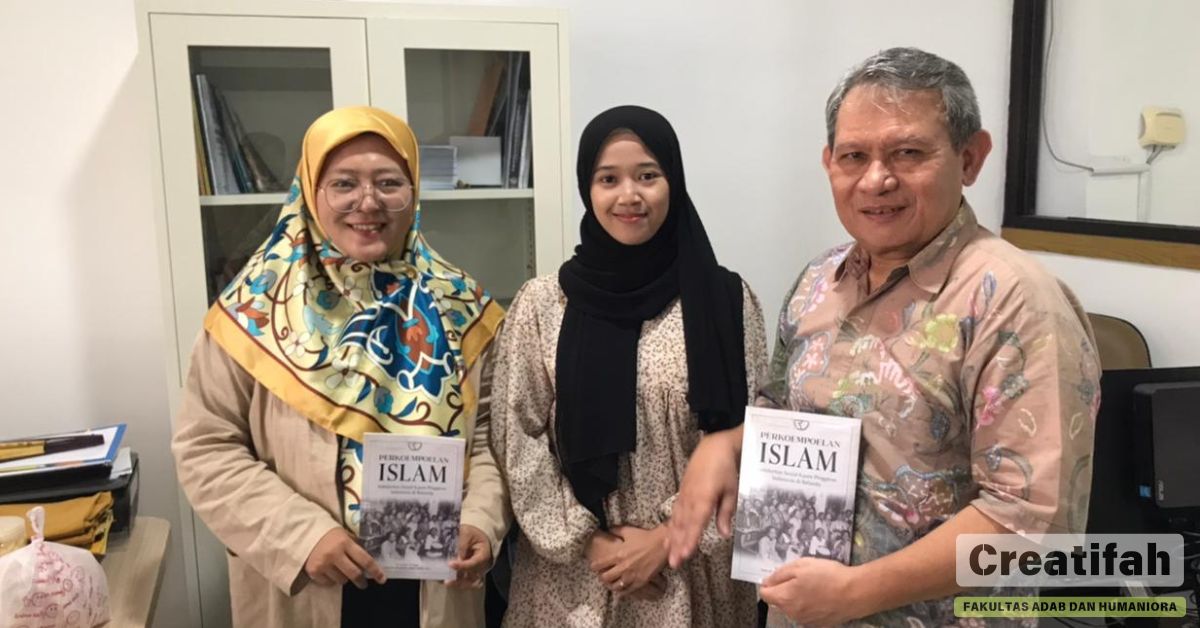
South Tangerang, FAH Online News - On Tuesday, February 4 2026, a warm and meaningful academic meeting took place within the Master of Islamic History and Culture (MSKI) Study Program, Faculty of Adab and Humanities, UIN Syarif Hidayatullah Jakarta, regarding the publication of a book entitled Perkoempoelan Islam: Social Solidarity of Indonesian Fringes in the Netherlands (Depok: Rajawali Pers, 2025). This book is the result of the development of research on the thesis of MSKI student, Iin Isnaini, which was prepared through scientific collaboration with Professor UIN Syarif Hidayatullah Jakarta, Prof. Sudarnoto Abdul Hakim, MA.
The book deals with the social history of Indonesian workers in the Netherlands in the first half of the 20th century, particularly those in the domestic and service sectors such as cooks, restaurant waiters and domestic servants who have escaped the main historiographic spotlight. Through a social history approach, this book places Islamic Cooperation as an important space for the formation of solidarity, collective identity and agency practices of the periphery in facing alienation, discrimination and structural limitations in the colonial country.
Substantively, this book shows that Perkoempoelan Islam does not only function as a religious organization, but also as a social, cultural and even political forum for Indonesian workers in the Netherlands. It discusses the organization's concrete efforts in fighting for socio-religious rights, building solidarity networks, and negotiating with Dutch local authorities. Thus, workers who are often positioned as passive groups actually appear as active and reflective historical subjects.
In terms of social impact, this book makes an important contribution to understanding the history of the Indonesian nation in the context of diaspora and migration. The story of the silent struggle of these workers enriches the narrative about the formation of national consciousness, cross-class solidarity, and relations between religion and social movements outside the Dutch East Indies. The findings in this book are also relevant for rereading colonial history from a lower perspective (history from below) that is more inclusive and fair.
During the meeting, Iin Isnaini had a direct discussion with Dr. Mauidlotun Nisa’, M.Hum., as Secretary of the MSKI Study Program, and Prof. Dr. Jajat Burhanuddin, Head of the MSKI Study Program. The discussion was fluid but substantive, discussing the position of this book in the scientific treasures of Indonesian Islamic history, its potential for development into the realm of diaspora studies and global migration, and its urgency for students and researchers across disciplines.
Dr. Mauidlotun Nisa’ emphasizes the importance of this book as an academic reference that opens up new study space about the history of Indonesian suburbs abroad, as well as being a concrete example of how thesis research can transform into books of scientific and public value. Meanwhile, Prof. Jajat Burhanuddin highlights the book's strength in linking social history, religion, and nationalism, which is relevant not only to historians, but also to the study of sociology, anthropology, and the study of international relations.
This meeting emphasized that the publication of the book Perkoempoelan Islam is not just an individual achievement of the author, but also part of the collective efforts of academic institutions to encourage the production of knowledge that is critical, contextual, and in favor of groups that have been marginalized in official history. It is hoped that this book can become important reading for lecturers, students, researchers and the wider public who want to understand Indonesian history from a more humane perspective.
With the publication of this book, the Master of Islamic History and Culture Study Program reiterates its commitment to developing productive academic traditions that are relevant to national and global issues. Today's discussion marks the beginning of further dialogues about diaspora history, social solidarity, and the role of religion in shaping community resilience amidst the pressures of colonial structures.
Author: Isna