
Menyala, Gacor, and Tantrum: Why Do Word Meanings Shift So Quickly on Social Media?
By: Andika Pratama
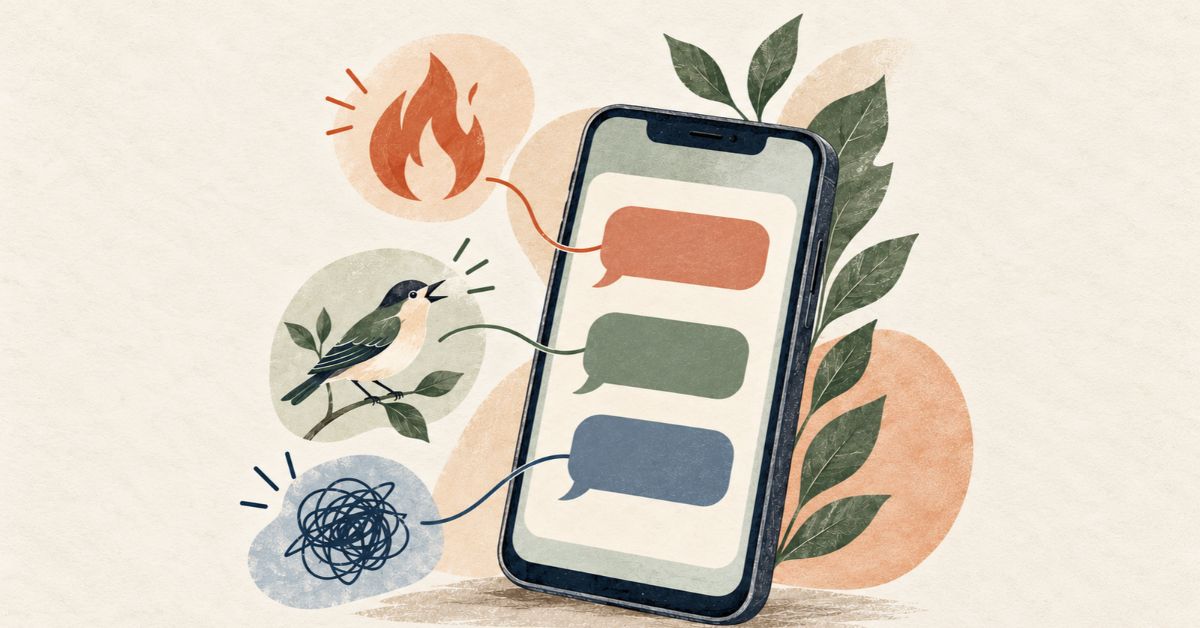
Societies have always found creative ways to repurpose existing vocabulary to describe new situations in everyday interaction. In social media comment sections, the word menyala (literally, “burning” or “glowing”) and the expression biarkan dia memasak (“let him cook”) frequently appear as ways to praise the sharpness of someone's ideas or the excellence of their performance, even when the events being discussed have nothing to do with actual flames or cooking. Social media users can immediately grasp the praise conveyed by these expressions because they have repeatedly encountered them in similar contexts in public online spaces. This linguistic phenomenon, which has become commonplace on social media feeds, demonstrates that words can transcend their literal meanings and acquire new semantic associations through the collective conventions established by their speakers.
In semantics, the process through which the scope of a word's meaning changes is known as semantic shift or semantic change. This phenomenon has actually been occurring throughout the history of Indonesian long before the internet emerged. In the past, the Indonesian word sarjana referred broadly to an intelligent or learned person, but its meaning gradually narrowed to designate someone who holds an academic degree from a higher education institution. Conversely, words such as bapak (father or sir) and saudara (sibling or relative) have expanded beyond biological kinship to become respectful forms of address for other people in formal interactions. Similar dynamics are now unfolding on social media, but at a much faster rate of circulation, allowing new meanings to be recognized, imitated, and incorporated into spoken conversations beyond mobile screens almost immediately.
Why Do Meanings Shift So Quickly in Digital Spaces?
One of the main drivers of rapid semantic change online is the need for users to communicate more concisely. The fast-paced nature of digital communication encourages internet users to express ideas briefly so that they can be understood at a glance. The word yapping, which originally refers to the high-pitched, repeated barking of a small dog, is now commonly used to describe someone talking at length without stopping. Similarly, the term red flag, which originated from warning flags used in military contexts and motorsports, can now be expressed in just two words to identify a person's troubling traits that warrant caution in a relationship. A short expression can carry information that would otherwise require an entire sentence, while the visual context of a post helps readers fill in the intended meaning left unstated. This linguistic economy is one of the defining characteristics frequently observed in studies of internet linguistics.
The practicality of exchanging messages goes hand in hand with language's function as a marker of social identity. From a sociolinguistic perspective, vocabulary shared by a community functions like a group code, fostering familiarity while distinguishing community members from outsiders. Studies of Generation Z language indicate that slang flourishes because it strengthens solidarity among users. The words gacor and skena, for example, illustrate this social process in contemporary conversation. The term gacor was originally used among bird enthusiasts to describe birds that sing frequently and energetically. It was later adopted by internet users to praise work performance, athletes' achievements, and even everyday good fortune when things are going exceptionally well. Meanwhile, skena, borrowed from the term scene in underground music subcultures, has evolved into a label for the fashion styles and social habits of urban youth. A person's ability to use these expressions appropriately and with the right tone can signal their familiarity with the culture of the relevant group.
Semantic shifts are also particularly noticeable when people borrow psychological terms to describe emotional experiences that are difficult to articulate using ordinary vocabulary. The word tantrum, which specifically refers to an outburst of emotion in young children whose self-regulation skills are not yet fully developed, is now frequently used by adults to describe frustration or anger at work or on campus. A similar development has occurred with burnout, which has broadened from chronic occupational exhaustion to a casual expression of tiredness after everyday activities, and gaslighting, which has shifted in popular usage from systematic psychological manipulation to a label for evasive behavior during ordinary disagreements. In psychological literature, the expansion of meanings associated with harm and mental health conditions is discussed through the phenomenon known as concept creep, which has also affected terms such as trauma. This theoretical framework helps explain how a term can come to encompass an increasingly broad spectrum of life experiences, even though its casual use in conversation does not automatically turn those experiences into clinical diagnoses.
Viral First, Dictionaries Later
The fluid movement of vocabulary can be traced relatively clearly because social media preserves publicly accessible records of user interactions over time. Consider the Indonesian verb menggoreng, which literally means “to fry.” It is often used by an account to describe attempts to exaggerate a sensitive issue in order to stir up public controversy. Thousands of other users who encounter the expression can immediately understand the metaphor behind it. The word is then adopted, carried into different conversations, and applied in new contexts until its meaning becomes widely recognized, potentially before it is recorded in an official dictionary.
The high frequency of a word on social media feeds does not necessarily mean that its new meaning is understood uniformly across all segments of society. A term that seems natural and humorous to young people on one digital platform may sound unfamiliar or even be misunderstood by other age groups outside that platform's ecosystem. Therefore, interpreting semantic change in cyberspace requires sensitivity to the full communicative context, including the speaker's background, the intended audience, and the situation in which the conversation takes place.
These rapid changes often spark debate about maintaining language standards in public communication. The view that every semantic shift represents linguistic decline tends to overlook the very nature of language, which continually evolves in response to speakers' needs to interpret new realities. Nevertheless, precision remains important when conversations address serious matters. The casual use of clinical terms such as depression, trauma, or bipolar to label temporary sadness risks blurring the distinction between ordinary emotional distress and psychological conditions that require professional care. On the other hand, the growing familiarity of mental health vocabulary in public discourse can also create opportunities for discussion and help people become more sensitive to emotional burdens that were previously difficult to express.
A comprehensive understanding of semantic change ultimately reveals that every vocabulary shift in digital spaces represents an intersection of the need for communication efficiency, the expression of group identity, and the human effort to name personal experiences. Words circulating across mobile screens function as living social instruments, continually negotiating meaning with people's thoughts and cultural practices. Awareness of these semantic processes enables us to interpret messages more carefully while responding more thoughtfully to the diversity of language use in a changing world.
References
Chaer, A. (2009). Pengantar semantik bahasa Indonesia (revised edition). Rineka Cipta.
Crystal, D. (2011). Internet linguistics: A student guide. Routledge. https://doi.org/10.4324/9780203830901
Eble, C. (1996). Slang and sociability: In-group language among college students. University of North Carolina Press.
Grieve, J., Nini, A., & Guo, D. (2018). Mapping lexical innovation on American social media. Journal of English Linguistics, 46(4), 293–319. https://doi.org/10.1177/0075424218793191
Haslam, N. (2016). Concept creep: Psychology’s expanding concepts of harm and pathology. Psychological Inquiry, 27(1), 1–17. https://doi.org/10.1080/1047840X.2016.1082418