MBSA UIN Jakarta Holds a National Seminar Exploring the Meaning and Aesthetics of Arabic Proverbs
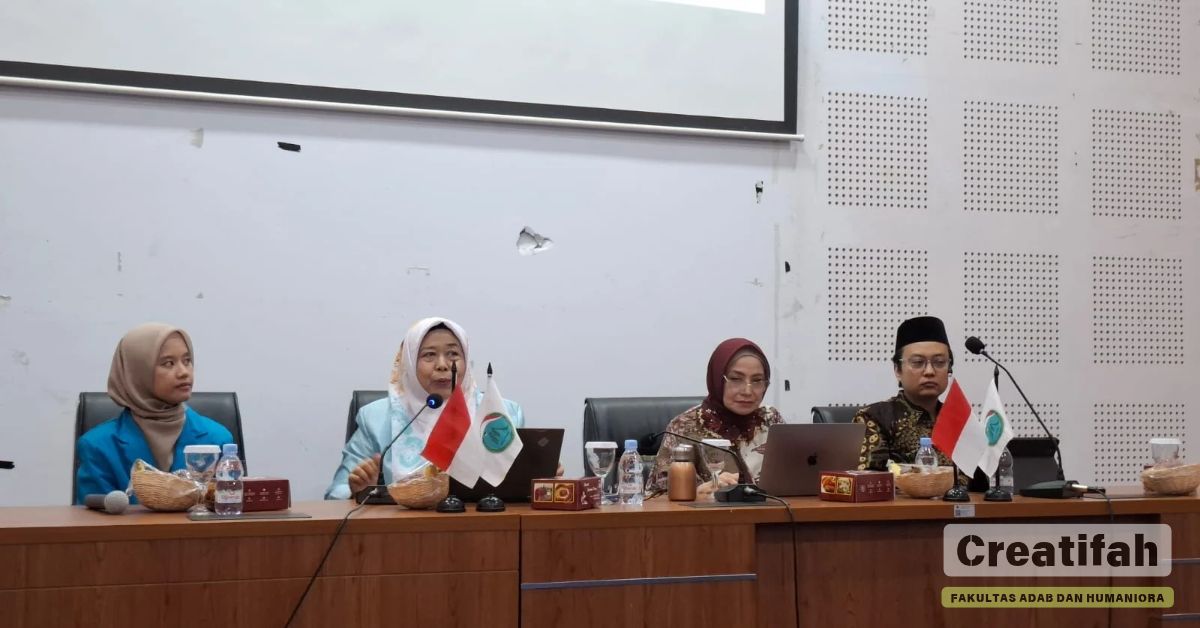
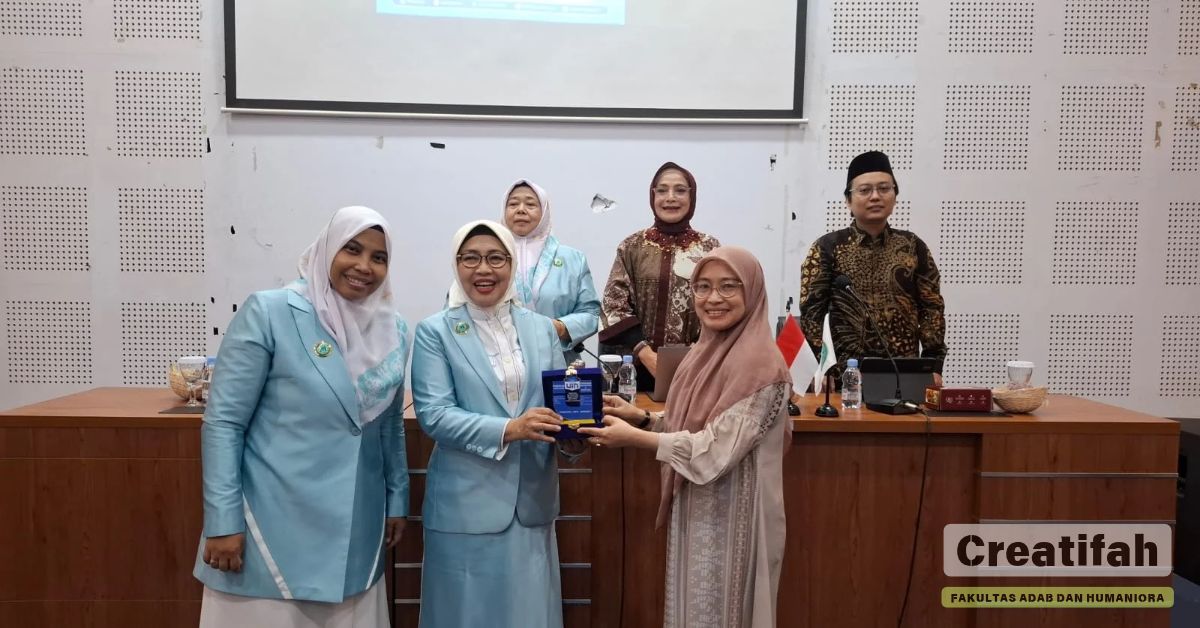
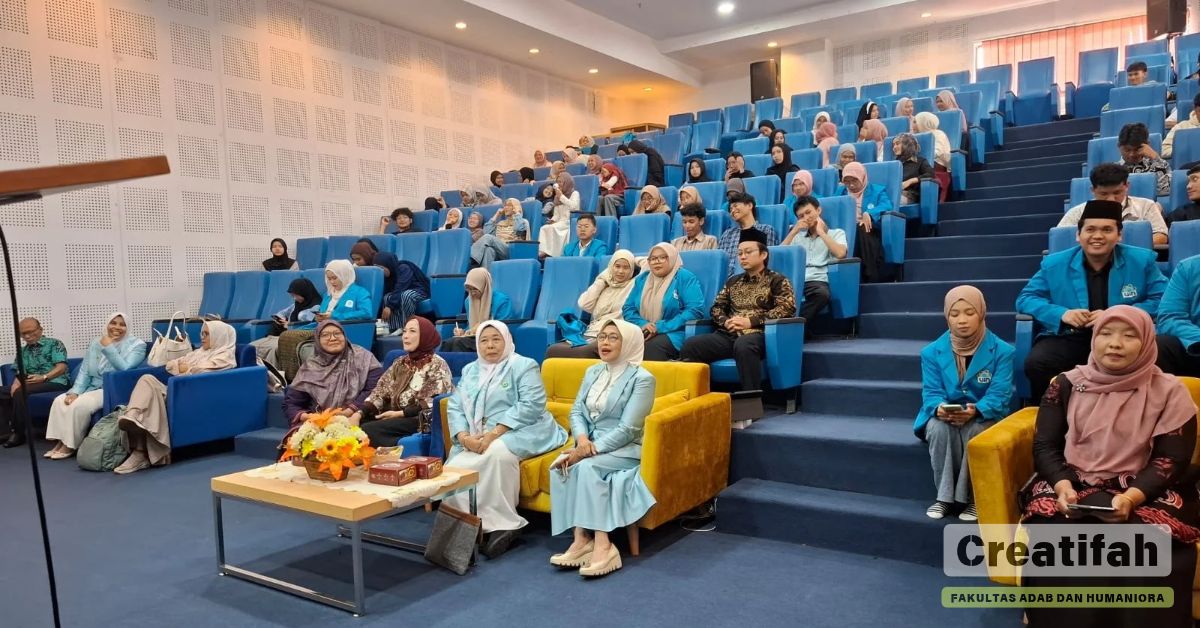
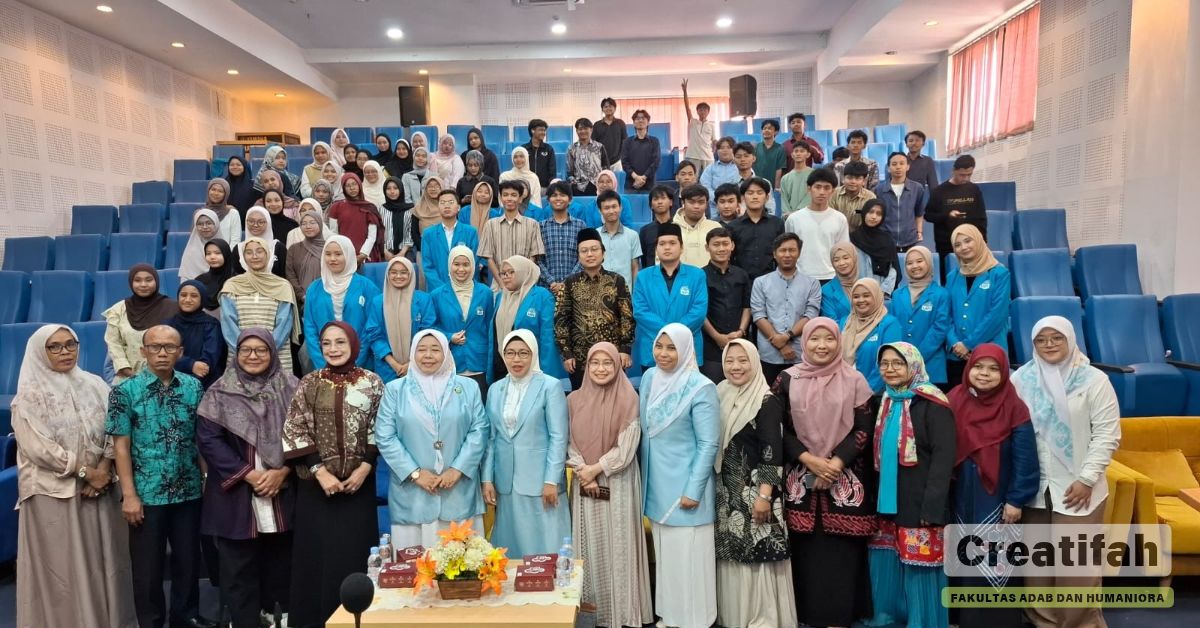
CIPUTAT, FAH ONLINE NEWS — The Master’s Program in Arabic Language and Literature (MBSA), Faculty of Adab and Humanities (FAH), UIN Syarif Hidayatullah Jakarta, in collaboration with the Indonesian Muslim Women Scholars Council (Majelis Alimat Indonesia/MAI), held a National Seminar entitled “Communication and Islamic Preaching from the Perspective of the Meaning and Aesthetics of Arabic Proverbs: The Culture of Proverbs Usage among University Students.” The event took place at the Abdul Ghani Theater Hall, FAH Building, UIN Jakarta, on Wednesday afternoon (18 November 2026).
In her opening remarks, Vice Dean I for Academic Affairs of FAH UIN Jakarta, Dr. Ida Farida, M.LIS., expressed her appreciation for the organization of the national seminar in collaboration with the Indonesian Muslim Women Scholars Council (MAI). She stated that the event served as an important academic platform for deepening students’ understanding of linguistic meaning, particularly proverbs, while distinguishing the characteristics of communication and Islamic preaching across different contexts. She also encouraged students, especially those preparing to write their undergraduate theses, to adopt a more critical approach to analyzing meaning and language usage as part of advancing academic research.
On the same occasion, the Chairperson of the Indonesian Muslim Women Scholars Council (MAI), Prof. Dr. Hj. Sylviana Murni, S.H., M.Si., popularly known as Mpok Silvi, also delivered her remarks. She emphasized the importance of language and words in building communication that resonates with people's hearts. According to her, beautiful words can touch people's emotions, while clear reasoning and sound thinking provide greater depth in understanding the messages being conveyed. She also reminded the audience that actions speak louder than words. Therefore, the values conveyed through communication and Islamic preaching should not remain mere words but must be translated into concrete behavior and actions.
In line with these messages, the seminar continued with presentations by three speakers who explored Arabic proverbs from linguistic, communication, Islamic preaching, and historical perspectives. The first speaker, Professor of the MBSA Program, Vice Chairperson of the Central Executive Board of MAI, and FAH professor, Prof. Dr. R. Yani'ah Wardani, M.Ag., discussed the essence of Arabic proverbs (al-amtsal) as concise expressions that compare one situation with another to convey wisdom. The academic, who has authored 41 works on proverb studies, classified the tradition of amtsal into two categories: pre-Islamic proverbs (amtsal Jahili), which emerged from the social wisdom of pre-Islamic Arab communities, and Qur'anic proverbs (amtsal Qur'ani), which reinforce faith and moral values through three forms: musharrahah (explicit), kaminah (implicit), and mursalah (unrestricted expressions).
According to Prof. Yani'ah, the appeal of proverbs lies in their conciseness of meaning (al-ijaz), the use of comparisons and figurative language to make abstract ideas more concrete (tasybih and isti'arah), and rhythmic harmony (al-iqa') that makes messages easier to remember. This combination is considered highly effective in Islamic preaching because it enables speakers to deliver criticism tactfully without offending their audiences.
The next session featured Dr. Marlinda Irwanti Purnomo, S.E., M.Si., Coordinator of the Islamic Preaching Division of the MAI Central Executive Board and Director and Rector of Sahid University (Usahid) for the 2019–2024 period. Drawing on her experience as a TVRI broadcaster, she highlighted the importance of systematic Islamic communication strategies in digital spaces, one of which involves using Qur'anic and Hadith-based proverbs to convey messages in a subtle and non-preachy manner.
Dr. Marlinda reminded Islamic preachers and public communicators to adapt their content formats to the characteristics of platforms such as TikTok, Instagram, Facebook, and podcasts—for example, by producing short videos of less than one minute—and to maintain a consistent posting schedule. Understanding the characteristics of audiences across generations (Generation Z, Millennials, and Baby Boomers), observing social media ethics, and utilizing hashtags are also essential to ensuring that communication leads to understanding and, ultimately, concrete action.
The third speaker, Musyfiqur Rahman, a translator and MBSA student, examined the historical dimensions of Arabic proverb studies, which he considered to remain relatively underexplored in academic circles. He illustrated how proverbs preserve records of the social realities of their respective eras, ranging from events during the Himyar Kingdom to depictions of disparities in the welfare of grassroots teachers documented in Al-Jahiz's book Al-Bayan wa at-Tabyin.
Unlike Arabic poetry (syi'r), which is strictly bound by metrical patterns (wazan) and rhyme, Musyfiqur argued that amtsal are considerably more flexible because they rely primarily on the sharpness of meaning (al-ma'na). This makes them suitable for adaptation into concise Islamic preaching content on social media. “When we understand a proverb within a more precise cultural context and examine its historical dimensions, we do not merely appreciate the beauty of its words; we also discover the traditions and social realities that shaped it,” he explained.
The Chair of the National Seminar Organizing Committee and Secretary of the MBSA Study Program, Sholikatus Sa'diyah, M.Pd., stated that the event was organized to broaden students' linguistic knowledge so that they would not remain confined to standard language or everyday conversational expressions.
“Through this national seminar, we want to share perspectives that encourage students to use not only standard language or everyday conversational language but also various linguistic styles, such as proverbs and metaphors. Proverbs are important and possess their own aesthetic value when we communicate with others,” Sholikatus said during an interview on the sidelines of the event.
She added that the successful implementation of the event was made possible through the collaboration of many parties, including MAI officials, faculty leaders (the Dean and Vice Deans), MBSA lecturers, administrative staff, and students who participated as committee members and speakers. Sholikatus expressed her hope that students would be able to apply the knowledge gained from the seminar in international interactions while developing their ability to integrate writing, communication, and Islamic preaching skills.
By: Muhammad Afiq Izzan Budiawan
Documentation: