Library Science Students of UIN Syarif Hidayatullah Jakarta Explore Opportunities and Gradual Strategies for AI Implementation with Guest Lecturer from Universitas Negeri Padang
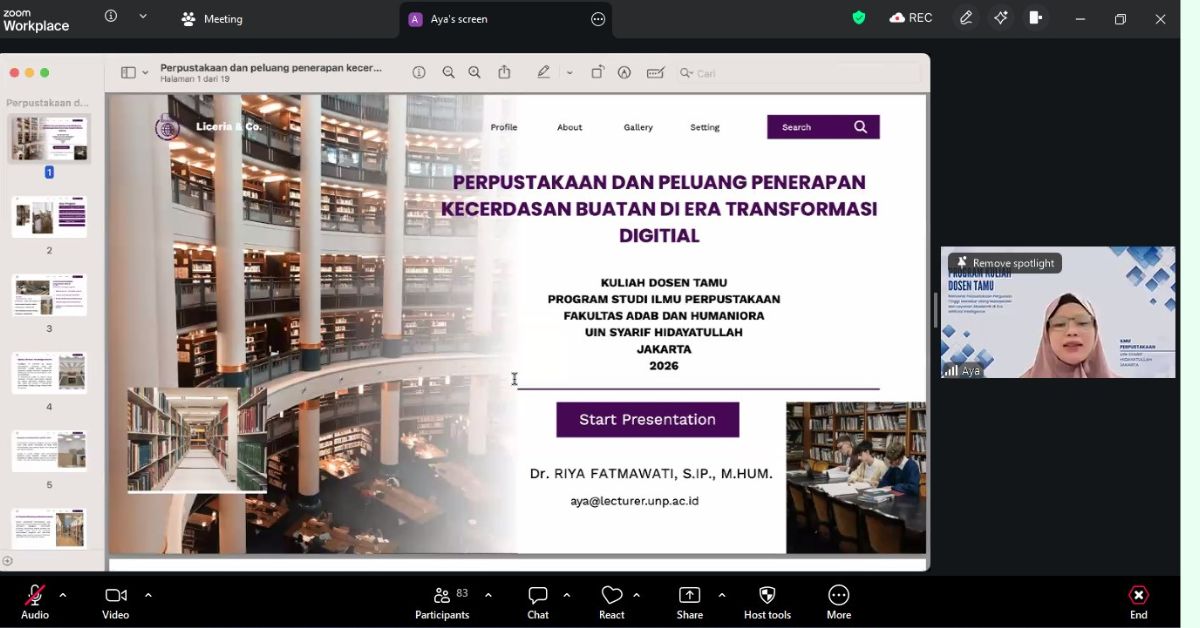
South Tangerang, FAH Online News – The Library Science Study Program (IPI), Faculty of Adab and Humanities (FAH), UIN Syarif Hidayatullah Jakarta successfully held a guest lecturer session conducted online via Zoom Meeting on Friday, 26/06/2026.
This important academic event featured Dr. Riya Fatmawati, S.I.P., M.Hum. from Universitas Negeri Padang as the main speaker, who delivered an in-depth discussion on critical issues related to libraries and the opportunities for implementing artificial intelligence in the era of digital transformation. The session began solemnly with the recitation of the Holy Qur’an and was guided by a moderator throughout the event.
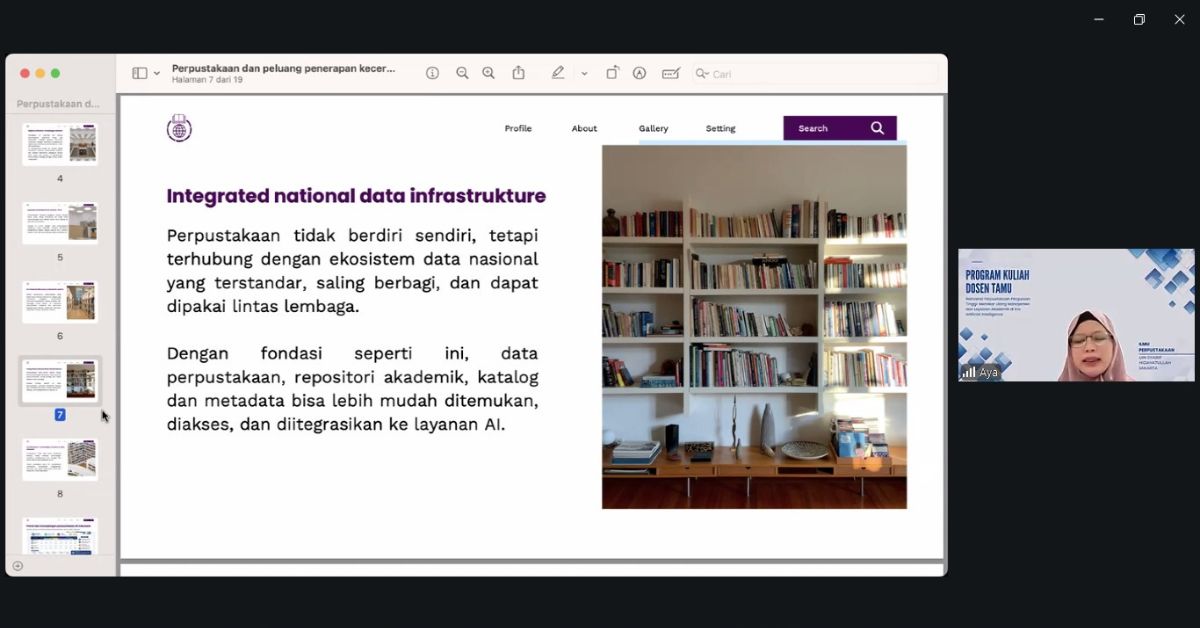
In the opening session, the Head of the Library Science Study Program at UIN Syarif Hidayatullah Jakarta delivered a warm welcome and officially opened the digital lecture. In the main session, Dr. Riya Fatmawati presented a comprehensive explanation on the transformation of traditional library paradigms into a data-driven knowledge ecosystem. She emphasized that the presence of artificial intelligence (AI) can strengthen library functions through automation, service personalization, and more intelligent semantic search for users.
Furthermore, she elaborated on the AI adoption roadmap divided into three stages based on institutional digital maturity. In Tier 1, designed for libraries with limited resources, implementation focuses on metadata automation, AI-assisted cataloging to reduce manual bibliographic input, FAQ-based chatbot services, and catalog search features capable of retrieving similar results even with non-exact keywords.
At Tier 2, with moderate digital readiness, libraries may develop semantic search systems that understand relationships between topics, user behavior-based recommendation systems, and circulation prediction models for collections. Meanwhile, Tier 3 represents highly advanced libraries that can integrate LLM-based AI assistants for complex queries, predictive analytics for collection development, and natural language processing (NLP) for automatic document classification.
Despite its vast potential, Dr. Riya Fatmawati also highlighted several challenges in AI adoption within academic libraries, including inadequate infrastructure, fragmented and inconsistent data quality, limited digital competency among librarians, and high initial implementation costs.
The participants showed high enthusiasm, reflected in an interactive discussion session. One interesting question addressed how AI can be controlled to avoid hallucinations or inaccurate responses. The speaker explained that AI accuracy largely depends on the user, especially in formulating precise prompts or instructions.
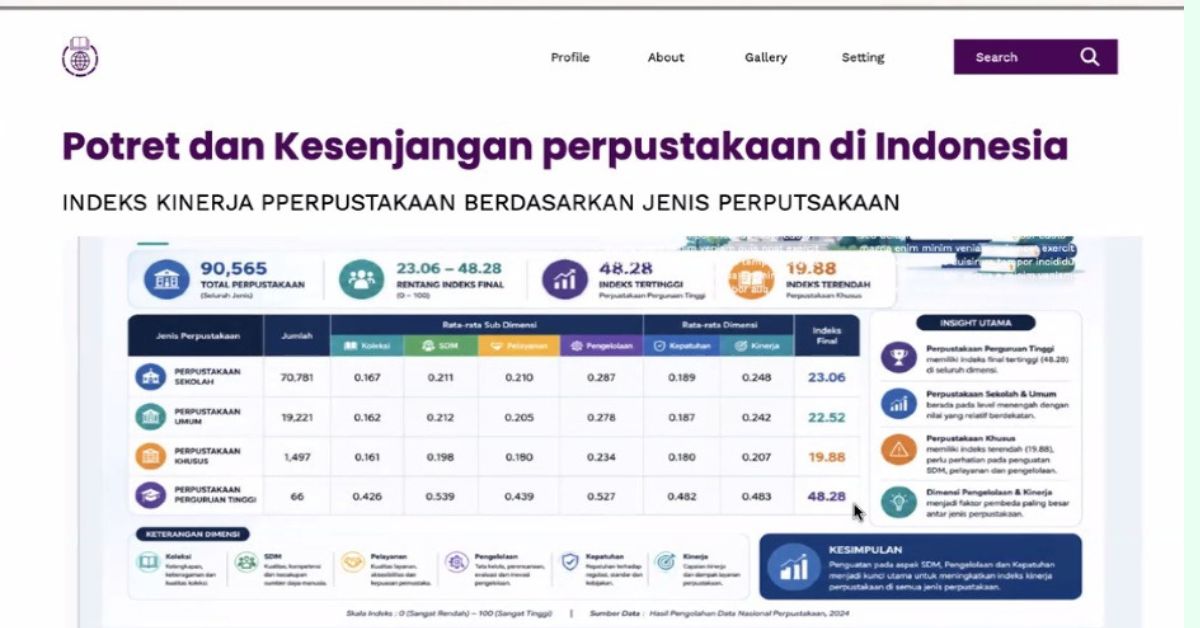
Another key point discussed was the performance gap among different types of libraries in Indonesia, where academic libraries generally perform better than school or public libraries. This highlights the importance of strengthening human resources, governance, and funding to ensure successful AI adoption.
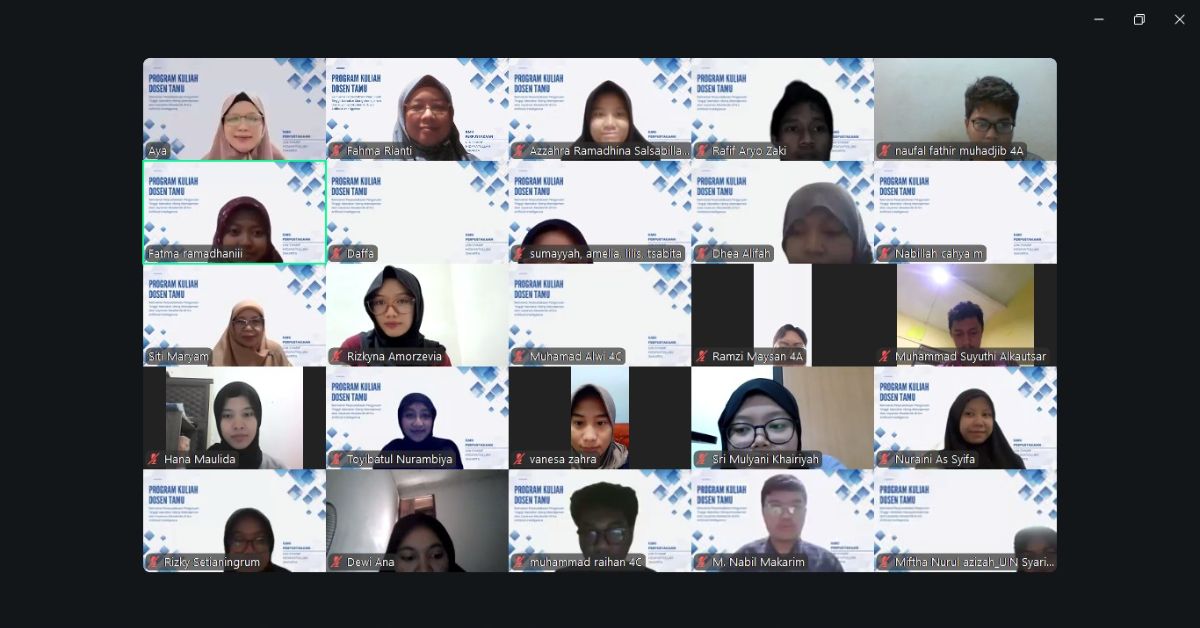
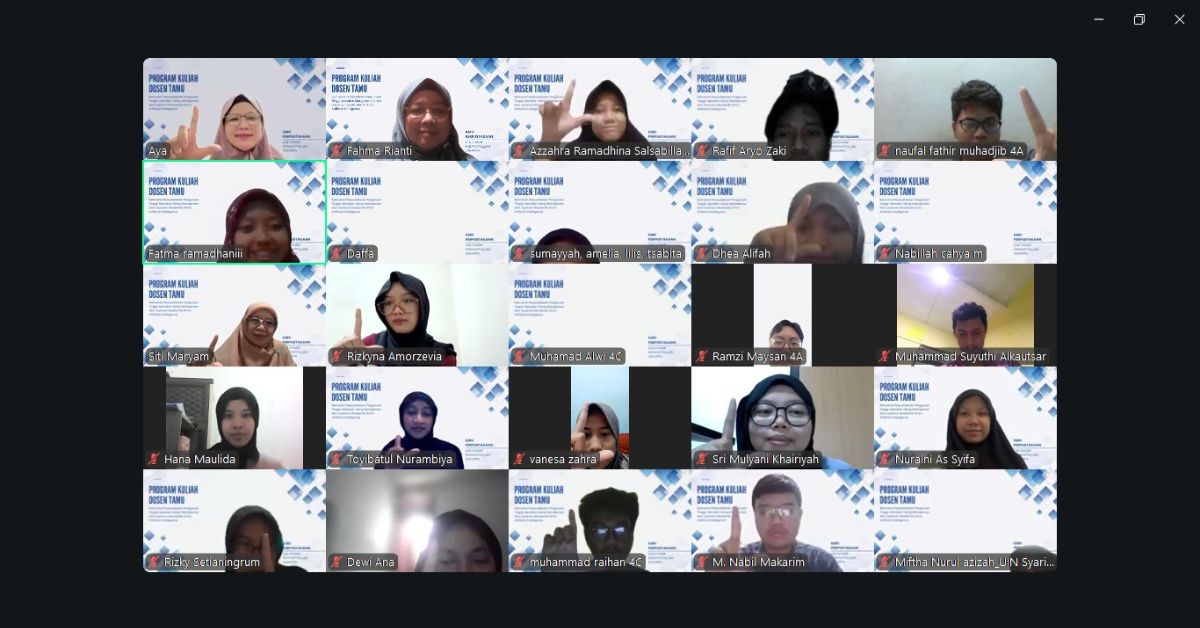
The event concluded with a symbolic certificate presentation to Dr. Riya Fatmawati as an appreciation for her contribution. The session ended with a group documentation activity via Zoom screenshots.
Writer: Nadhira Sonja Isinbayeva
Documentation: