JIPERS Mengabdi 2026 Volume 2 Focuses on School Libraries, Equipping Participants with Innovation, Ethics, and Program Planning Skills
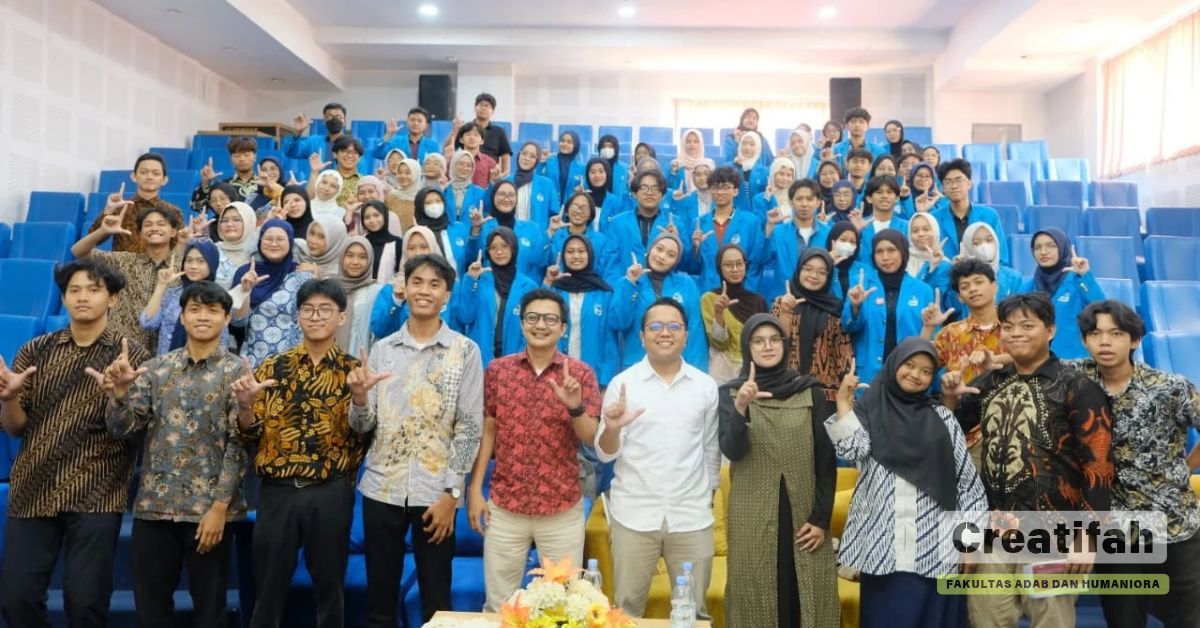
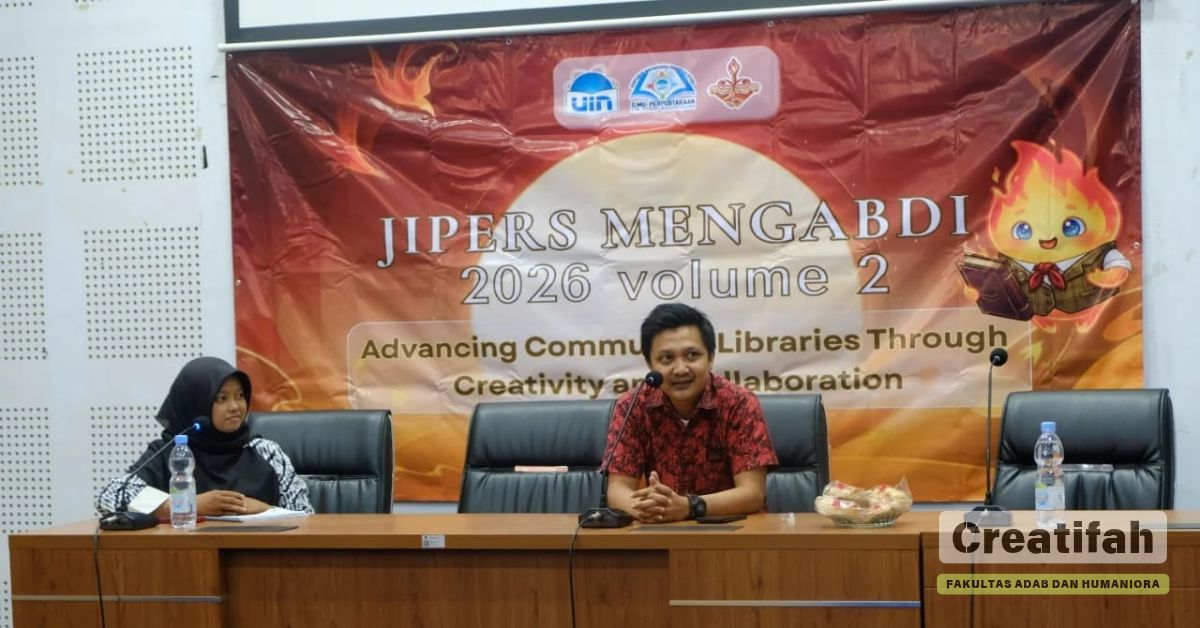
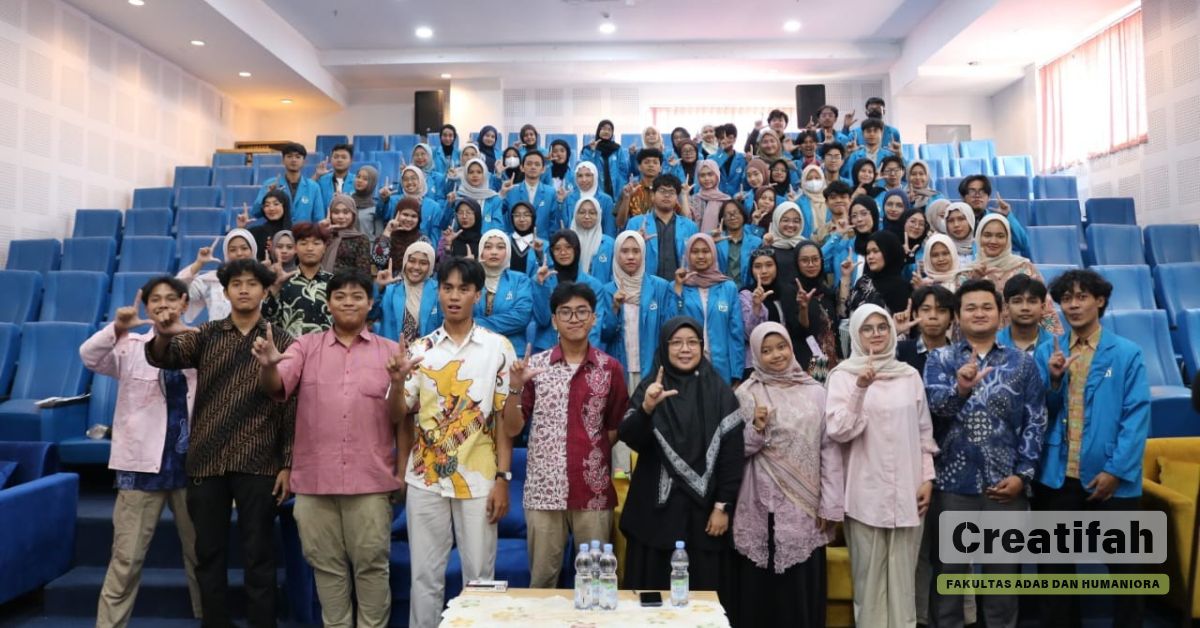
South Tangerang, FAH Online News — The Student Association of the Library Science Study Program (HMPS Ilmu Perpustakaan), Faculty of Adab and Humanities (FAH), Syarif Hidayatullah State Islamic University Jakarta, held preparatory training sessions for participants of JIPERS Mengabdi 2026 Volume 2 on Monday, July 20, 2026, and Thursday, July 23, 2026. Both sessions took place in the Prof. Dr. Bustami Abdul Ghani Theater Room on the fifth floor of FAH, UIN Syarif Hidayatullah Jakarta. The training carried the theme “Advancing Community Libraries Through Creativity and Collaboration” and aimed to equip participants with the knowledge and skills they would need before carrying out community service at their respective host institutions.
The first training session featured two speakers who are alumni of the Library Science Study Program: Febri Nurul Huda, S.IP., M.M., and Akhmad Rhaditya R., S.IP. The second session featured Fahma Rianti, M.Hum., a lecturer in the Library Science Study Program.
The first session was opened by Iskandar, Chair of the JIPERS Mengabdi 2026 Volume 2 Organizing Committee. He explained that this year's program had a more specific focus than previous editions. While earlier programs covered libraries, archives, and museums, this year's activities focused entirely on school libraries.
“We chose this focus because many school libraries still need attention and guidance to develop optimally,” Iskandar said.
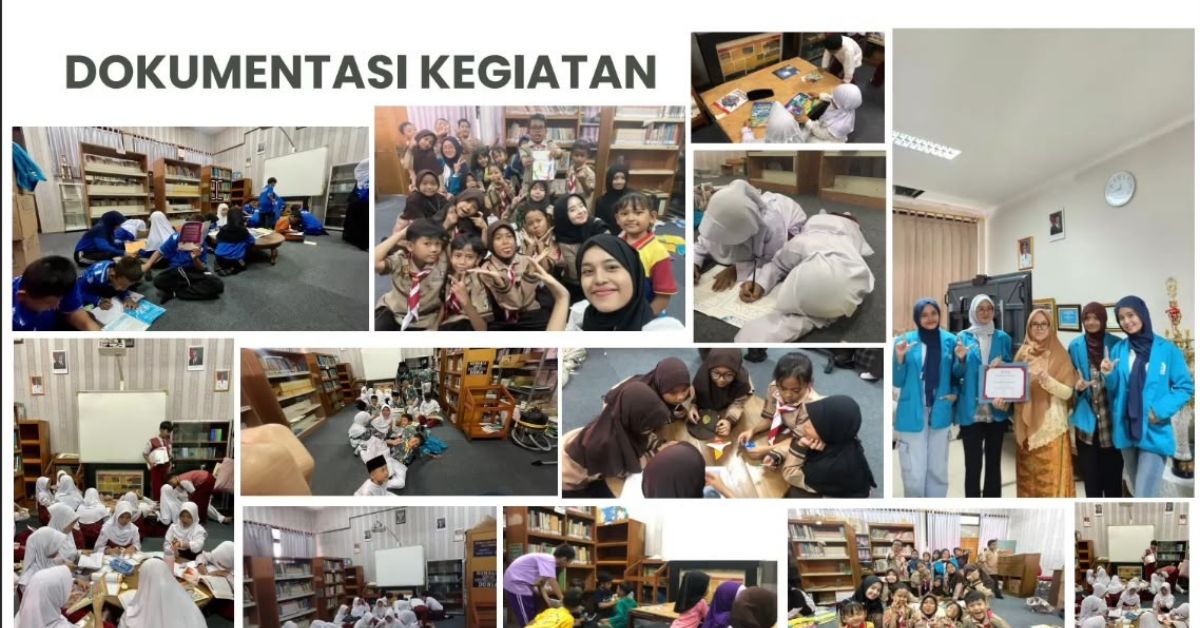
He described JIPERS Mengabdi as a platform for students to apply the knowledge they acquire in university classrooms while making tangible contributions to society. He expressed hope that the program would generate a lasting impact.
“We hope this program will not merely remain an annual community service activity, but will also deliver sustainable benefits, generate innovations, expand cooperation with various institutions, and contribute positively to the development of libraries in Indonesia,” he said.
Librarians Must Be Proactive
Febri opened the training sessions with a presentation on Library Fundamentals. He emphasized that librarians must not be passive. As civilization evolves, users' needs are shifting from physical spaces toward digital ecosystems. Librarians therefore need to be technologically literate, analyze user characteristics, and continuously innovate and create.
Febri also highlighted the importance of mental resilience. According to him, librarians should step outside their comfort zones, think critically, and avoid taking things too personally. He encouraged librarians to generate revenue for their libraries, for example, by proposing system development projects such as SLiMS to library or school management. He noted that librarians who rely on monotonous approaches risk being left behind by changing times.
He also outlined the modern competencies required of librarians. Essential soft skills include strategic communication, problem-solving, and user-centered design. Hard skills include data literacy and curation, content production, and proficiency in information and writing support tools such as Turnitin and Grammarly.
Febri further advised participants to avoid reactive responses. For example, rather than simply saying, “I don't know,” they could respond, “I'm sorry, Sir. I will study it first.”
Ethics and Good Conduct in Communication
The session continued with a presentation on the technical practices of librarians working in school libraries, delivered by Akhmad Rhaditya R. (Radith). He emphasized the importance of proper etiquette and good conduct when communicating in school environments that bring together different generations.
Communication, he explained, should be firm, wise, and polite, while being adapted to the person being addressed, whether students, teachers, or colleagues with differing perspectives. He also reminded participants that their community service should not be limited to acquiring knowledge; they should also share and apply what they had learned at university.
Radith recommended organizing activities that spark students' curiosity, such as reading competitions and storytelling sessions. Zihan, one of the participants, added that participants could distribute questionnaires at the beginning of their placement to assess students' reading habits, implement initiatives such as 15 minutes of reading every morning, and compare the results at the end of the program.
At the end of the session, the speakers emphasized that leaders must understand the characteristics of their team members, communicate actively, and avoid making every decision independently.
Library Programs Must Be Measurable
The second training session, held on Thursday, July 23, 2026, began with remarks from Ahmad Yasik Hayes, Chair of the Library Science Student Association. He encouraged participants to give their best throughout the community service program.
“You have to go all in when implementing what you have learned in class, and give everything you have to the fullest of your abilities,” Hayes said.
Rafli, Vice Chair of the JIPERS Mengabdi 2026 Volume 2 Organizing Committee, emphasized that the meaning of “community service” must be reflected in concrete action. He hoped participants would identify library challenges in advance and be prepared to design appropriate programs during their placements, using the day's training as a foundation.
Fahma then delivered a presentation on Library Program Planning. She described school libraries as the heart of learning, which should be integrated with the curriculum through collaboration among school stakeholders. Libraries serve educational, informational, recreational, and research functions.
According to Fahma, library programs should meet the SMART criteria: Specific, Measurable, Achievable, Relevant, and Time-bound. Examples include reading corners, reading challenges, and mandatory reading periods. She explained that one characteristic distinguishing professional librarians is their ability to evaluate library performance empirically.
Regarding reading interest, Fahma explained that it can be assessed through the duration and diversity of reading activities. She also advised participants who encounter disorganized library collections to prioritize processing the books before developing other programs. This process should begin with arranging the books, classifying them according to the Dewey Decimal Classification (DDC) system, and documenting the collection.
She concluded by reminding participants to carry out their service sincerely, remain humble, and position themselves as both learners and contributors.
Article by: Lu’lu’a Jannati Adn
Documentation: