
From the Strait of Malacca to Instagram: Examining the Online Ta’aruf Trend in the Historical Genealogy of Islam in the Nusantara
Author: Lutfiyatul Zahroh
Malacca in the 15th century was a highly important region that made a major contribution to the historical development of Indonesia and was a densely populated city. Imagine the bustling atmosphere of the 15th century along the Strait of Malacca, the busiest trading port in the world at that time. This city had a harbor frequently visited by merchant ships from various regions. Since the 1st century, the Strait of Malacca had functioned as a major route connecting East Asian regions such as China with South and West Asian regions such as India and Persia. Due to its strategic location, the Strait of Malacca became the main gateway for the entry and exit of traders. However, interestingly, the Strait of Malacca was not only an international trade center but also a center for the spread of Islam in the Nusantara, one of which occurred through marriage between Muslim traders and local communities.
The strategic position of Malacca as a meeting point between Arab, Persian, and Nusantara traders created a space for social interaction. Many Muslim merchants stayed temporarily or permanently in this region. These Muslim traders were generally economically well-established individuals. They married local women, including daughters of nobles or royal families. In the historiography of Islamization in Indonesia, historians such as Azyumardi Azra and Sartono Kartodirdjo agree that marriage was one of the most peaceful, effective, and long-lasting channels of Islamization. When Muslim traders and scholars stopped in port cities such as Samudera Pasai, Malacca, and Tuban, they were not only engaged in economic transactions. Many of them eventually married local noblewomen or members of local communities.
The historical records of Islamization in the Nusantara consistently place the “marriage pathway” as one of the most peaceful and effective channels in the spread of Islam. In the past, the union of two individuals from different cultural backgrounds in trading ports successfully formed strong new Muslim communities. Foreign merchants had to stay for months in port cities while waiting for monsoon wind changes to sail back home. During this waiting period, they built simple residential communities known as Pekojan (for Muslim traders), from which social interaction with local populations began. Similarly, Chinese traders were also involved. Chinese imperial law (particularly during the Ming and Qing dynasties) strictly prohibited women from leaving their homeland. As a result, Chinese trading ships arriving in the Strait of Malacca were almost entirely male. This condition forced them to seek spouses abroad to continue their lineage. They approached local families (Malay, Javanese, or Batak communities in port areas) through intermediaries or matchmakers.
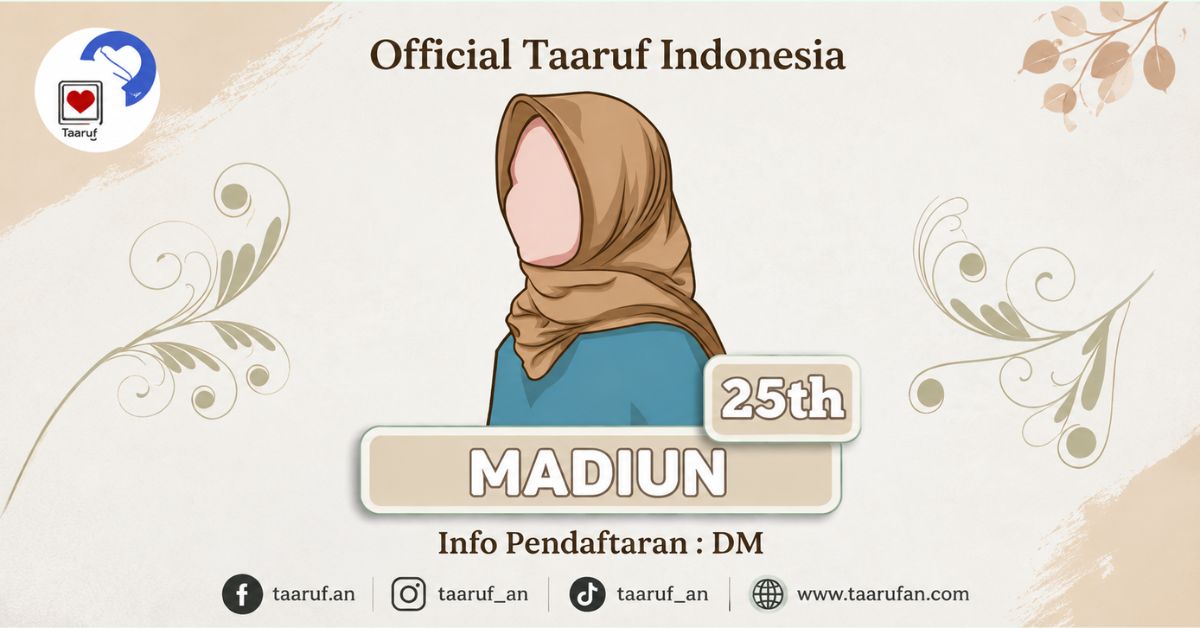
Let us move to the present, an era in which smartphones have become an extension of human life, and the “marriage market” has shifted to digital screens. Along with technological development, digital platforms have replaced physical meeting spaces. If in the past ports and trading hubs served as places where individuals from different regions met, today social media and online platforms play a similar role. Numerous Instagram ta’aruf online accounts have emerged, where hundreds and even thousands of male and female participants register by providing short biographies such as name, age, residence, and criteria for potential partners. They hope that algorithms will connect them with a partner who shares the same faith and values. If we turn back time, marriages in the Strait of Malacca between individuals from different cultural backgrounds also occurred through trade routes that united two hearts in marriage.
This phenomenon appears highly modern, even futuristic. Through the rise of Instagram ta’aruf accounts now popular among many participants, modern Muslim generations are reproducing old patterns in new formats. In the 21st century, this instinct to maintain religious identity has not disappeared; it has only changed its medium. With technological advancement, finding a partner can now be done without face-to-face meetings as in Malacca’s past. Today, it is possible simply through mobile screens to observe individuals seeking partners across different backgrounds via Instagram ta’aruf accounts.
This article shows that changes in time and technological development do not alter the fundamental human need to build relationships and form families, but rather change how these processes occur. Social interactions among traders in 15th-century Malacca did not only produce economic relations but also led to marriages. Entering the digital era of the 21st century, this pattern has not disappeared but has transformed. If previously partner selection occurred through direct interaction in trade centers such as Malacca, today the process takes place through digital platforms such as Instagram via online ta’aruf accounts. Therefore, partner-seeking through digital platforms can be seen as a form of social adaptation to changing times. Although the media have changed, the essence remains the same: creating spaces of encounter that enable human relationships.
Image sources: @taaruf_an and @taarufanofficial
References:
Azra, A. (2004). Jaringan Global dan Lokal Islam Nusantara. Mizan.
Rakhman, A. S., Handayani, Y., & Bahktiar, A. (2025). Perdagangan di Selat Malaka pada masa pendudukan VOC 1786-1800. JEJAK: Jurnal Pendidikan Sejarah & Sejarah FKIP Universitas Jambi, 5(1), 108.
Supriatna, A. (2021). Peran Pelabuhan dan Angin Muson dalam Membentuk Jaringan Perdagangan Islam di Selat Malaka. Jurnal Sejarah Maritim Nusantara, 3(2), 112-125.
Aisyah, F., & Diyanto, R. (2025). Selat Malaka, Titik Tumpu Akulturasi Budaya Empat Kawasan (Asia Selatan, Asia Timur, Asia Barat dan Asia Tenggara). Majalah Ilmiah Tabuah, 29(1), 67.