Following the Footsteps of Civilization: The Islamic History and Civilization Study Program Inspires the 2026 New Student Cohort with Moral Character, Critical Thinking, and Leadership
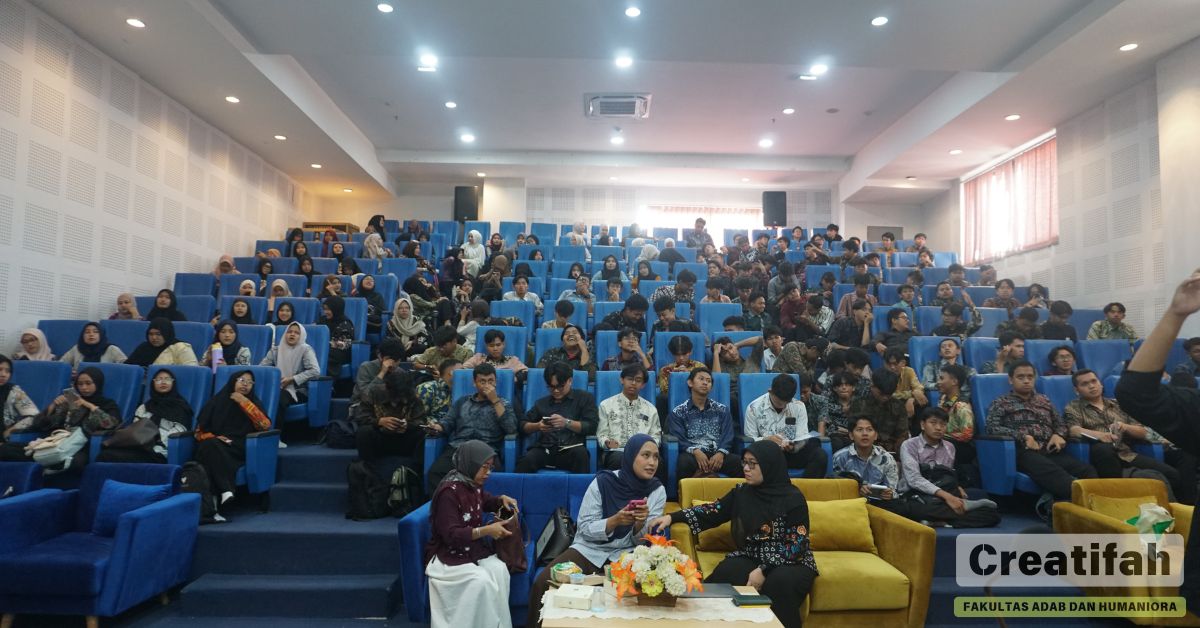
South Tangerang, FAH Online News — The Islamic History and Civilization Study Program (SPI), Faculty of Adab and Humanities, UIN Syarif Hidayatullah Jakarta, organized an upgrading program for the 2026 cohort of new students under the theme “Tracing the Footsteps of Civilization: Shaping Muslim Historians with Noble Character and Leadership.” The two-day program was held on Wednesday and Thursday, 20–21 Rabiul Awal 1448 AH, corresponding to September 2–3, 2026, at the Abdul Ghani Theater Room, 5th Floor, Faculty of Adab and Humanities Building.
The two-day upgrading program was designed as a space for academic orientation and character development for new students. Through a series of lectures and discussions, students were introduced to the field of history in a more comprehensive manner, while also gaining insights into various career opportunities and areas of service they may pursue after completing their studies.
The program began at 8:00 a.m. Western Indonesia Time (WIB) and was attended by the Vice Dean III for Student Affairs and Cooperation, Prof. Usep Abdul Matin, S.Ag., M.A., Ph.D.; the Head of the Islamic History and Civilization Study Program, Dr. Zakiya Darajat, M.A.; and the Chairperson of the SPI Student Association (HMPS), Thoriq Aziz Dawaisla, along with other HMPS administrators. The upgrading program featured several speakers, namely Dr. Faizal Arifin, M.Hum.; Nurul Azizah, M.Hum.; Dr. Hj. Tati Hartimah, M.A.; Elisa Kurnia Dewi, M.Psy.; Dr. Awalia Rahma, M.A.; Dr. Imas Emalia, M.Hum.; Alfida Marifatullah, S.Hum., M.A.; and Safurotun Ziah, S.Hum., M.A. The entire program was enthusiastically received by the 2026 cohort of new SPI students.
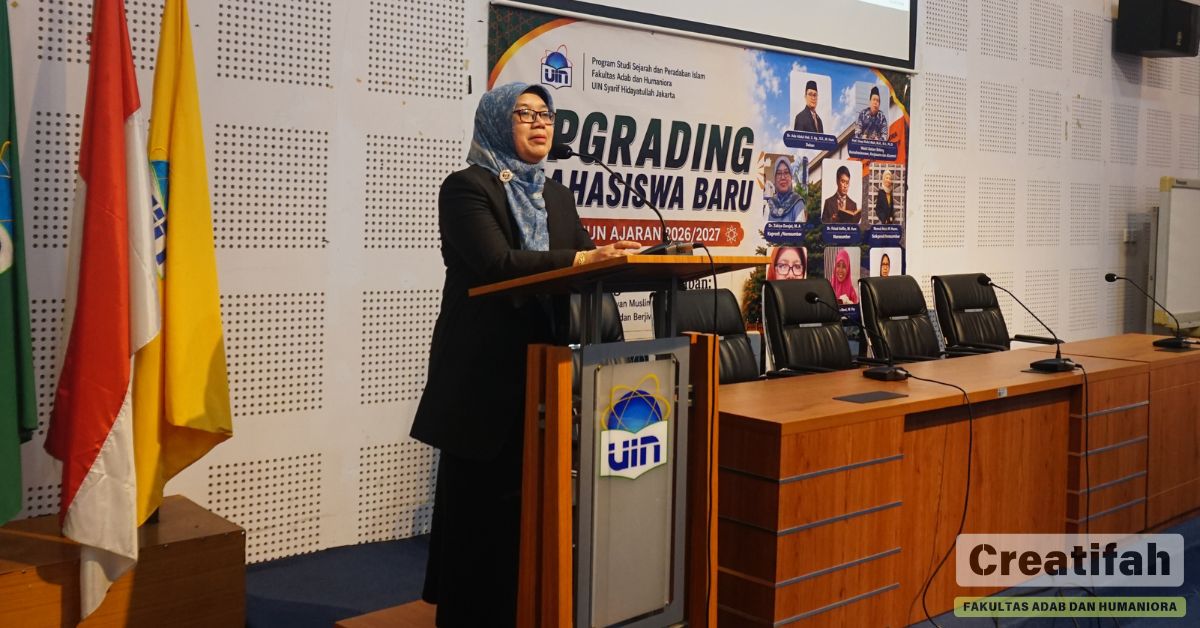
The Head of the Islamic History and Civilization Study Program, Dr. Zakiya Darajat, M.A., explained in her opening remarks that the upgrading program was part of the study program’s efforts to prepare students to take on strategic roles in the future. In addition to introducing the curriculum focus and learning methods of the SPI Study Program, the program was also aimed at developing students’ character and moral values.
“In the SPI Study Program, we do not only study the rise and fall of civilizations in the past, but also examine how history can be explored and presented through various forms of technological integration and other approaches. In addition, this program aims to prepare students to take on strategic roles in the future by equipping them with akhlakul karimah [noble character], mental resilience, and leadership. This is part of the SPI Study Program’s effort to prepare our new students,” she said.
The Head of the Study Program further emphasized that the footsteps of civilization remind us that every generation has its own role in shaping history. Civilization is not built by people who merely watch from the sidelines. It is built by individuals who possess knowledge, character, courage, perseverance, and a far-reaching vision. Therefore, the SPI Study Program organized this upgrading program as an effort to prepare future Muslim historians who are not only intelligent and critical, but also possess strong character and are capable of adapting to a changing world.
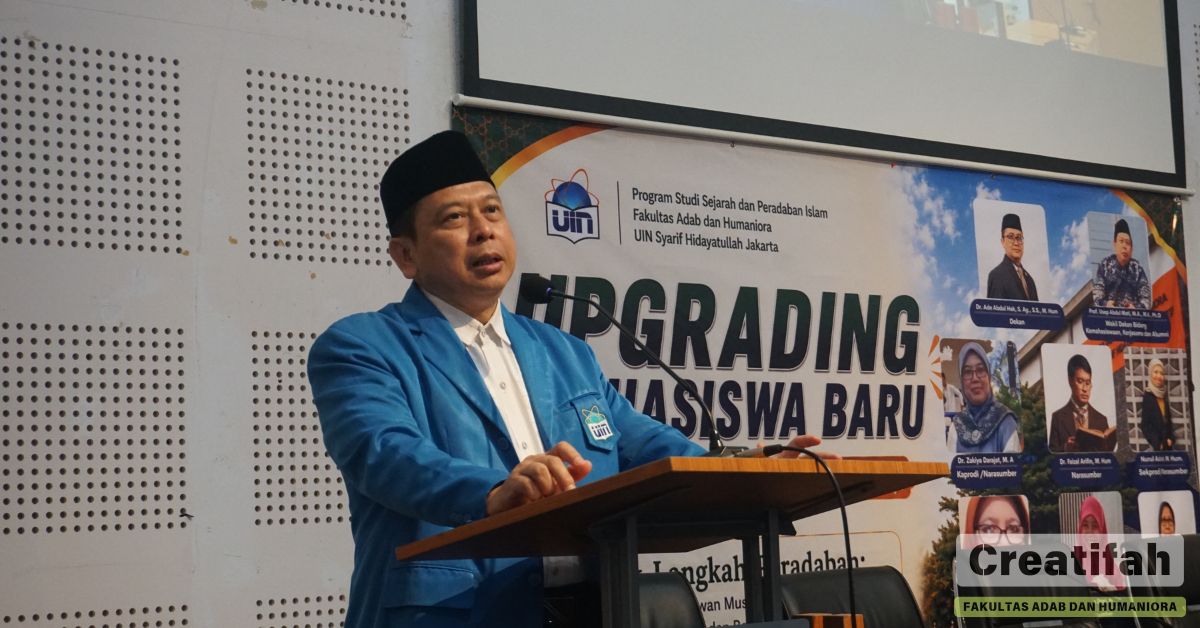
Meanwhile, Vice Dean III for Student Affairs and Cooperation, Prof. Usep Abdul Matin, S.Ag., M.A., Ph.D., reminded new students not to keep the various problems they may encounter during their studies to themselves. He encouraged students to communicate first with the Head or Secretary of the Study Program whenever they experience academic difficulties or other challenges.
Prof. Usep also encouraged students to develop their potential according to their respective interests and talents by participating in various Student Activity Units (UKM) and student organizations available at UIN Syarif Hidayatullah Jakarta. He also emphasized the importance of strengthening students’ religious skills, particularly their ability to read the Qur’an.
“If you encounter problems during your studies, please communicate them first to the Head or Secretary of the Study Program. Do not keep them to yourself, so that the problems can be properly addressed. In addition, those of you who have skills and interests in particular fields are encouraged to join the UKMs or student organizations available at UIN Jakarta. Since many SPI students come from Islamic senior high schools (madrasah aliyah), I also encourage you to further improve your Qur’anic reading skills,” he said.
Proud to Be a Muslim Historian
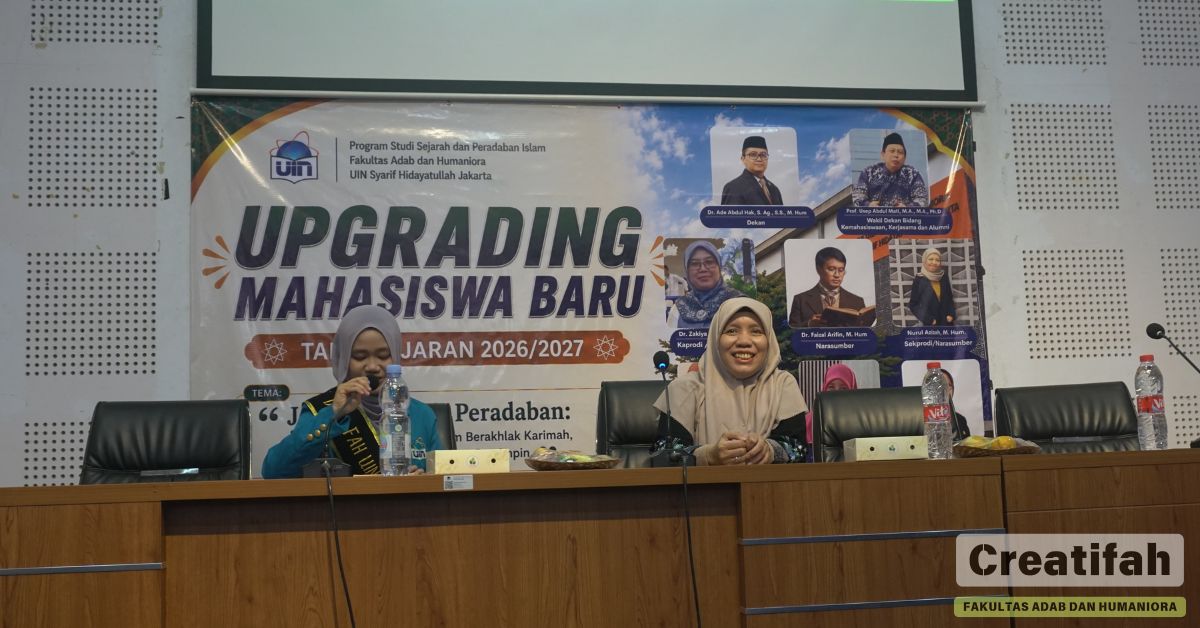
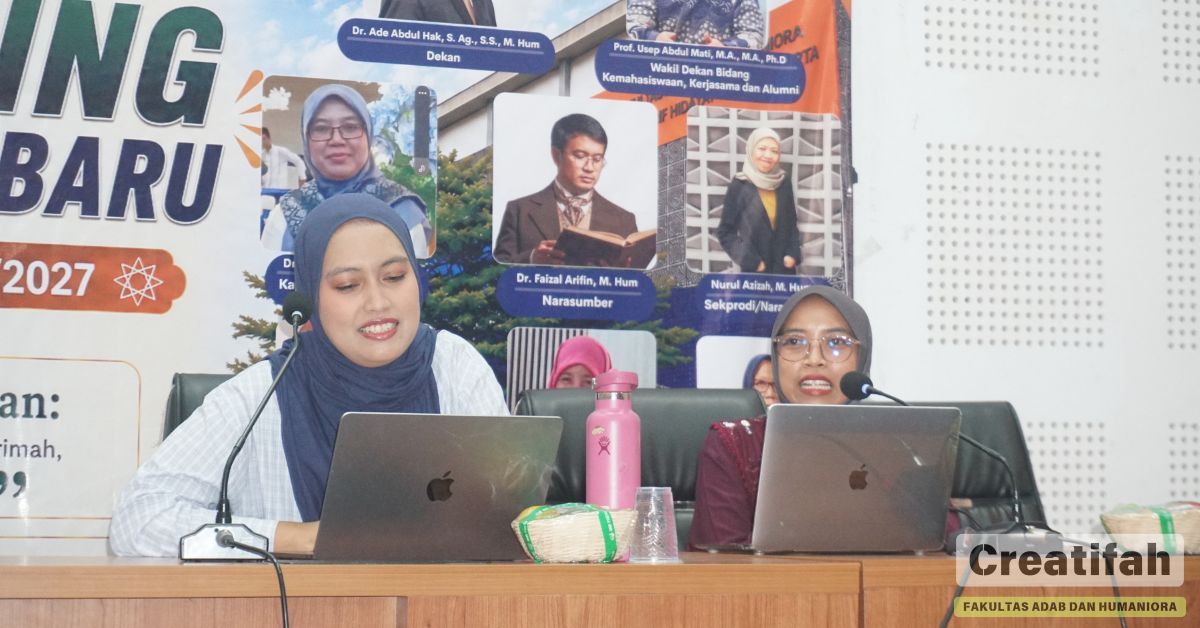
The program continued with a session entitled “Proud to Be a Muslim Historian,” delivered by Dr. Faizal Arifin, M.Hum., and Nurul Azizah, M.Hum., with Muhammad Anizi Riziq serving as moderator.
During the session, Nurul Azizah, M.Hum., Secretary of the SPI Study Program, explained the objectives and direction that students need to understand as they begin exploring the field of history. She encouraged the new students to reflect on why they had chosen the Islamic History and Civilization Study Program as part of their academic journey.
Nurul explained that history continues to play an important role in human and social life. History helps individuals understand their identity and collective memories, helps families trace their genealogy, enables nations to preserve the memory of their heroes’ struggles, and helps societies understand the factors that contribute to the rise and decline of a nation.
“Why does society still need history? First, individuals need history because without it, people can easily lose their memories. Second, families need it to understand their genealogy. Third, nations need it so that the struggles of their heroes are not forgotten. Fourth, the rise and decline of a nation cannot be understood without considering the influence of history. Thus, history provides society with memory,” she added.
In this context, the SPI Study Program seeks to build students’ academic identity so that they can develop into Muslim historians who will eventually contribute to society. This identity is built not only through mastery of knowledge, but also through integrity, good manners, critical thinking, reflection, and a sense of responsibility.
“What makes you a Muslim historian? It includes knowledge, integrity, good manners, critical thinking, reflection, and responsibility. So, what are the responsibilities of historians? They include preserving memory, examining narratives, interpreting change, and educating society,” she added.
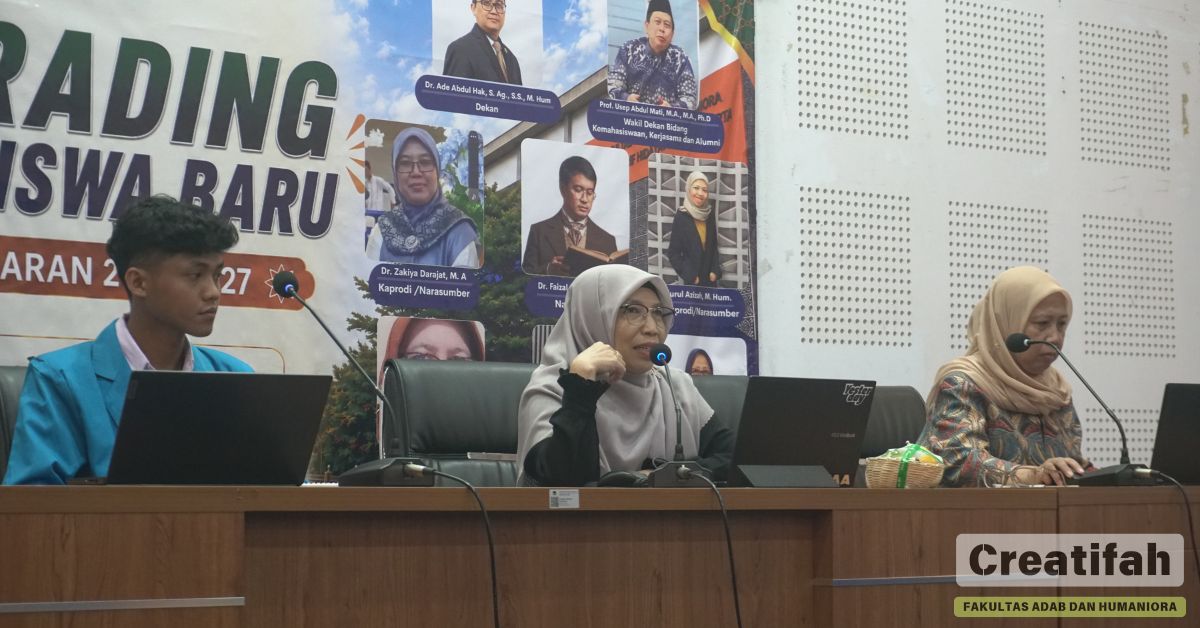
In line with this presentation, Dr. Faizal Arifin, M.Hum., a lecturer in the Islamic History and Civilization Study Program, provided a broader understanding of the development of Islamic historiography through the ideas of several influential scholars and their works.
“In the field of Islamic history, there are four thinkers who shaped the way Muslims wrote and understood their own history. First, al-Tabari, or Muhammad ibn Jarir al-Tabari (823–923 CE). From him, we learn that history requires perseverance in collecting and organizing sources, as reflected in his important work Tarikh al-Rusul wa al-Muluk. Second, al-Mas‘udi, or Abu al-Hasan al-Mas‘udi (d. 956 CE). From him, we learn that history is not merely about kings and wars, as demonstrated in his work Muruj al-Dhahab. Third, Ibn Miskawayh (923–1030 CE). From him, we learn to understand history as experience that can be studied through his work Tajarib al-Umam. Fourth, Ibn Khaldun (1332–1406 CE). From him, we learn how history should be studied by examining the causes and patterns behind events through his renowned work Al-Muqaddimah,” he explained.
Dr. Faizal also explained that the presence of Islam in Indonesia cannot be separated from various networks that developed throughout the Muslim world, including trade, students, scholars, education, and intellectual networks. One of the important figures in understanding the intellectual connections between Islam in the Indonesian archipelago and the broader Muslim world is Prof. Dr. Azyumardi Azra, M.A. (1955–2022), particularly through his studies of the social and intellectual history of Islam in Indonesia.
Furthermore, he emphasized that historians continue to play an important role amid the rapid development of digital technology. Historians have a strategic position in helping society verify information, particularly in confronting the spread of hoaxes, unsourced information, and inaccurate historical narratives.
“The arrival of Islam in Indonesia cannot be separated from networks involving trade, students, scholars, education, and intellectual exchange. One prominent figure is Prof. Dr. Azyumardi Azra, M.A. (1955–2022). Through his work, we can understand the intellectual networks connecting Islam in the Indonesian archipelago with the broader Muslim world, particularly through his studies of the social and intellectual history of Islam in Indonesia. So, why are historians still important in today’s digital era? They help counter hoaxes, correct information without reliable sources, and expose false historical narratives,” he added.
Developing the Character and Moral Values of Muslim Students
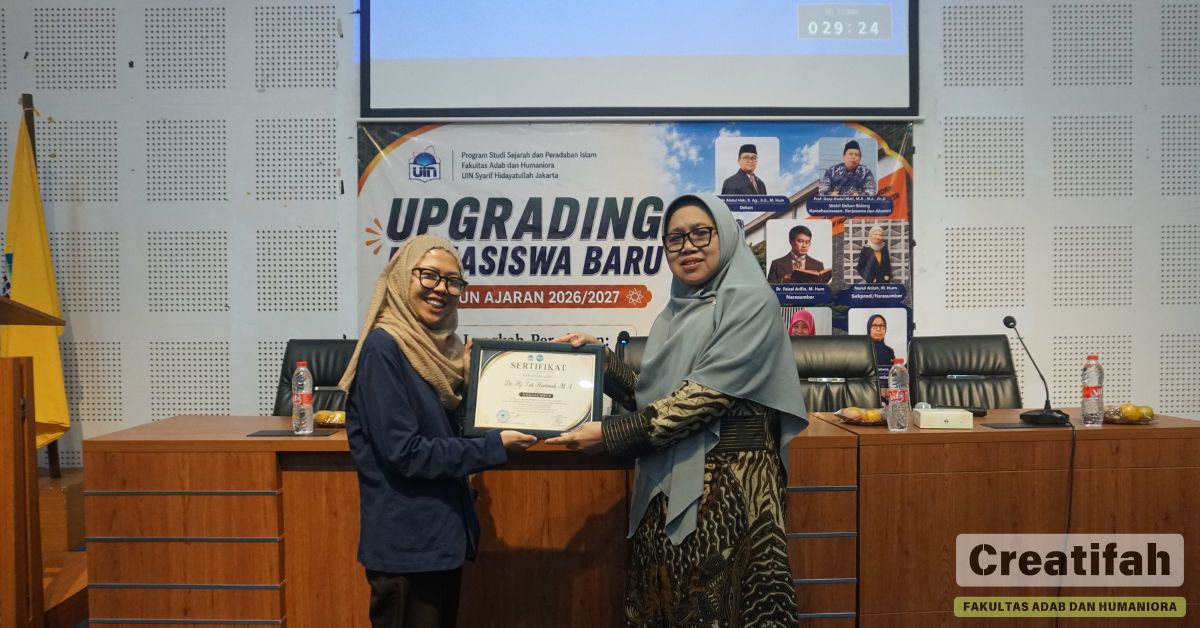
The program continued with a presentation entitled “Developing the Character and Moral Values of Muslim Students,” delivered by Dr. Hj. Tati Hartimah, M.A., a lecturer in the Islamic History and Civilization Study Program, with Alyya Azzahra as moderator.
In her presentation, Dr. Hj. Tati Hartimah explained that Muslim students need to understand the concept of akhlak as an essential component of personality and character development. Linguistically, akhlak is an Arabic term referring to a person’s moral character or conduct that is deeply rooted within the individual and manifested through their actions. In the Islamic context, akhlak is associated with morality and ethics derived from religious teachings and encompasses human relationships with God as well as with fellow human beings.
To enrich students’ understanding, Dr. Tati also introduced the concepts of akhlak proposed by several prominent Islamic thinkers.
“We also need to understand the concept of akhlak as explained by several important Islamic thinkers, such as Ibn Miskawayh. According to him, akhlak is a state of the soul that motivates a person to perform actions without requiring conscious thought and deliberation. Abdul Karim Zaidan defines akhlak as values and qualities embedded in the soul through which a person can assess an action as either good or bad. Ahmad Mubarok views akhlak as the inner depth of a person that becomes the source of outward actions, in which those actions arise naturally without considering personal gain or loss,” she added.
Maintaining Mental Well-Being in a Busy World
The first day of the upgrading program concluded with a psychology session entitled “Maintaining Mental Well-Being in a Busy World,” delivered by Elisa Kurnia Dewi, M.Psy., a lecturer in the Social Welfare Study Program at UIN Jakarta, with Alyaa Jahra Iskandar serving as moderator.
Elisa Kurnia Dewi, M.Psy., emphasized the importance of increasing students’ awareness of various mental and emotional challenges that may arise in everyday life. According to her, student life involves numerous challenges, ranging from time-management difficulties, anxiety and depression, financial insecurity, to difficulties adjusting to the campus environment.
“Many mental and emotional challenges can occur in student life, such as time-management difficulties, experienced by 73% of students; anxiety and depression, with 68% of students having experienced anxiety or depressive disorders; financial insecurity, with 60% of students feeling highly anxious about their family’s financial situation; and difficulties adjusting, with 42% of students finding it difficult to adjust or fit into the campus environment. These conditions can influence how individuals respond to events that disrupt their balance or exceed their capacity to cope,” she explained.
She also explained that mental health does not simply mean being free from psychological problems, but also relates to an individual’s overall well-being in living their life.
“A person can be considered mentally healthy when they are in a state of well-being, which includes: first, being aware of their own abilities; second, managing stress in everyday life; third, engaging in productive activities or work; and fourth, contributing to their community,” she added.
At the end of the first day, the atmosphere became more relaxed through a musical performance by several participants, who performed the song Bulan dan Kesatria by the Indonesian band Superman Is Dead. The first day’s activities were then concluded with the departure of the new students.
Fundamentals of Academic Writing and Critical Thinking
Entering the second day, the upgrading program began with a session entitled “Academic Writing and Critical Thinking,” featuring Dr. Awalia Rahma, M.A., and Dr. Imas Emalia, M.Hum., with Nabil Fakhry as moderator.
During the session, Dr. Imas Emalia, M.Hum., a lecturer in the Islamic History and Civilization Study Program, explained several characteristics that distinguish members of the academic community from people outside the academic environment. According to her, academic culture plays an important role in shaping individuals who are capable of contributing to the development of knowledge and a civilized society.
“There are three characteristics that distinguish members of the academic community from those outside it. First, cultivating academic behavior as an effort to build a civilized society. Second, making reading and writing traditions the foundation of civilization. Third, cultivating a culture of discussion,” she explained.
She then explained that learning in higher education requires students to become more independent and active in constructing their own knowledge.
“What does learning within a campus culture look like? First, learning at university is no longer centered on teachers and lecturers, but instead involves the 6Cs: Critical Thinking, Creativity, Collaboration, Communication, Character, and Citizenship. Second, critical thinking is grounded in literacy, which trains students to develop objective arguments in discussions, communication, and collaboration. Third, the 6Cs shape students into professional members of the academic community. Directly and indirectly, they contribute to the development of knowledge and the nation,” she said.
According to her, reading and writing are important instruments for building civilization as well as developing knowledge. Therefore, students need to make literacy activities part of their academic habits.
“A member of the academic community must understand that one of the characteristics of civilization through knowledge is the ability to write and maintain objectivity toward data and facts. For members of the academic community, writing is a responsibility because it is part of the knowledge cycle in the development of science and technology. Reading and writing are long-term intellectual investments,” she added.
In line with this presentation, Dr. Awalia Rahma, M.A., a lecturer in the Islamic History and Civilization Study Program, added that critical thinking is a fundamental competence that history students must possess. This ability is necessary so that students can distinguish between authentic and inauthentic sources and avoid simply accepting every piece of information they encounter.
“Why do history students need critical thinking? First, to move beyond memorized facts. Second, to confront subjectivity and bias. Third, to manage various interpretations and respond to the challenges of our time, including hoaxes. How can we think critically? First, read all sources critically. Second, analyze the methodology and evidence. Third, focus on change and continuity. Fourth, develop self-awareness,” she explained.
Exploring the New World of University Students
The second day continued with a session entitled “Exploring the New World of University Students,” delivered by Dr. Zakiya Darajat, M.A., with Khilda Aqila Sepiani as moderator.
During the session, Dr. Zakiya provided new students with insights, strategies, and practical guidance for becoming high-achieving students both in the classroom and through active participation in extracurricular activities. She explained that entering higher education is a transition process that requires changes in learning habits, ways of thinking, and personal responsibility.
“As new university students, we must first understand this new world, including the transition from being school students to university students, the shift from guided learning to independent learning, and personal responsibility for our time, assignments, and life choices,” she explained.
According to her, students need to become adaptive and progressive individuals by developing various skills relevant to academic and professional life.
“Next, become adaptive and progressive students. There are several soft skills that university students need to master: critical and analytical thinking, effective communication, particularly in academic forums, time management—many activities and limited time—teamwork, and leadership. So, how can you adapt to campus life? Participate in intra- and extracurricular organizations, build healthy relationships with lecturers and students from other study programs, make use of campus facilities, and manage stress and mental well-being,” she said.
In addition to equipping students with adaptive skills, Dr. Zakiya encouraged the new students to begin planning their academic journey by creating a four-year roadmap for their studies.
“Therefore, you should already begin setting goals and planning your steps for the next four years of your studies. In the first year, adapt to the campus environment; in the second year, begin exploring the campus world; in the third year, start producing your own work; and in the fourth year, contribute to the university,” she added.
Historia Pride Talks: Breaking Boundaries and Pursuing Education Abroad
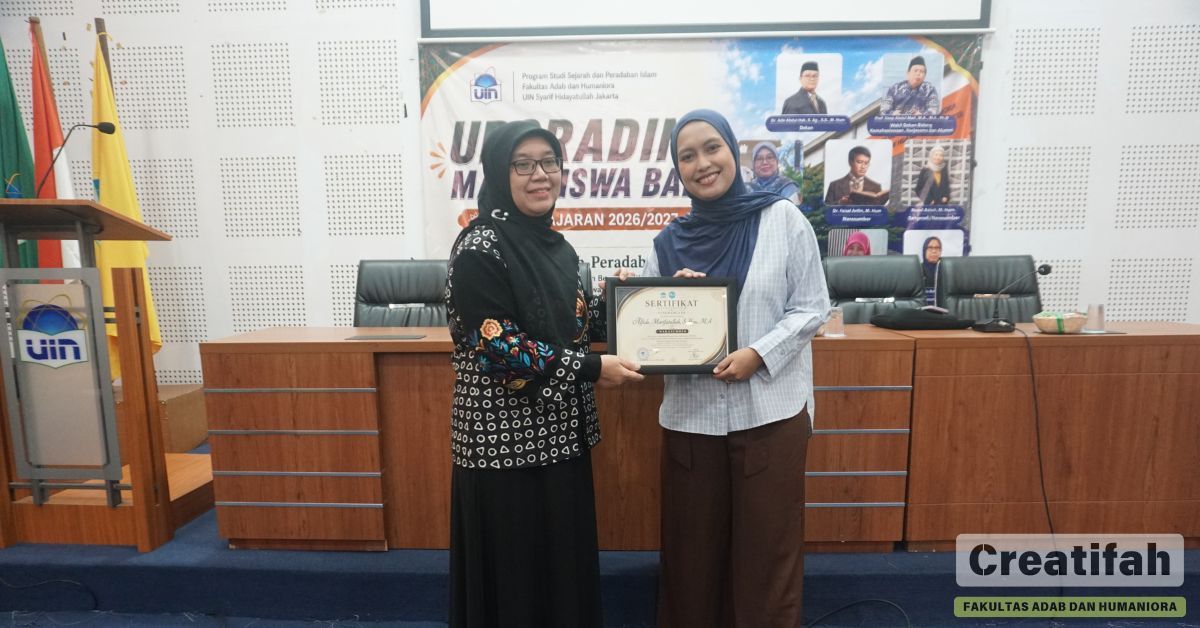
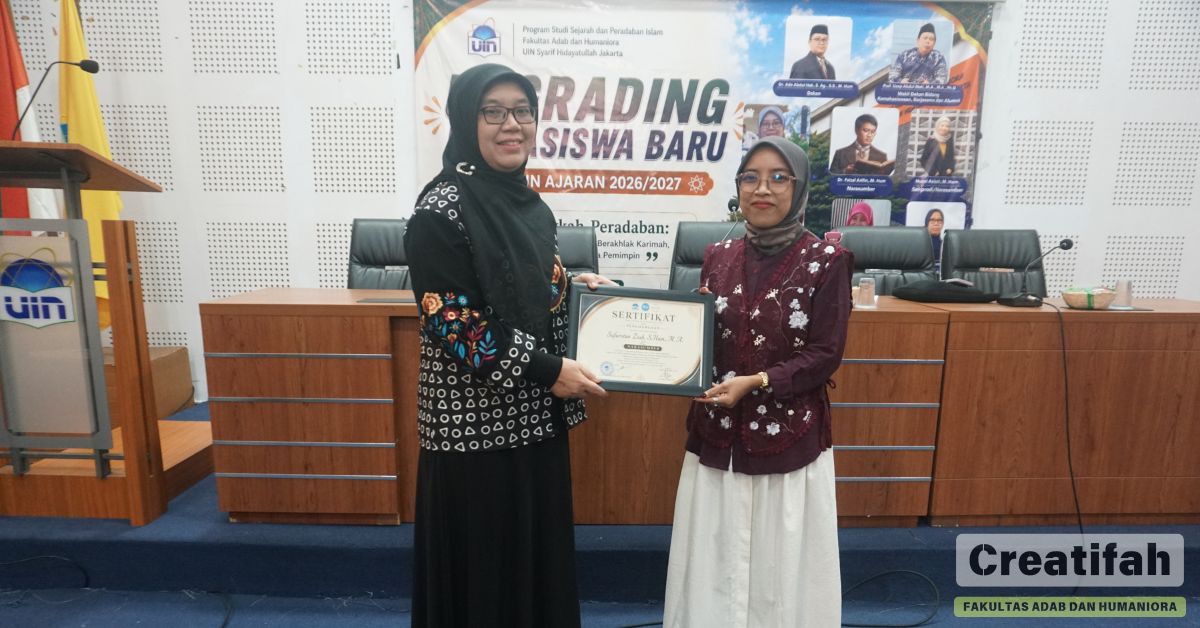
As the closing session of the two-day upgrading program, new students participated in “Historia Pride Talks,” featuring Alfida Marifatullah, S.Hum., M.A., and Safurotun Ziah, S.Hum., M.A., with Ahmad Daffa Rasyidi serving as moderator.
During this inspiring session, both speakers shared their academic experiences and their journeys in obtaining LPDP scholarships to pursue master’s degrees in the United Kingdom (UK). Their stories served as both reflection and motivation for the new students, demonstrating that academic journeys can open opportunities for pursuing education at the international level.
Alfida Marifatullah shared her personal experience of obtaining an LPDP scholarship. She revealed that she had never imagined that she would be able to pursue a master’s degree in England. The journey was not always smooth, as she experienced several unsuccessful attempts before finally receiving the scholarship in 2024.
“I had never imagined that I would be able to complete a master’s degree in England. Before I successfully obtained the LPDP scholarship in 2024, I had failed several times. But fate had other plans. On my third attempt, I finally succeeded and was able to pursue my studies in England,” she said.
She also explained that her success in obtaining the scholarship was inseparable from the preparations she had made since she was a university student. Organizational experience, volunteer activities, seminars, and developing English-language skills were important parts of the process.
“There were many things I had to prepare while I was still at university. I participated in many volunteer activities, both on and off campus. I also joined organizations and attended seminars. These experiences became important assets in helping me obtain the LPDP scholarship. Most importantly, I consistently practiced my English so that I could become fluent and use it effectively,” she said.
Echoing Alfida’s remarks, Safurotun Ziah, S.Hum., M.A., emphasized the importance of SPI students beginning to practice and learn English while they are still at university, so that they will have the necessary preparation if they wish to pursue further studies abroad.
“We need to start learning and improving our English while we are still at university because it is one of the essential requirements for pursuing a master’s degree abroad,” she added.
The session was also complemented by documentation of the two speakers’ experiences during their studies in the United Kingdom. Through the experiences they shared, the new students were encouraged to see that academic opportunities can emerge through a long process requiring courage, consistency, experience, and personal preparation.
Reflection: Rethinking the Journey of Becoming a University Student
Before the entire upgrading program for the 2026 cohort of new SPI students came to an end, the participants took part in a reflection session as part of the evaluation and contemplation process following their experiences throughout the program.
During the session, students were given a series of reflective questions encouraging them to look back on their experiences during the upgrading program. They were invited to share how beneficial the program had been, how their perceptions of university life had changed after participating in the sessions, and how they understood the meaning of being a successful university student and the qualities needed to achieve success.
These reflective questions provided students with an opportunity not only to recall the material presented during the program, but also to connect it with their own circumstances and journeys as new university students. The reflection was expected to help students understand that success in higher education is determined not only by academic achievement, but also by the ability to adapt, build relationships, develop personal potential, maintain mental well-being, demonstrate integrity, take meaningful roles, and contribute to the surrounding environment.
The reflection session was conducted interactively. Students were given the opportunity to share their perspectives, impressions, and personal interpretations of the entire two-day program. Through this session, they were once again encouraged to reaffirm their goals and commitment to their academic journey in the Islamic History and Civilization Study Program.
Official Closing and Appreciation for the Organizing Committee
Following the reflection session, the upgrading program for the 2026 cohort of new SPI students was officially closed by the Head of the Islamic History and Civilization Study Program, Dr. Zakiya Darajat, M.A.
On the occasion, Dr. Zakiya first expressed her appreciation and gratitude to the Islamic History and Civilization Student Association (HMPS SPI) and the entire organizing committee for their contributions to preparing and conducting the upgrading program. The appreciation was extended to all parties whose cooperation and contributions helped the SPI Study Program successfully carry out the entire series of activities.
Student involvement through HMPS and the organizing committee was regarded as an important part of organizational learning, as well as a form of collaboration between the study program and its students in creating an active and constructive academic environment.
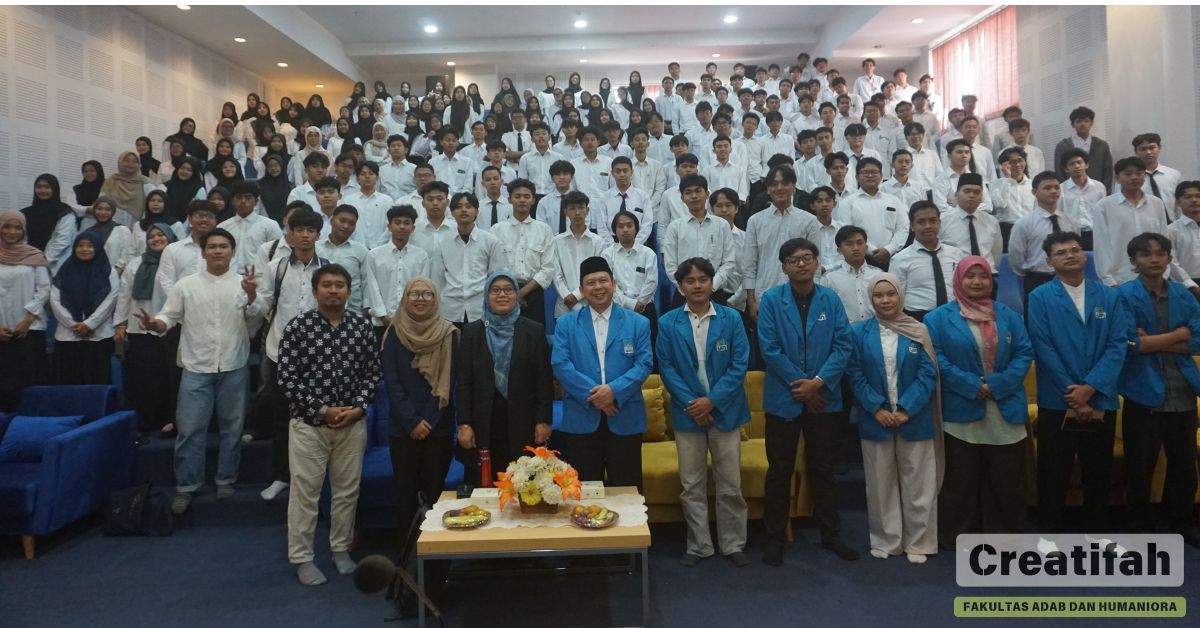
The official closing marked the end of the entire upgrading program for the 2026 cohort of new SPI students. The event was then followed by a prayer and a group photograph of the new students with the Head of the Islamic History and Civilization Study Program.
With the conclusion of the program, new students are expected not to regard the two-day upgrading experience as an isolated event, but rather to carry the values they have gained into their academic journey. These include developing pride in becoming future Muslim historians, cultivating akhlakul karimah and noble character, strengthening critical-thinking skills and academic culture, maintaining mental well-being, and planning their academic and professional journeys in a purposeful manner.
The SPI 2026 upgrading program thus serves as an important first step for new students to become familiar with the academic environment while developing their identity as members of the Islamic History and Civilization community—a journey to understand the past, interpret the changes of the times, and prepare themselves to play a meaningful role in shaping the future.
Written by: Ahmad Daffa Rasyidi / Dr. Zakiya Darajat, M.A.
Documentasi: