FAH UIN Jakarta Presents Two International Experts to Review Madani Islamic Practices Malaysia–Sudan
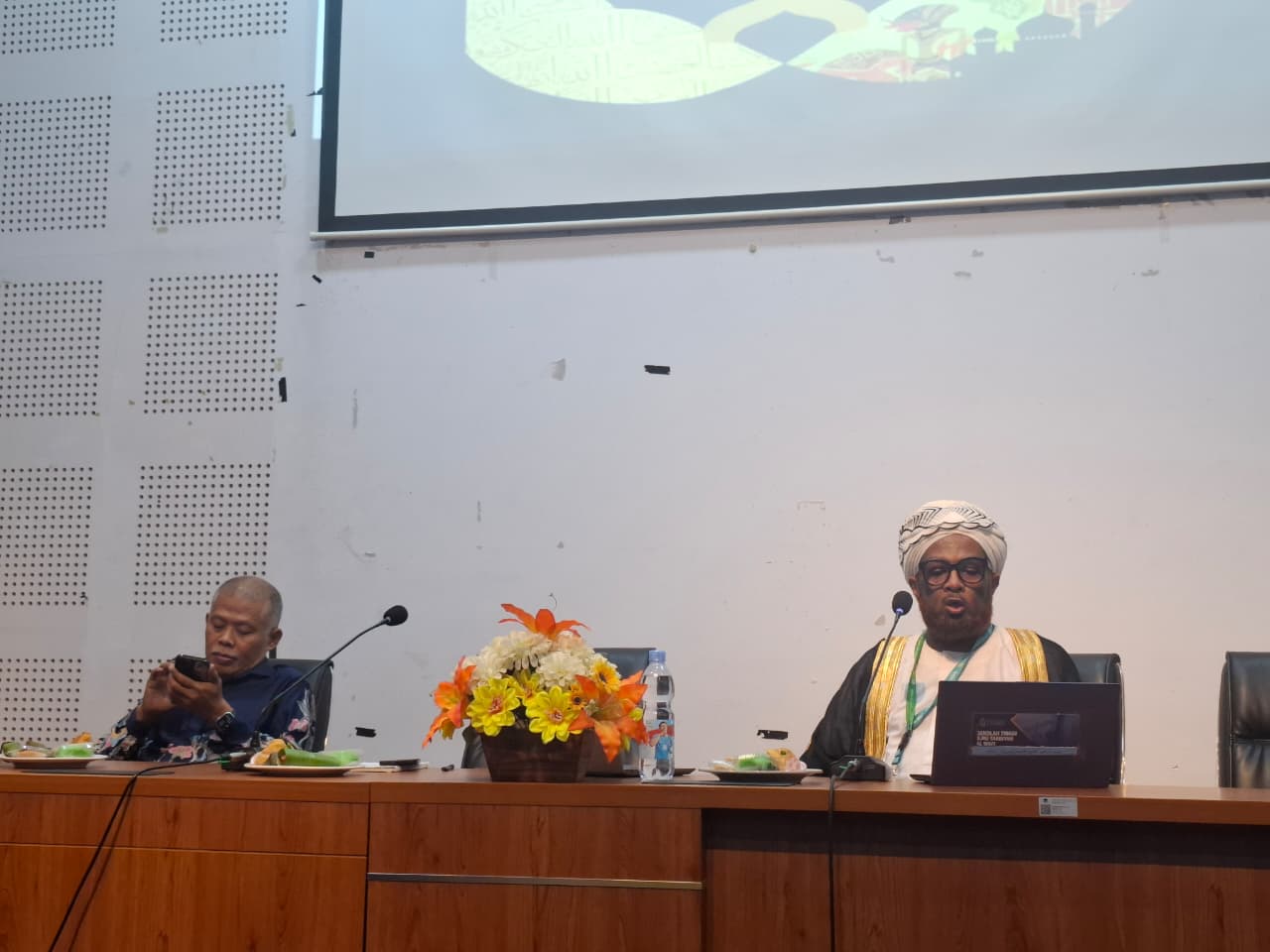
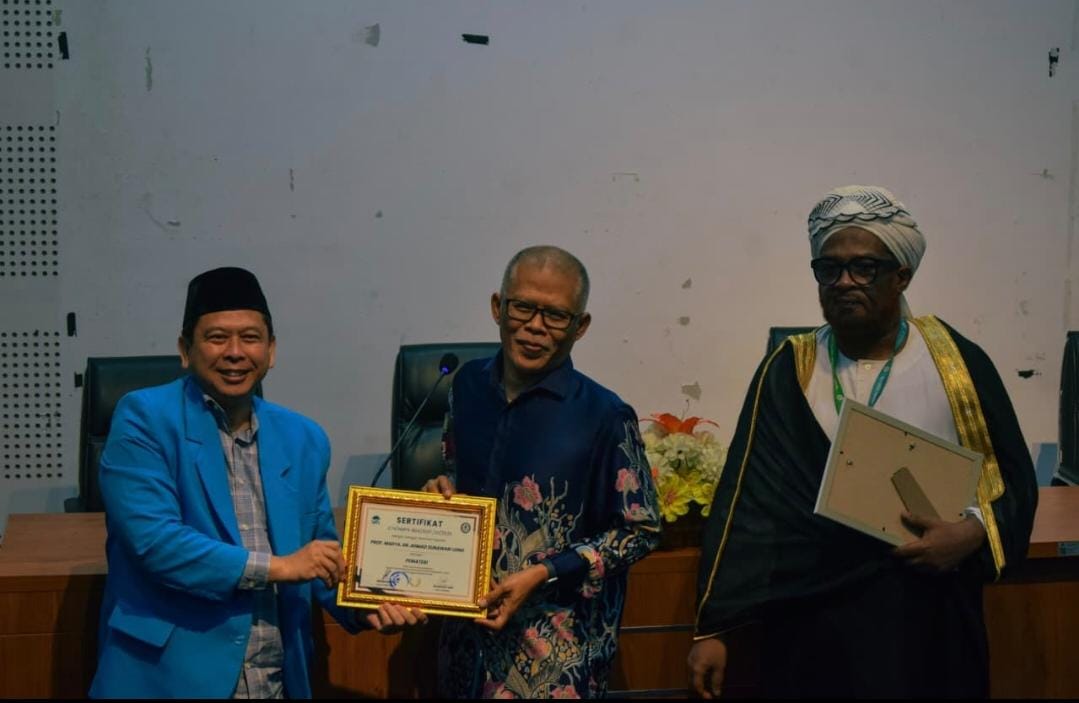
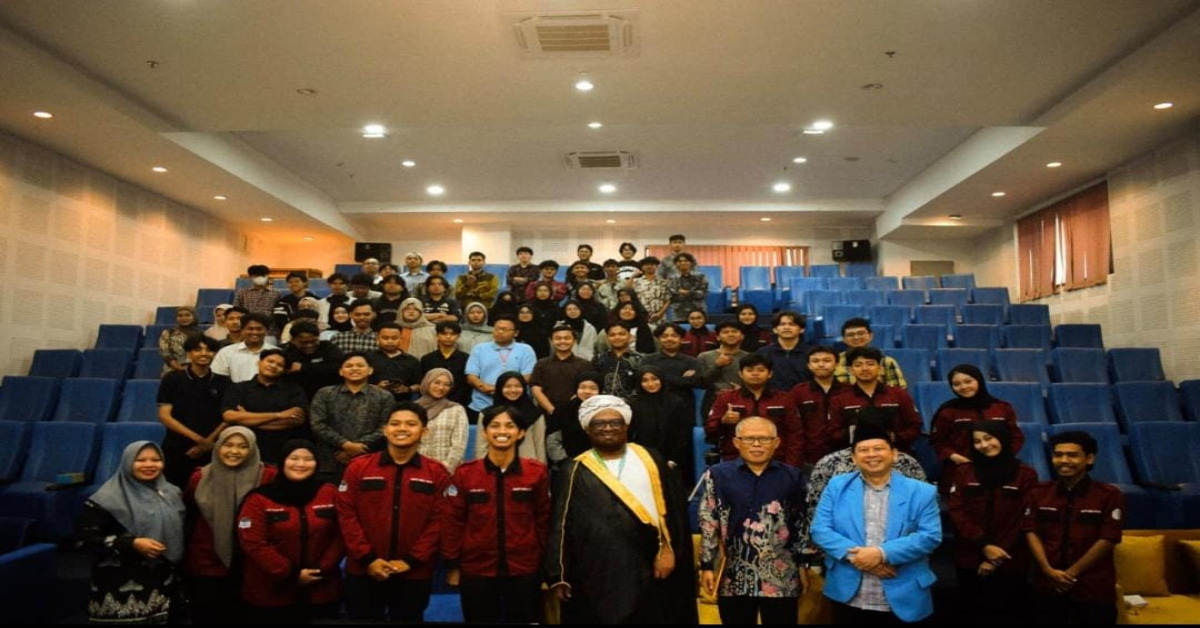
South Tangerang, FAH Online News — Faculty of Adab and Humanities (FAH) UIN Syarif Hidayatullah Jakarta has again strengthened the academic atmosphere through holding an Islamic Seminar by presenting two international sources from Malaysia Prof. Dr. Ahmad Sunawari Long, Professor at Universiti Kebangsaan Malaysia (UKM) and second resource person from Sudan Dr. Thalal Ahmad Al-'Awdh Al-Hasan. Prof. Sunawari long discusses “Civil Islamic Practices in Malaysia: Challenges and Opportunities in Contemporary Context”, while Dr. Thalal discusses “Arabic is influential in the way Indonesians understand Islam and culture”, on 12/04/2025 at the 5th floor theater. This activity was initiated by the Arabic Language and Literature Study Program Student Association (HMPS BSA) attended by students from the study program as an effort to broaden understanding of the characteristics of Islam in Malaysia and Sudan and enrich religious perspectives in an Indonesian context.
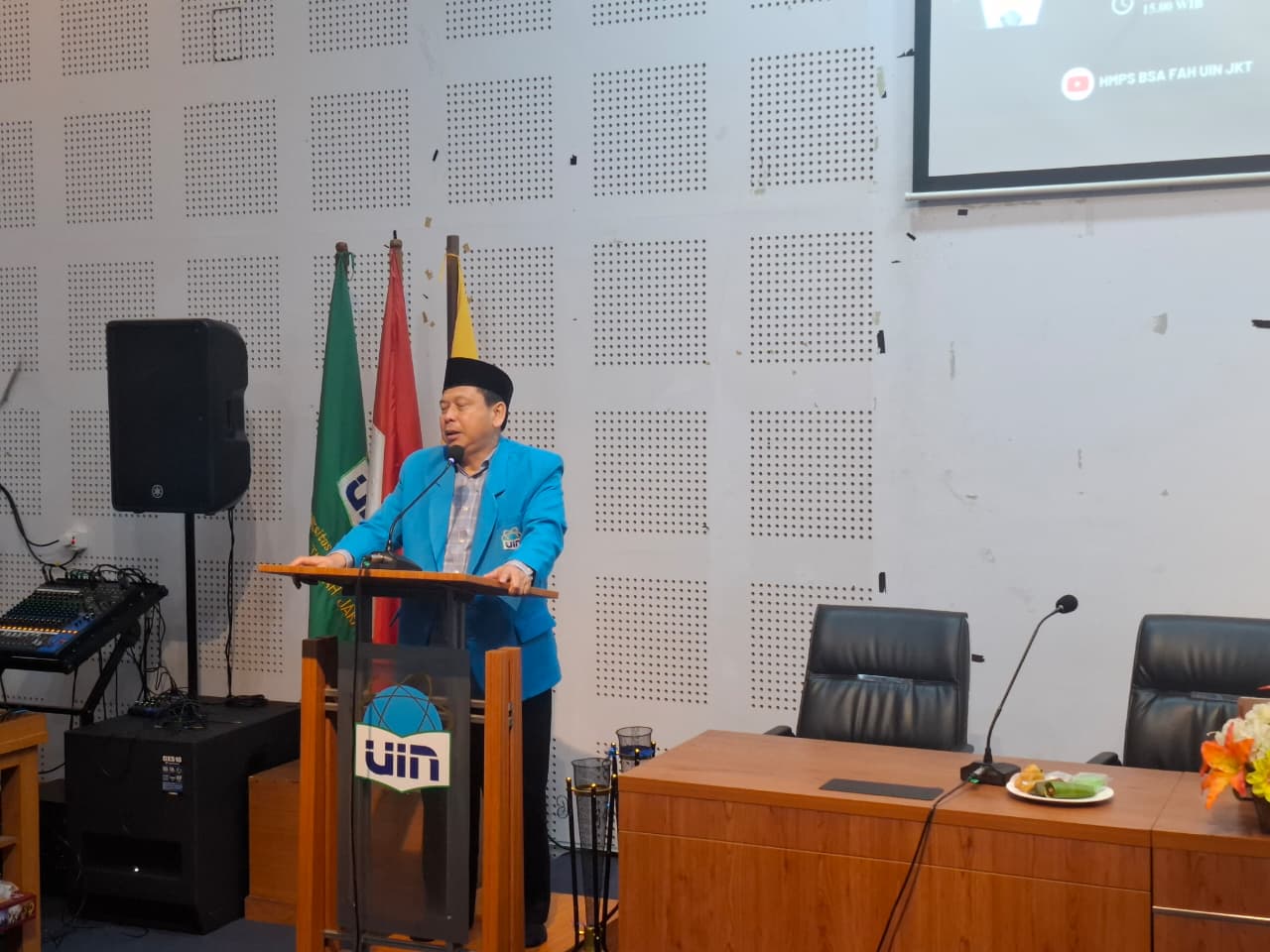
In his speech, Deputy Dean III of FAH UIN Jakarta, Prof. Usep Abdul Matin, MA, MA, Ph.D said that this seminar was part of the faculty's commitment to broadening students' global Islamic horizons, as well as opening up spaces for academic dialogue across countries.
<TAG1> Indonesia and Malaysia share similar Islamic history and culture. However, our religious socio-political reality is structurally different. Today we learn how Malaysia built Civil Islam within its political and social framework, while enriching students' understanding of the diversity of Islamic implementation in the Muslim world,” said Prof. Usep.
He hopes that discussion and research cooperation with SMEs can continue to be strengthened to produce scientific contributions that have an impact on the development of Islamic studies in Indonesia and Southeast Asia.
On this occasion, Prof. Sunawari Long in his presentation explained the characteristics of Islam in Malaysia which has a centralized religious management approach through official state institutions.
“In Malaysia there is no Ministry of Religion like in Indonesia. Islamic religious affairs are handled by JAKIM, (Jabatan Progress Islam Malaysia), as the official government institution that oversees religious broadcasting, administration and policy,” he explained.
Prof. Sunawari emphasized that although Muslims in Malaysia do not form an absolute majority in population composition due to their coexistence with Confucian, Buddhist and Hindu communities, in contemporary political dynamics, strategic positions are held by many Muslim figures. This, he argued, was one of the factors that strengthened national religious policy while preserving the identity of Madani Islam in Malaysia.
He also highlighted the important characteristics of worship governance in Malaysia which tend to be uniform and centralized. “We don't know the NU or Muhammadiyah version of Ramadan like in Indonesia. The initial determination of the Hijri month is carried out through an official government decision, so that people fast and celebrate holidays simultaneously and under control,” he said.
Meanwhile, in his presentation, Dr. Thalal also explains the great influence of Arabic on Indonesian culture. He said that Arabic not only played a role in the development of Muslims in the world, but also made a significant contribution to the formation of vocabulary in Indonesian. “Many terms in Indonesian come from Arabic, such as general and specific. This shows the historical and cultural closeness between the two,” he said. Dr. Thalal also expressed his feeling of at home while in Indonesia. “When I just arrived at the airport, I immediately felt comfortable because I was greeted by the chanting of the call to prayer. "It's like I'm at home," he added.
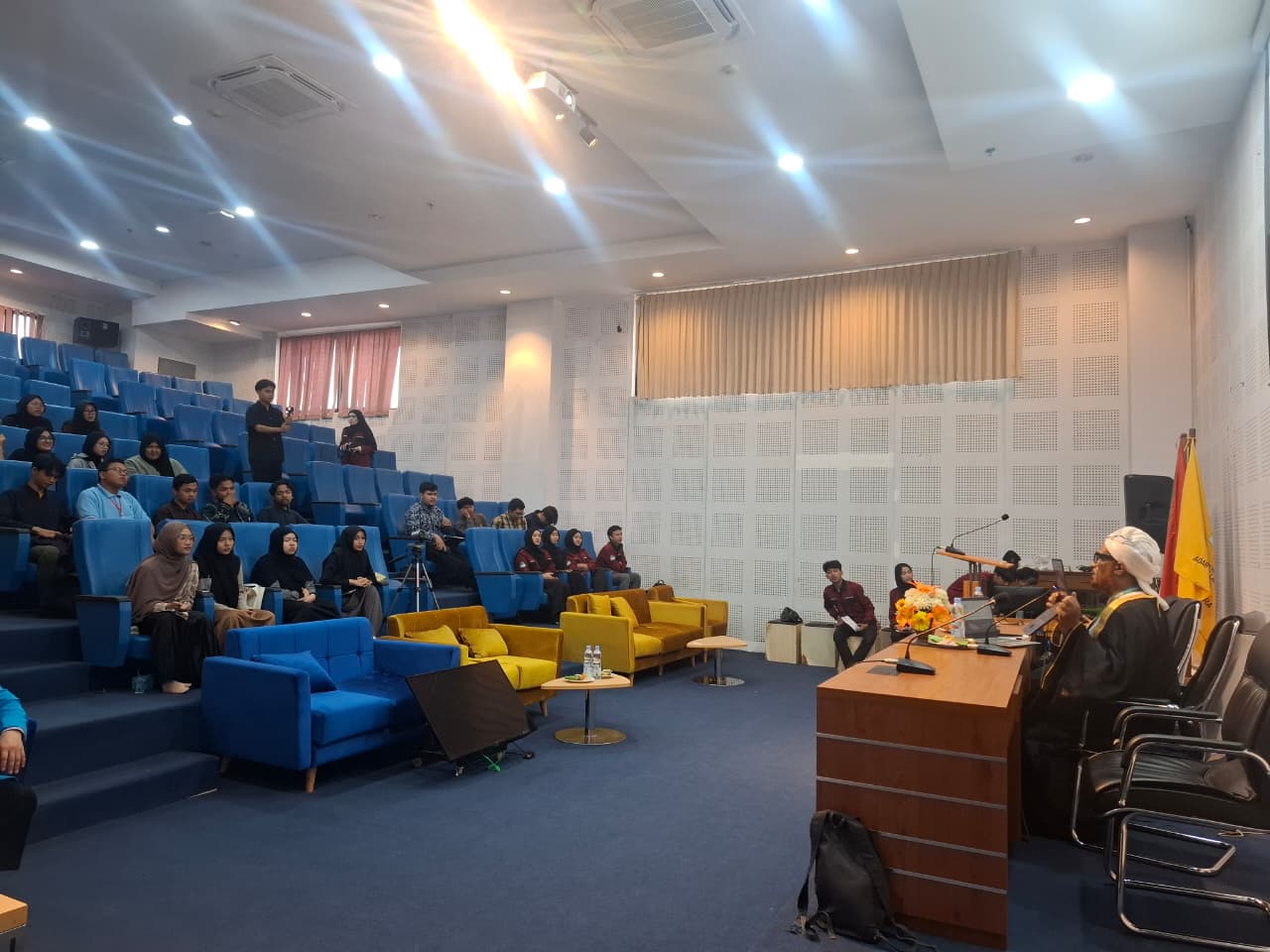
Interactive dialogue between the two resource persons and the participants further enriched students' understanding of the dynamics of contemporary Islam in Southeast Asia. The discussion was active, where participants could explore more deeply the differences, similarities and challenges facing Muslim communities in Malaysia and Indonesia.
The event closed with a question and answer session which was warm and enthusiastic. The participants responded positively and expressed the hope that similar activities could continue to be held, especially in the context of Southeast Asian Islamic studies whose relevance is increasingly important in the era of globalization.
Overall, the seminar provided a constructive exchange of views on how Islam develops in a pluralistic society through a moderate approach and structured policies, as exemplified by Malaysia. This activity also strengthens FAH's commitment to opening students' global horizons and encouraging productive cross-border academic dialogue. (SN)
Documentation: