FAH UIN Jakarta Holds a Scientific Publication Workshop to Promote High-Quality, Reputable Scholarly Publications through the Use of AI in Research
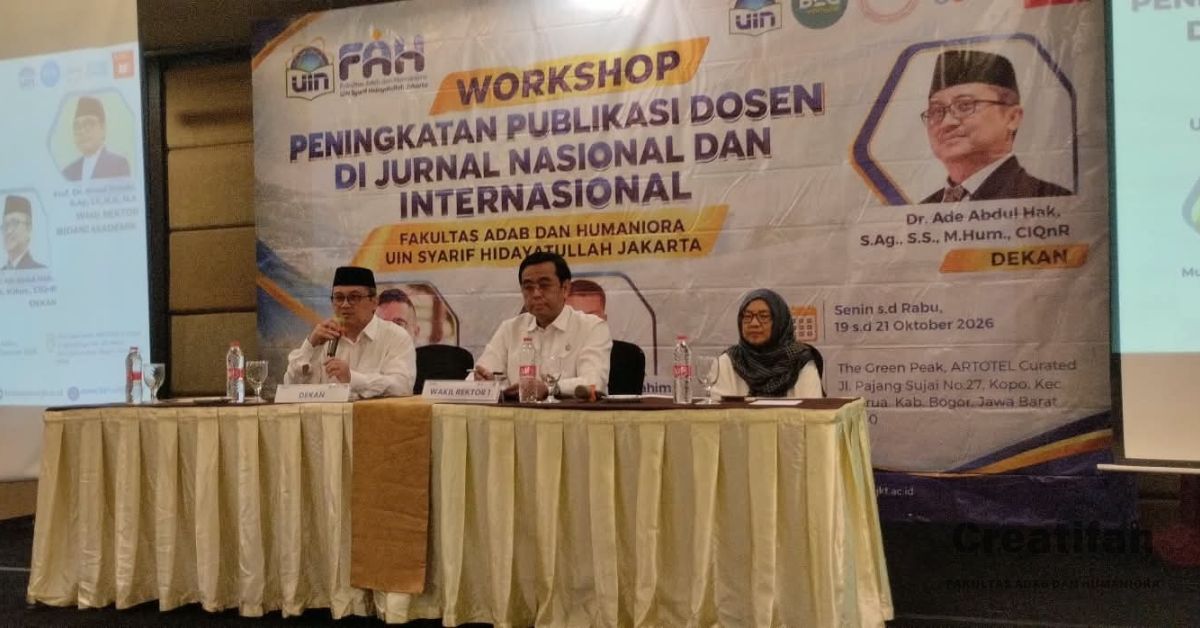
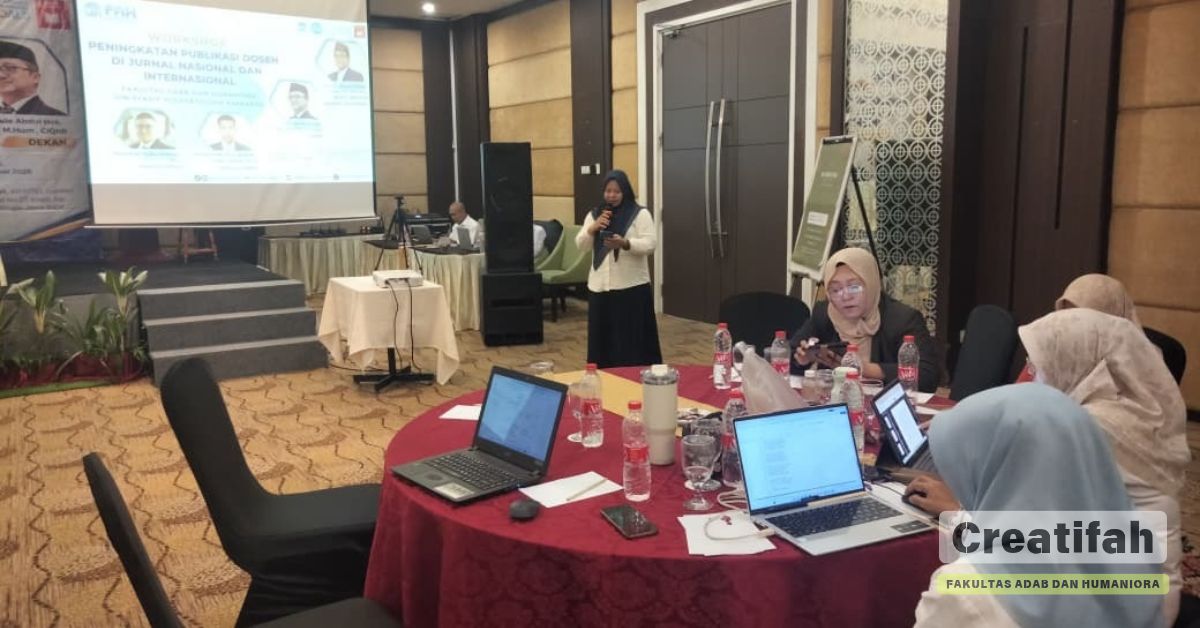
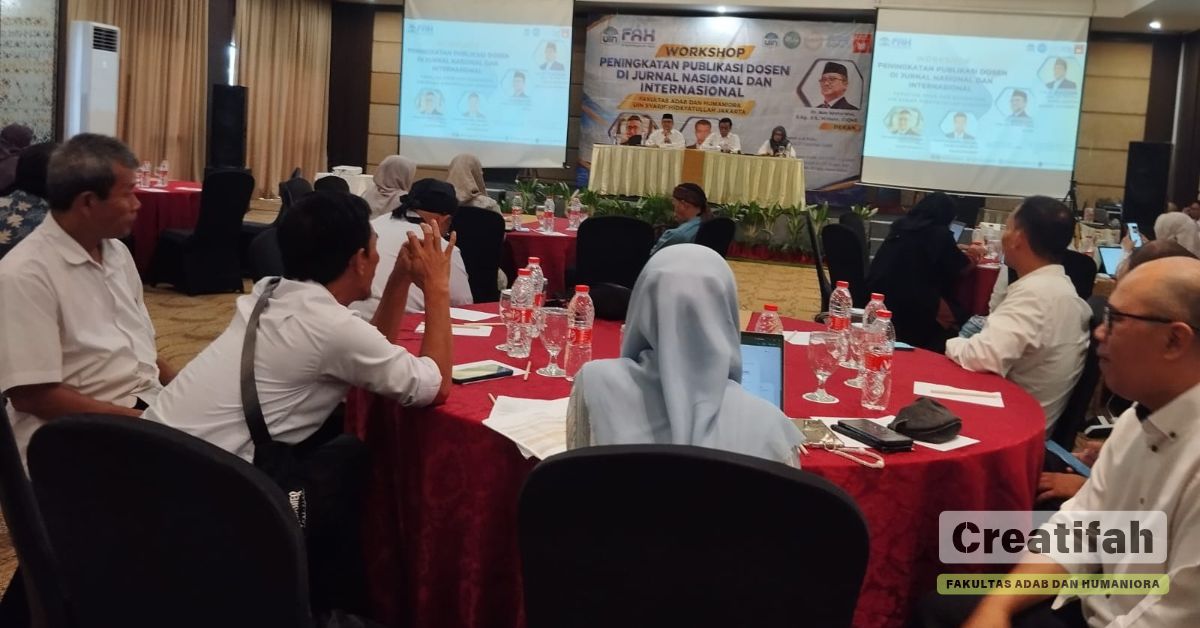
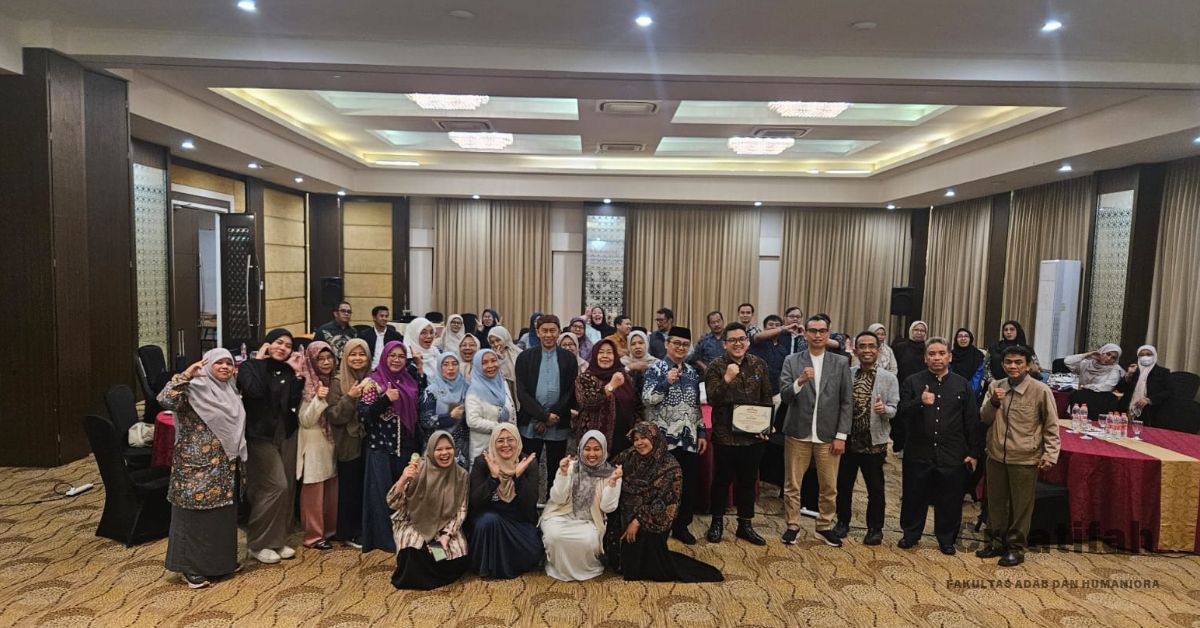
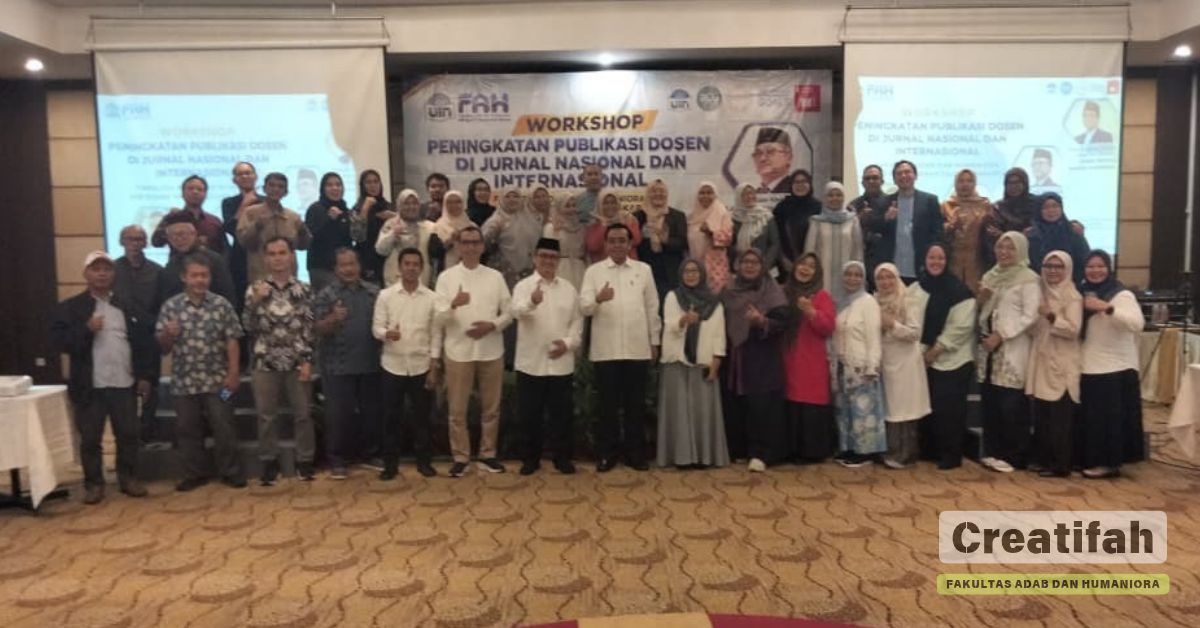
Bogor, FAH Online News – The Faculty of Adab and Humanities (FAH) at Syarif Hidayatullah State Islamic University Jakarta held a Workshop on Enhancing Faculty Publications in National and International Journals at The Grand Peak, ARTOTEL Cisarua, Bogor, from October 19 to 21, 2026. The event aimed to strengthen the research culture, improve the quality of academic publications, and encourage faculty members to contribute to the advancement of knowledge through the use of technology and stronger research collaboration.
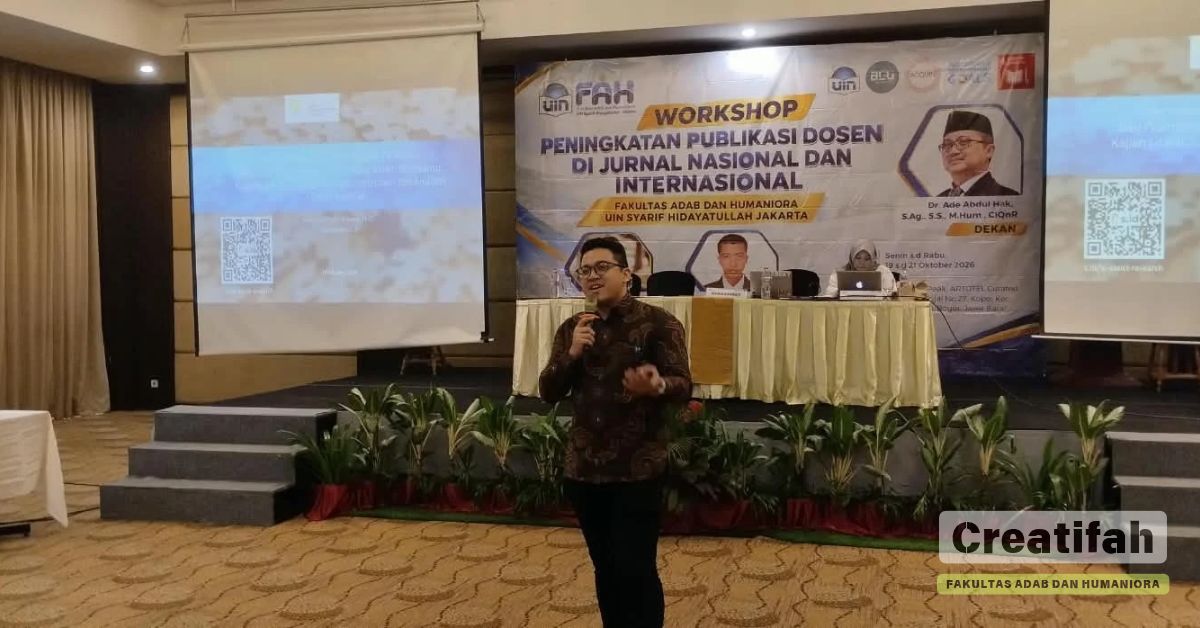
The workshop featured two speakers: Muhammad Prabu Wibowo, Ph.D., Chair of the Association of Indonesian Higher Education Institutions in Library and Information Science (APTIPI) for the 2024–2027 term, and Muhammad Okky Ibrohim, S.Mat., M.Kom., Ph.D., a lecturer and researcher at the Faculty of Computer Science, Universitas Indonesia. On the first day, Muhammad Prabu Wibowo delivered a presentation entitled “Leveraging AI as a Research Assistant: From Prompting to Vibe Coding.” The session explored the use of artificial intelligence (AI) to support the research process, from idea development and literature searches to academic writing, while emphasizing source verification, accuracy, and academic integrity.
The event was attended by UIN Jakarta Vice Rector for Academic Affairs, Prof. Dr. Ahmad Tholabi Kharlie, S.Ag., S.H., M.H., M.A.; Head of the Institute for Quality Assurance (LPM), Prof. Amelia Fauzia, Ph.D.; as well as FAH leadership, faculty members, and educational support staff.
In his opening remarks, Dean of FAH UIN Jakarta, Dr. Ade Abdul Hak, S.Ag., S.S., M.Hum., emphasized that increasing publication output must go hand in hand with research quality and meaningful contributions to the advancement of knowledge. The use of technology, collaboration among faculty members, and the strengthening of research groups were identified as essential elements in building a focused and sustainable research ecosystem.
“What we are pursuing is not merely a greater number of publications, but their quality and contribution to the advancement of knowledge,” he stressed.
The Dean expressed his hope that the workshop would serve as a catalyst for FAH faculty members to strengthen their commitment to research and academic writing while supporting the achievement of academic performance targets, including cumulative credit points (Kredit Usulan Menaikkan Pangkat or KUM), Faculty Workload (Beban Kerja Dosen or BKD), and Key Performance Indicators (KPIs), known in Indonesia as Indikator Kinerja Utama (IKU).
Prof. Amelia Fauzia, Ph.D., who represented the Rector of UIN Syarif Hidayatullah Jakarta on the occasion, emphasized that scholarly publication is an essential component of the three pillars of higher education in Indonesia: education, research, and community service. She noted that UIN Jakarta has approximately 59 journals, while FAH manages six journals that need to be continuously developed by improving research quality and expanding national and international collaborations. One of the anticipated goals is to establish an FAH journal indexed in Scopus.
She also underscored the importance of mentoring early-career faculty members through mentorship programs and coaching clinics, as well as utilizing research fellow and adjunct professor programs to expand international academic networks. In addition, publication incentives provided by the Institute for Research and Community Engagement (LP2M) are expected to encourage improvements in both the productivity and quality of FAH faculty publications.
UIN Jakarta Vice Rector for Academic Affairs, Prof. Ahmad Tholabi, S.Ag., S.H., M.H., M.A., emphasized that scholarly publications play a crucial role in strengthening the university’s reputation, developing faculty expertise, and enhancing academic competitiveness. He stressed that publication should not be pursued solely for career advancement, but should also form part of long-term scholarly development through consistent and impactful research.
Regarding the use of artificial intelligence, he highlighted the importance of critical judgment and academic responsibility, noting that all AI-generated outputs must be examined and verified by researchers.
“AI is an assistant, not a replacement for researchers. Responsibility for research methods, analysis, validity, and findings remains with the researcher,” he stated.
In the first session, Muhammad Prabu Wibowo, Ph.D., explained that generative AI can support various stages of research, including idea development, literature searches, research instrument design, data analysis, and the preparation of publication materials. He introduced the C.R.E.F.O. framework for prompt engineering, which emphasizes the importance of clearly specifying context, role, task, format, and constraints to ensure that AI produces outputs suited to research needs.
AI can also assist with systematic literature reviews (SLRs) and data processing through tools and platforms such as Google Apps Script, Google Colab, and Python.
Despite the efficiency it offers, Prabu stressed that all AI-generated outputs must be examined and verified, including the accuracy of references, research instruments, code, statistical results, and data interpretations. He also highlighted the importance of protecting data privacy, avoiding plagiarism, respecting copyright, and transparently disclosing the use of AI in accordance with institutional and journal policies. In his view, technology must be used responsibly without undermining researchers’ critical thinking skills or academic integrity.
“Do not accept AI-generated analyses without question. We must review the code used, ensure that the statistical figures are consistent with the raw data, and assess whether the resulting graphs make sense. AI-generated interpretations must also be carefully reread to prevent errors in explaining research findings,” he emphasized.
He further warned of the risks of misinformation, fabricated references, data privacy breaches, plagiarism, copyright violations, and failure to disclose AI use in accordance with institutional and journal policies. Researchers must therefore remain actively involved in reviewing and controlling the outputs produced with the assistance of technology.
“We must not lose our critical thinking abilities by becoming overly dependent on AI. The ability to formulate prompts is indeed important, but the ability to understand problems, evaluate information, interpret data, and draw conclusions must remain with the researcher,” Prabu stated.
Through this workshop, FAH UIN Jakarta seeks to strengthen research groups, develop research and publication roadmaps, and provide mentoring for early-career faculty members. These efforts are expected to foster a productive and competitive research ecosystem while encouraging publications that not only meet performance targets but also make meaningful contributions to knowledge and society.
The central message of the workshop was that AI can serve as an assistant to improve research effectiveness and efficiency, but it cannot replace human scientific judgment. Publication quality ultimately depends on methodological rigor, data validity, academic integrity, and researchers’ accountability.
Writers: Nurul Aini / Kasih Nur / Deny Saputra
Documentation: