
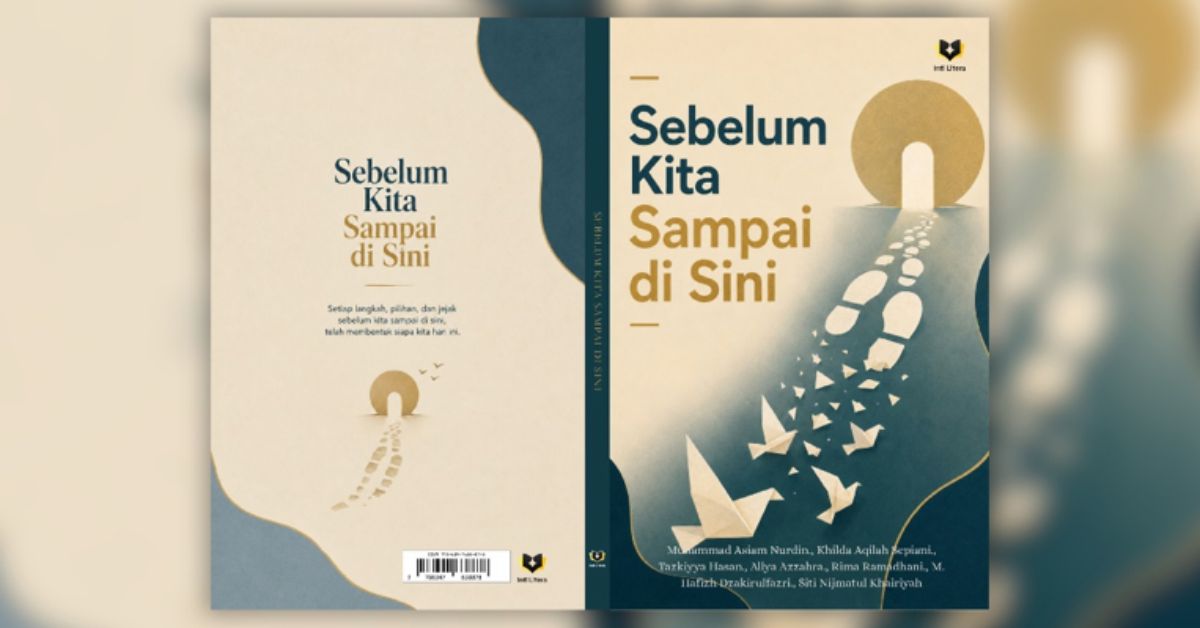
Discussing the Book Sebelum Kita Sampai di Sini, Written by a Student of the Faculty of Adab and Humanities
By: Jasmiko
The written works of students of the Faculty of Adab and Humanities, UIN Syarif Hidayatullah Jakarta, have enriched the realm of autobiographical literature through a memoir anthology entitled Sebelum Kita Sampai di Sini (Before We Arrive Here). Published by Inti Litera in July 2026, the 161-page book brings together the personal journeys of seven young writers as they reflect on their paths toward adulthood. The realities they experienced, both before and during their university years, are woven into sentences that fill the pages. The book's editor, Jasmiko, is a master's student in Arabic Language and Literature at the same university and faculty as the seven authors.
Muhammad Aslam Nurdin opens the book with “Meninggalkan Bekas” (“Leaving a Mark”). He transforms six years of experience navigating the traditions of Islamic boarding school life into a reflection on time and discipline. Aslam, as he is affectionately known, recalls his first encounters with unvowelled Arabic texts and the advice of his teachers, which gradually sank into his heart, like drops of water falling upon stone. His piece invites readers to pause and reconsider the meaning of perseverance amid the pressures of an increasingly fast-paced life.
The emotional landscape shifts dramatically in “Anggitan Senja Menjelaga Buana,” written by Khilda Aqilah Sepiani. Aqila pours out the struggles of a wandering santri who entered university without even a high school diploma. Her sense of alienation upon being admitted to the Islamic History and Civilization Study Program—despite initially aspiring to study Arabic Literature—is intertwined with memories of working as a low-paid honorary teacher. Aqila demonstrates that the scars of failure can be transformed into the courage to stand tall.
The search for identity continues through the three-part narrative by Tazkiyya Hasan. Tazkiyya chronicles her transition from the environment of a Muhammadiyah Boarding School in Yogyakarta to a high school setting that stirred new inner conflicts. After being disappointed by her rejection through a university admission pathway, she compensated through persistent self-directed study until she was eventually admitted to UIN Jakarta. Through her reflections, Tazkiyya shows that maturity emerges from the courage to untangle the knots within oneself.
Alyya Azzahra offers another perspective through “I'm Trying 'Cause I'm Being Chosen.” Alyya traces her educational journey at IAIN Ambon, where she studied Comparative Schools of Islamic Jurisprudence and Law, before eventually moving to Ciputat. Inter-ethnic conflict in Ambon, harassment by a stalker, and the exhaustion of carrying organizational responsibilities became intertwined experiences that shaped her resilience. From her perspective, people do not always truly choose their paths in life; rather, they respond to the choices placed before them by destiny.
The spirit of Minangkabau tradition emerges in “Ketika Separuh Hatiku Harus Memilih” (“When Half of My Heart Had to Choose”), written by Rima Ramadhani. Rima, the youngest child from the coastal region of West Sumatra, challenges her own sense of comfort when confronted with the Minangkabau tradition of merantau, or leaving one's homeland to seek experience and opportunity elsewhere. Financial concerns and emotional ties to her family gradually softened through encouragement from her siblings and the certainty provided by the KIP-Kuliah scholarship. Rima recounts her inner transition from someone who relied on the security of home to a person brave enough to take her own steps in a foreign city.
Hafizh Dzakirulfazri contributes a compelling account through “Dari Balik Jaring Aula” (“Behind the Hall Net”). Hafizh chronicles his long struggle to make it onto his pesantren's futsal team in order to compete in the Santri League. Being overlooked by his coach, repeated failures in selection trials, and a muscle injury shortly before the decisive match are woven into a metaphor about choices made in quiet, unseen spaces. Hafizh shows that perseverance in confronting failure can surpass natural talent.
The anthology concludes with Siti Nijmatul Khairiyah's “Orang Baru di Bangku Sebelah” (“The New Student in the Seat Next to Me”). Siti revisits childhood memories marked by bullying and insincere friendships. These painful experiences led her to build emotional walls in her relationships with others, until the arrival of a transfer student named Rani changed the way she understood sincerity. The piece provides a quiet conclusion, affirming that a single genuine friendship can heal the traces left by past pain.
This book is, above all, born of honesty and grounded in the fundamental idea that education is non-negotiable. The seven writers reaffirm the aspirations of students: that obstacles will inevitably come and go, but they should never become barriers to pursuing an education. Traveling all the way from Padang to Ciputat in pursuit of hope is something extraordinary. Likewise, the experiences they went through in Islamic boarding schools have provided lessons that continue to guide them toward becoming better individuals as they enter university.
Ultimately, education has no finish line. As the Prophet Muhammad is reported to have taught, learning continues until one reaches the grave—meaning that learning is a lifelong journey, lasting until death.