
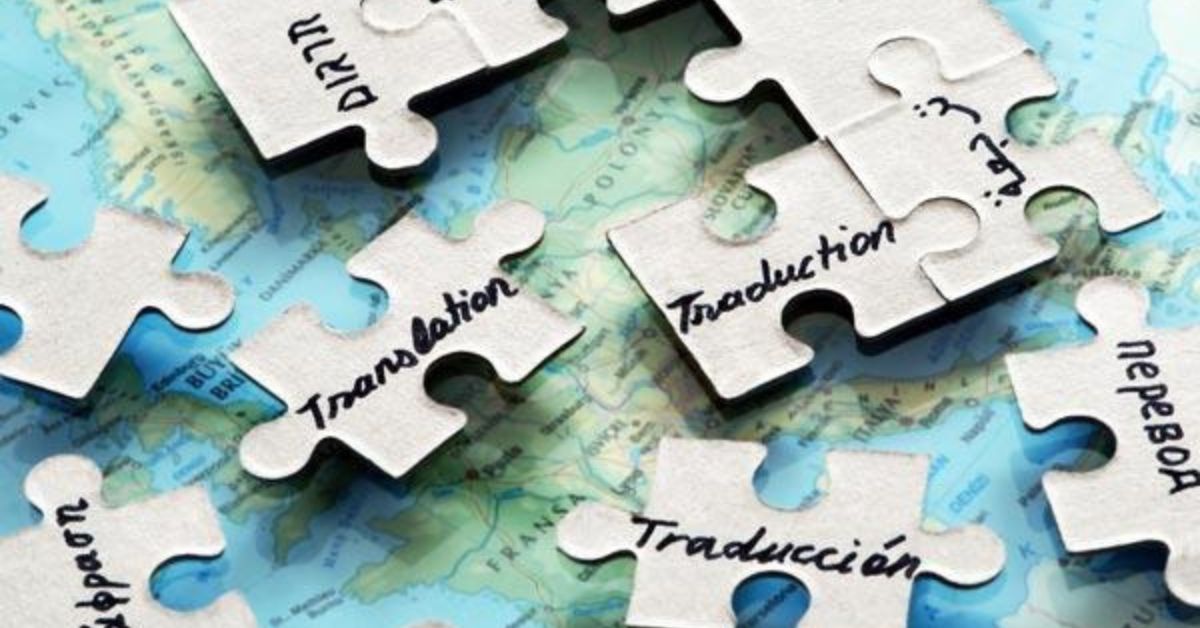
Dillema Ambiguity in Translation
As social creatures, of course we need communication. We need to establish relationships with each other in order to meet our common needs. However, in the current era of globalization, we are exposed to various forms of cultural assimilation throughout the world through various media; films, literary works, humor, and so on. In order for us to understand what ideas and messages we want to convey, of course it is necessary to translate the text into our language so that the transmission of ideas runs effectively. The translated text must meet three criteria as Molina & Albir (2002) said; acceptability, accuracy and readability. The loss of just one of these three elements can result in the translation results feeling unnatural.
However, the problem actually starts from here, often after successfully translating the meaning of words lexically and sentences grammatically, the meaning that arises feels wrapped in an unnatural sensation. A simple example, in the sentence ‘ "Let's have a quick lunch." Literally, we can easily interpret it as “Come on, have a quick lunch!”. However, take another look, if we consider the culture of Americans or Europeans the expression is interpreted as the act of eating food that does not take a long time, or in this case the type of food can be bread and the like.
Before that, we need to understand the definition of translation, namely a condition where the reader or listener of the original text has the same mental effect, and cognition scheme as the reader of the target text. However, the most appropriate approach is still the subject of ongoing debate regarding whether loyalty to the source text should always be prioritized in order to ensure authenticity of meaning or a functionalist approach (skopos) that adapts needs to the cultural context of the target language. In this case, the translator must be able to bridge the two poles by looking for a middle point in interpreting the text. The problem is that not all words or phrases in the source text have equivalent words with the same weight of meaning and image in the target language.
This situation often occurs in translations of literary works or legal texts, each of which has heavy consequences so that the choice of diction error can divert the initial intention. Translators must have a keen analytical sensitivity to dissect the layers of meaning hidden behind seemingly simple words. The problem becomes even more complicated when the ambiguity must originate from extreme differences in cultural reality or what is often referred to as untranslatability because no matter what, our efforts are to find suitable alternative words, and even though there are, the resulting emotional output is not the same.
So, the next time you read a translation that feels good to read and doesn't feel like reading a translation, remember that the translator has made a series of complicated compromises in his head. They may have carried out a bit of positive bias through a complex negotiation process by choosing words that don't hurt you, explaining the complicated ones, and discarding the unnecessary ones to keep the communication bridge upright. After all, translators are social creatures who are bound to certain communities, religious beliefs, feelings, cultural backgrounds, and psychological constraints.
Author: Andika Pratama
Editor and Reviewer: Muhammad Husein Fadhlillah
REFERENCES
Baker, M. (2018). In Other Words: A Coursebook on Translation (3rd ed.). Routledge. https://doi.org/10.4324/9781315619187
Nida, E. A. (2007). Toward a Science of Translating. Shanghai Foreign Language Education Press.
Venuti, L. (2000). The Translation Studies Reader. Routledge.
Setiajid, H. H. (2019). Translator's Dilemma: The Importance of Target Readers. International Seminar on Language (p. 521). Jakarta: Language Development and Development Agency.
Poerwanto, M. A. (2024). Cultural Transition in Literary Translation: Challenges and Innovation. Journal of Social Sciences and Humanities, 3(2), 299–312.
Molina, L., & Hurtado Albir, A. (2004). Translation Techniques Revisited: A Dynamic and Functionalist Approach. Meta, 47(4), 498–512. https://doi.org/10.7202/008033ar
Photo Source: https://mitratranslations.com/en/a-few-misconceptions-about-translation/