
Did Sufi Orders Become the Most Effective Form of Resistance during the Colonial Period?
By: Gama Braja D
Student of the Islamic History and Civilization Study Program
Faculty of Adab and Humanities
UIN Syarif Hidayatullah Jakarta
What do dhikr, religious study gatherings, and resistance against colonial rulers have in common?
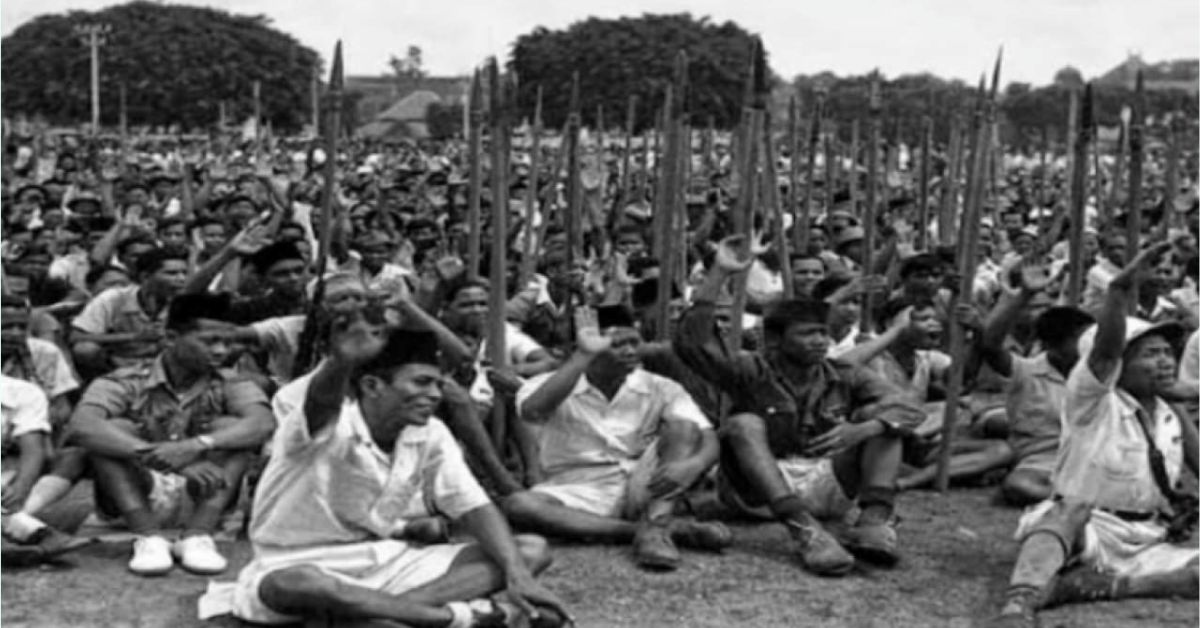
At first glance, the three seem unrelated. When we talk about the struggle against Dutch colonialism, what usually comes to mind is war, sharpened bamboo spears, or figures who took up arms on the battlefield. However, history shows that one of the greatest threats to the colonial government actually came from groups often seen as dealing only with spiritual matters: Sufi orders.
Behind dhikr gatherings and religious teaching, there were social networks capable of connecting thousands of people from different regions. For society, Sufi orders were places to seek inner peace. For the colonial government, however, Sufi orders were often viewed as spaces that could give rise to resistance.
Why could an organization closely associated with spiritual life become a force so feared by colonial rulers?
When the Dutch Did Not Only Fight Weapons
One common mistake in understanding colonial history is assuming that the Dutch only faced armed resistance. In reality, they also faced something far more difficult to control: the influence of religious scholars.
Troops could be defeated in a single battle. Fortresses could be destroyed by cannons. But how could they stop ideas that had spread from one surau to another?
This is where the power of Sufi orders became visible. Through the relationship between teacher and student, messages about justice, dignity, and the importance of defending the homeland could spread without relying on formal organizational structures that were easy for the colonial government to monitor.
Networks That Existed Before Modern Organizations
Long before the rise of modern organizations such as Sarekat Islam or Muhammadiyah, many Sufi orders already had networks that reached various regions of the Nusantara.
Imagine a social network without the internet, without telephones, and even without newspapers that were easily accessible to the public. Even so, information could still move through religious gatherings, the travels of religious scholars, and relationships among students of Islamic boarding schools.
That is why Sufi orders often became effective means of mobilization. When a respected religious scholar called on people to defend the dignity of the community, his message did not stop in one village. It could spread far beyond the administrative boundaries created by the colonial government.
Why Was Society So Loyal?
Another factor that made Sufi orders influential was the high level of trust between teacher and student.
In the uncertain situation of colonial rule, religious scholars did not only serve as teachers of religion. They also acted as mediators of conflict, advisers to society, and protectors of vulnerable groups.
As a result, when religious scholars judged that colonialism had gone too far and harmed society, their voices carried strong moral weight. The resistance that emerged was not merely a political matter. It was also seen as an effort to defend the values believed in by the community.
Lessons That Remain Relevant Today
The story of Sufi orders and colonial resistance offers an important lesson for the present. History shows that major change does not always come from military power or political authority. Sometimes, change begins with networks of trust that are built slowly within society.
Sufi orders survived and remained influential because they offered something deeper than mere organization: a sense of togetherness, identity, and shared purpose.
In a world that is increasingly connected but often feels individualistic, this lesson remains relevant. In the end, the greatest strength of a movement does not lie in the number of its weapons, but in its ability to unite people under one belief and one shared goal.
Conclusion
Indonesian history shows that the struggle against colonialism did not only take place on the battlefield. In surau, pesantren, and dhikr gatherings, social networks grew and slowly built the collective awareness of society to reject oppression.
That is why Sufi orders were not merely spiritual institutions. In many periods of history, Sufi orders also became one of the important foundations for the rise of resistance against colonialism in the Nusantara.
Bibliography
Azra. (2004). Jaringan ulama Timur Tengah dan Kepulauan Nusantara abad XVII & XVIII: Akar pembaruan Islam Indonesia (Revised edition). Kencana.
Bruinessen. (1995). Kitab kuning, pesantren, dan tarekat: Tradisi-tradisi Islam di Indonesia. Mizan.
Kartodirdjo. (1984). Pemberontakan petani Banten 1888. Pustaka Jaya.
Kartodirdjo. (1993). Pendekatan ilmu sosial dalam metodologi sejarah. Gramedia Pustaka Utama.
Ricklefs. (2008). Sejarah Indonesia modern 1200-2008. Serambi.
Noer. (1996). Gerakan modern Islam di Indonesia 1900-1942. LP3ES.
Lapidus. (2014). A History of Islamic Societies (3rd ed.). Cambridge University Press.
Esposito. (2018). Islam: The Straight Path (5th ed.). Oxford University Press.
Carey. (2019). Kuasa ramalan: Pangeran Diponegoro dan akhir tatanan lama di Jawa, 1785-1855. KPG.
Alfian. (1987). Perang di Jalan Allah: Perang Aceh 1873-1912. Pustaka Sinar Harapan.