Decolonization and Contemporary Challenges: FAH UIN Jakarta Holds Postcolonial Studies Discussion with Prof. Manneke Budiman
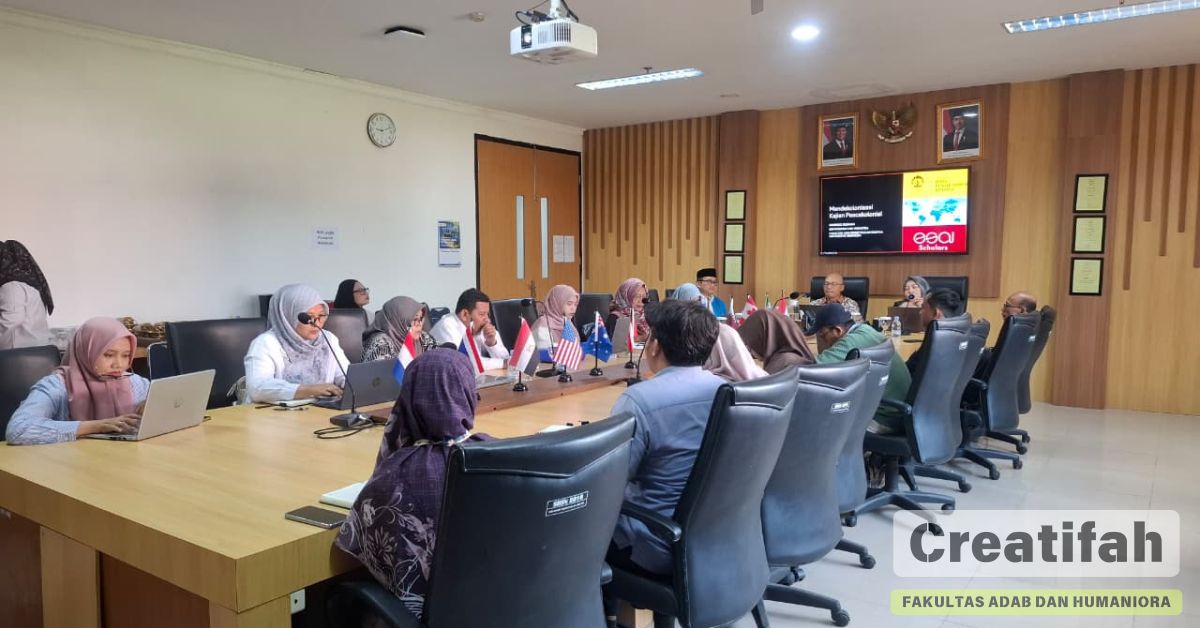
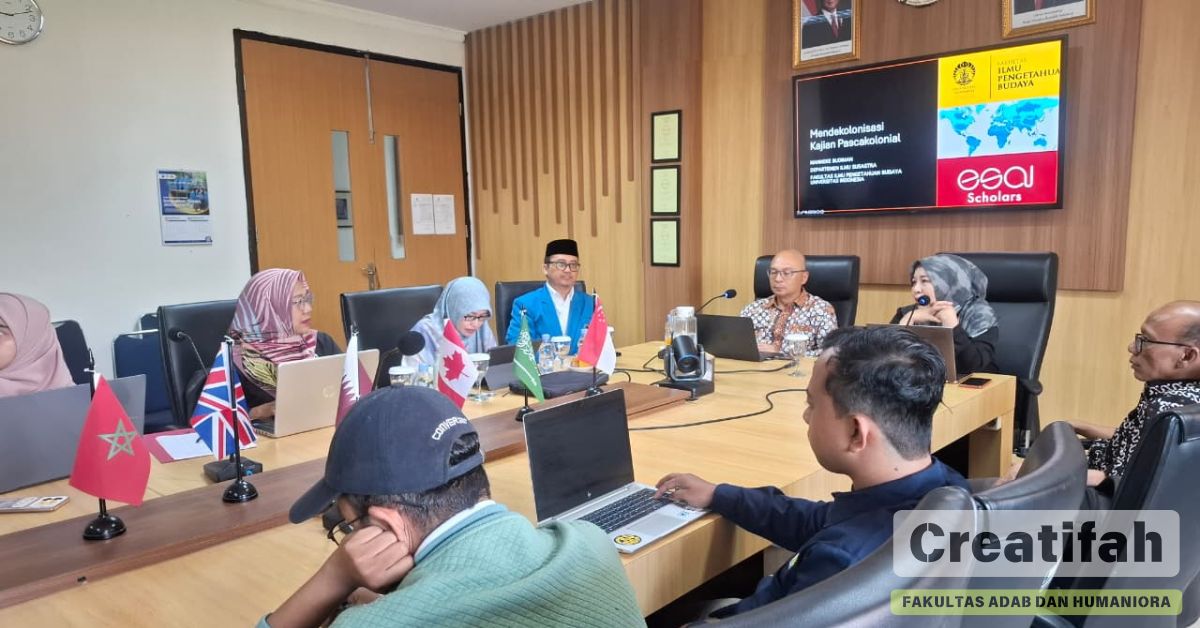
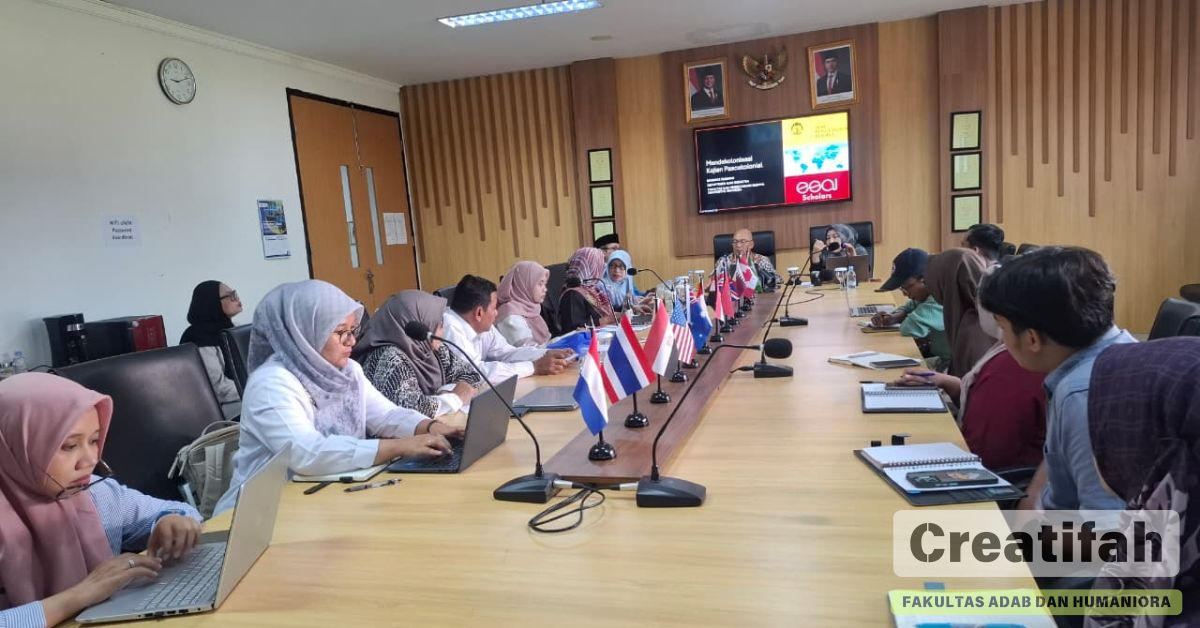
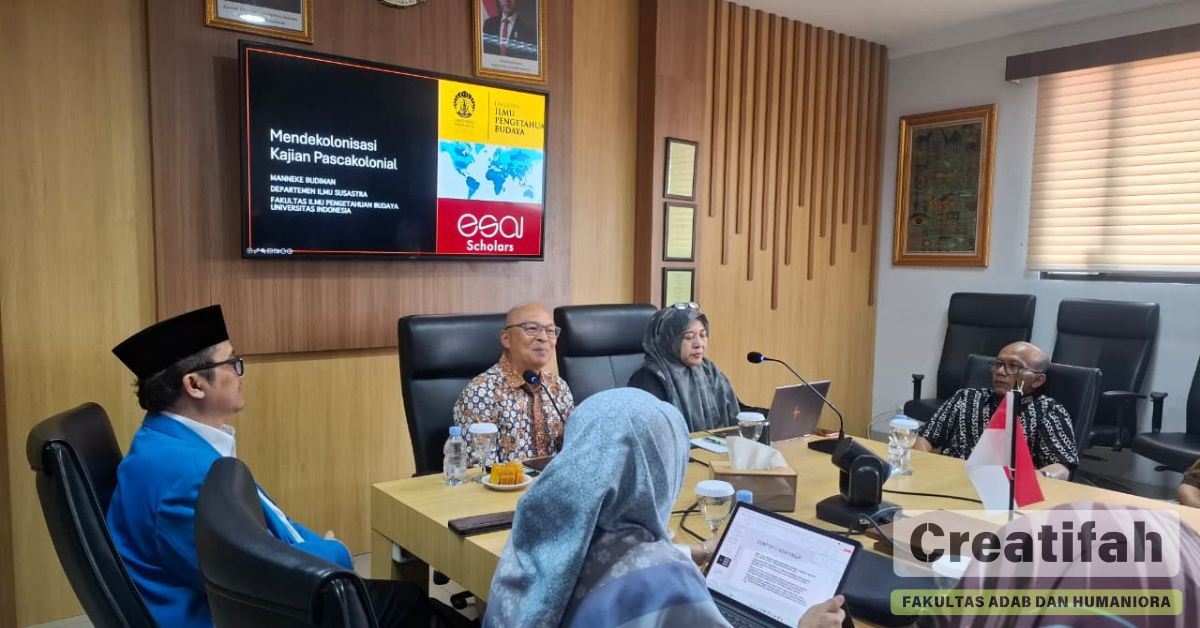
South Tangerang, FAH Online News — In an effort to address the dynamics of globalization and the shifting discourse of postcolonial studies, the Faculty of Adab and Humanities (FAH), UIN Syarif Hidayatullah Jakarta, organized an academic discussion titled “Postcolonial Studies and the Challenges of Decolonization in Indonesia.” The event was held at the FAH Meeting Room on Monday (April 20, 2026), from 08:30 to 12:00 WIB.
The workshop featured Professor of Literature and Cultural Studies at the University of Indonesia, Prof. Manneke Budiman, Ph.D., as the keynote speaker, with Yeni Ratna Suningsih, Ph.D., serving as moderator. The event was also attended by lecturers from FAH and FITK (Faculty of Tarbiyah), Vice Dean II of FAH Dr. Siti Amsariah, M.Ag., Head of the Master’s Program in Arabic Language and Literature (BSA) Dr. M. Adib Misbachul Islam, M.Hum., as well as graduate students of Arabic Literature.
In his presentation, Prof. Manneke questioned the possible stagnation of postcolonial studies. He raised a reflective question: has this field reached a point of stagnation? According to him, if postcolonial research consistently concludes by blaming past Western colonialism for all present-day issues, then the field has lost its critical edge. “Such outcomes actually reinforce the West as the ‘authority’ in postcolonial knowledge, and postcolonial studies lose their sharpness,” he emphasized.
To revitalize the field, Prof. Manneke encouraged a shift in perspective through the concept of Asia as Method. He highlighted the importance of distinguishing between ‘decolonization’ and ‘deimperialization’. Decolonization refers to the active efforts of formerly colonized societies to engage in self-critique in order to produce independent subjectivity. Meanwhile, deimperialization requires former colonial powers to evaluate the motives and historical consequences of their imperial actions.
Researchers in the era of globalization must also be able to recognize emerging global shifts, such as the resurgence of Sinocentrism in East Asia, geopolitical crises in the Middle East, and the role of social media in fostering post-truth polarization.
In the context of Indonesian literature—his area of expertise—a transnational approach is now considered more relevant for analyzing works such as Burung-Burung Manyar by Y.B. Mangunwijaya, the Supernova series by Dewi Lestari, and Pulang by Leila S. Chudori. These studies aim to uncover contemporary tensions between decolonization and deimperialization, rather than being confined to notions of nativism.
In conclusion, Prof. Manneke emphasized that postcolonial studies can only remain relevant if they free themselves from the lingering shadows of past colonialism. Academics are therefore challenged to be more imaginative in critiquing new forms of reimperialism that simultaneously attempt to resolve and reproduce imperial characteristics in the present.
The event continued with an interactive discussion and critical Q&A session, followed by the presentation of a certificate of appreciation to the speaker and concluded with a group photo session.
Author: Andika Pratama / Sukasih Nur / Deny Saputra
Documentation: