
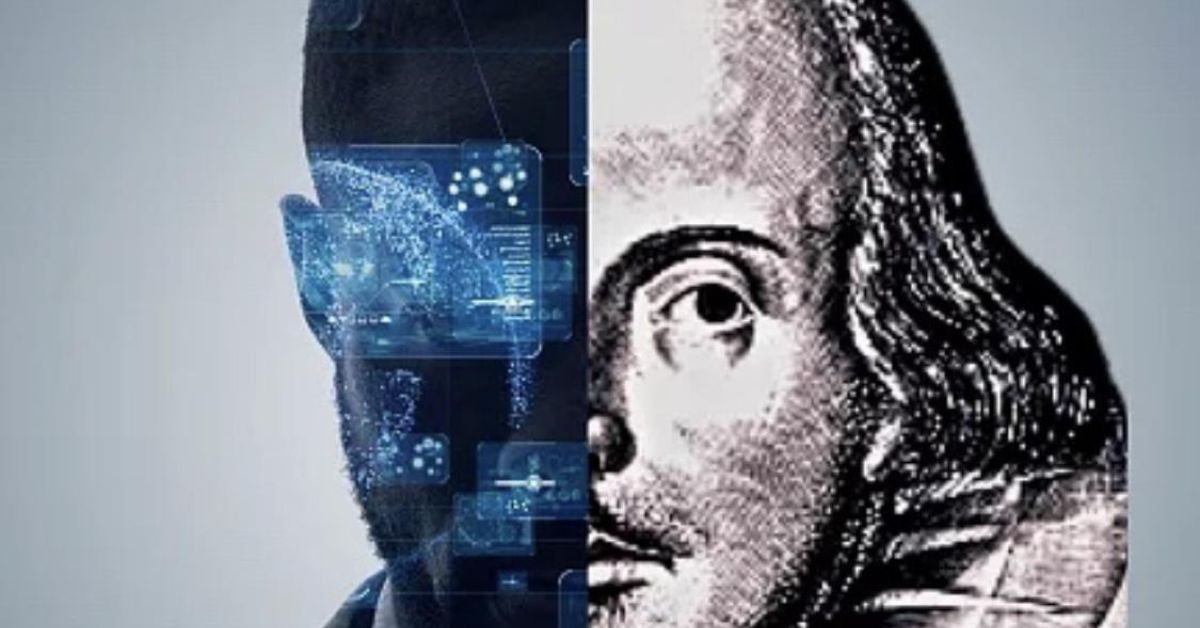
Can Artificial Intelligence Replace the Depth of Human Feelings in Poetry Writing?
Literature, especially poetry, has for thousands of years been considered a bulwark of human subjectivity. It is the embodiment of suffering, love, trauma, and euphoria experienced consciously through the human body. However, the presence of Generative AI began to shake this dominance, sparking a debate that is now no longer just asking whether machines can write poetry, but whether machines are capable of having the depth of feeling that is the spirit of the work.
Technically, artificial intelligence works through very complex statistical probabilities without actually having an affection. When a language model writes a line about heart-wrenching sadness, it is not calling out memories of loss, but rather predicting words that have historically appeared together frequently in a vast corpus of human literature data. In other words, AI poetry is the result of massive pattern recognition, while human poetry is the fruit of real life experiences. Humans write because there is an internal urge to communicate something unspeakable, whereas AI writes in response to external commands.
This profound difference lies in the emotional texture that artificial intelligence is difficult to replicate. Humans sense the world through the body, such as coldness, a fast heartbeat, or the smell of coffee evoking memories that all have a biological context and personal history. Instead, AI simply understands the sensation as textual data without actually feeling it. Often, the beauty of poetry is born from the poet's courage to break the rules of language in order to wrap deep emotions. Artificial intelligence, on the other hand, tends to be trapped in familiar and data-measured patterns. In human writing, each word is chosen with intention and sincerity, while AI chooses words because that is the result that is most considered correct by its computer system.
However, in the midst of this debate, a new space emerged in the form of collaboration between the human spirit and digital tools. This is evident when honest and complex human emotions, such as the guilt of not being able to welcome one's sincerity due to conflict with oneself, are given to AI for aesthetic processing. The result is a work that captures the fragility of these feelings:
About the Unspoken
You are a sincerity that is never fake,
While I am a door that is always stiff.
You're not the one lying,
In fact, I'm the one who's afraid;
Choose to retreat as you try to get closer.
Sorry for not being able to explain what's in my heart to you,
Not because I don't want to,
But because I don't have the language.
Now I just stare at the key I burned myself,
Realizing that the problem is with my heart which is not yet at peace.
Through these collaborative experiments, we can see that AI does not really replace poets, but rather serves as an extension or a new medium. The depth of feelings remains sourced entirely from human honesty, while AI provides the structure and metaphor to wrap up those feelings. In conclusion, AI may be able to perfectly imitate the form of poetry to the point of being able to deceive the reader in literary tests, but the depth of feeling remains a bridge between two consciousnesses that machines lack. As long as this technology lacks awareness and life experience, it will remain an echo, not a sound itself.
Author: Nadhira Sonja Isinbayeva
Editor and Reviewer: Muhammad Husein Fadhlillah
Photo Source: https://static.euronews.com/articles/stories/08/86/16/82/432x243_cmsv2_fa034853-5648-5a68-8de3-525023ef884d-8861682.jpg
Reference
Boden, M. A. (2004). The Creative Mind: Myths and Mechanisms. London: Routledge.
Gunther, K. (2023). AI and the Art of Poetry: Can Machines Feel? Journal of Digital Humanities, 12(2), 45-62.
Heersmink, R. (2021). The Narrative Self, Distributed Cognition, and Creative Writing. Phenomenology and the Cognitive Sciences, 20, 81–101.
Marcus, G., & Davis, E. (2019). AI Rebooting: Building Artificial Intelligence We Can Trust. New York: Pantheon.
Turing, A. M. (1950). Computing Machinery and Intelligence. Mind, 59(236), 433–460.