BSA Academic Seminar Discusses Unity and Diversity in Arabic Grammar Theory
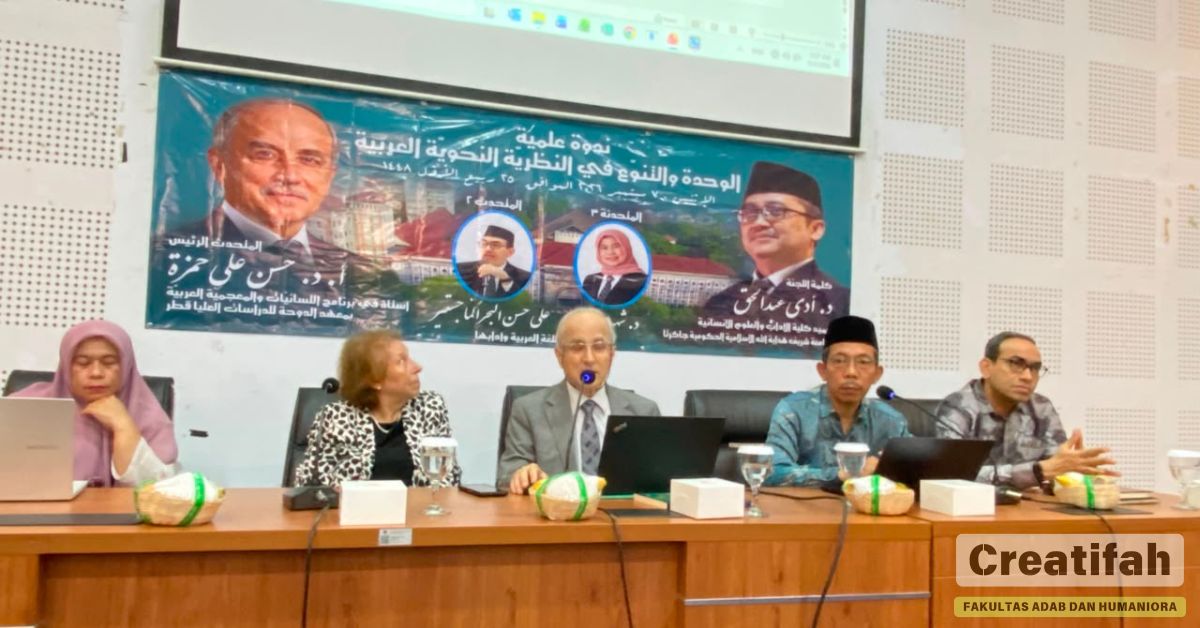
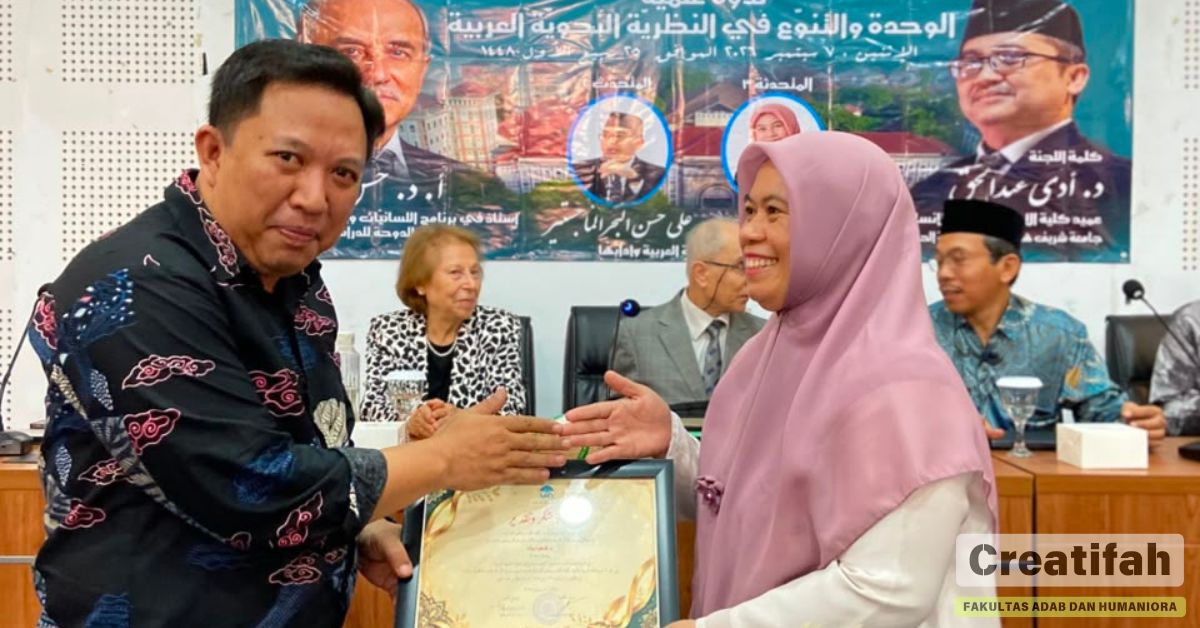
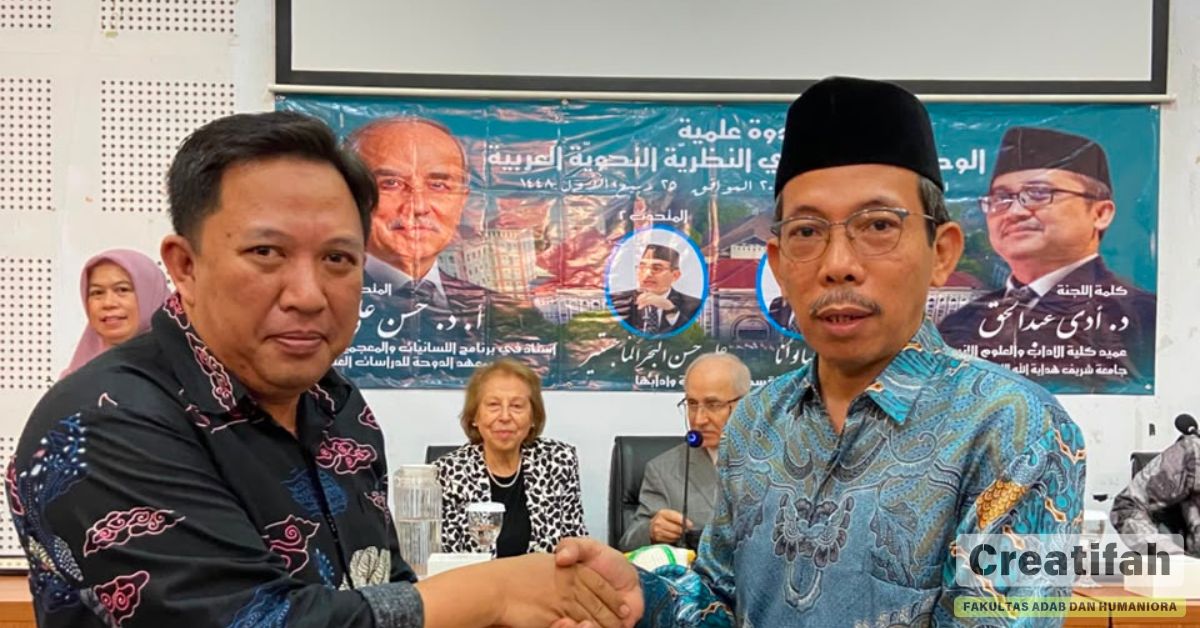
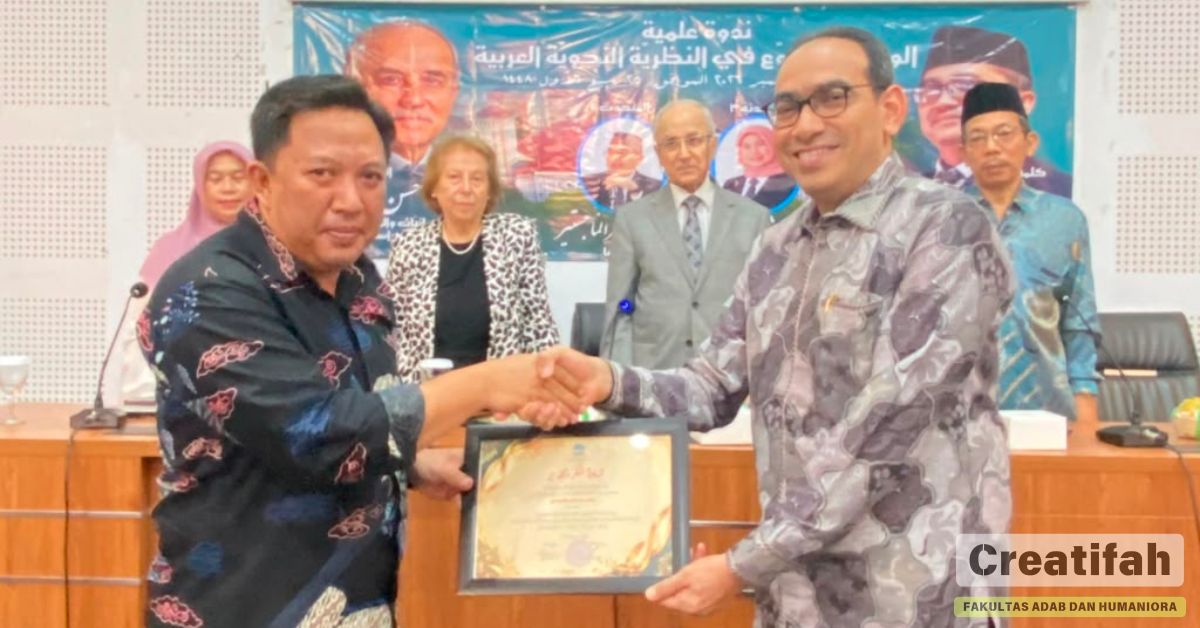
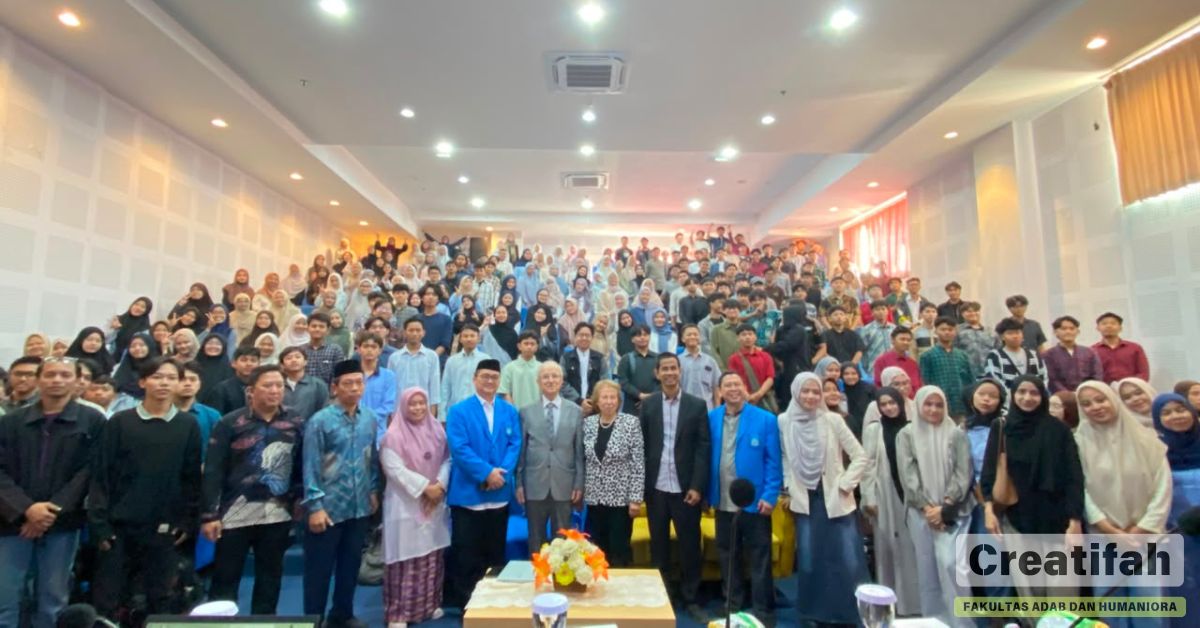
South Tangerang, FAH News Online – The Arabic Language and Literature Study Program (BSA), Faculty of Adab and Humanities (FAH), UIN Syarif Hidayatullah Jakarta, held an academic seminar entitled “Unity and Diversity in Arabic Grammar Theory” on Monday, September 7, 2026, corresponding to 25 Rabi' al-Awwal 1448 AH. Moderated by Bobby Mahbubi, M.Hum., the event provided an academic forum for students and members of the academic community to broaden their understanding of the development of Arabic grammatical theories and the dynamics of Arabic grammar (nahwu) studies. The seminar brought together several academics and lecturers with expertise in Arabic language and linguistics.
In his opening remarks, the Dean of the Faculty of Adab and Humanities (FAH), UIN Syarif Hidayatullah Jakarta, Dr. Ade Abdul Hak, S.Ag., S.S., M.Hum., expressed his appreciation to the Arabic Language and Literature Study Program for organizing an academic event that brought together academics and experts in Arabic linguistics.
The Dean emphasized that Arabic serves not only as a means of communication but also holds an important position in Islamic studies, culture, and the development of knowledge. Therefore, the academic study of Arabic needs to be continuously developed by taking into account the richness of theories, perspectives, and linguistic phenomena. He noted that discussions on unity and diversity in Arabic grammatical theory are important because developments in linguistic studies have produced various approaches and perspectives for understanding the structure of the Arabic language.
“Through academic activities such as this seminar, students are expected to gain new insights, develop critical thinking skills, and be encouraged to continuously engage in scholarly research in the field of Arabic studies,” were the key points conveyed by the Dean in his remarks. He also expressed his gratitude to the speakers and all participants who took part in the event.
The seminar featured Dr. Hasan Ali Hamzah, Professor in the Arabic Linguistics and Lexicography Program at the Doha Institute for Graduate Studies, as the first speaker, with Husni Thamrin, M.A. serving as moderator. In his presentation, Dr. Hasan Ali Hamzah explained that Arabic grammatical theory contains elements of both unity and diversity. Its unity can be seen in the fundamental principles that form the foundation of nahwu studies, while its diversity is reflected in the different approaches, analyses, and perspectives developed by linguists. Such differences constitute an integral part of the development of the Arabic linguistic scholarly tradition and can enrich our understanding of the Arabic language system.
Meanwhile, Ali Hasan Bahar, M.A., a lecturer in the Arabic Language and Literature Study Program, emphasized that diversity of thought in Arabic grammatical theory is an important part of the development of nahwu as a field of knowledge. By understanding the various perspectives and approaches that have emerged, Arabic language studies can be conducted more broadly, critically, and contextually.
The discussion continued with Dr. Cahya Buana, M.A., a lecturer in the Arabic Language and Literature Study Program, who presented a topic entitled “The Transformation and Diversity of Arabic Nahwu Teaching Methods in Indonesia: Between Tradition and Modernization.” He explained that nahwu plays an important role for students in Islamic boarding schools and universities, particularly in understanding Arabic sentence structures, grasping the meaning of texts, reading Arabic texts correctly, and understanding the intellectual heritage of the Arab-Islamic tradition. In this context, nahwu is not an end in itself, but rather a tool for achieving a better understanding of texts.
Dr. Cahya also outlined the development of nahwu instruction within Indonesia’s Islamic educational tradition. Arabic texts, commonly referred to as kitab kuning, have long served as one of the primary sources of learning, while nahwu has constituted a fundamental component of pesantren curricula, primarily aimed at helping students read and understand classical Islamic texts (turats). As times have changed, methods of teaching nahwu have undergone modernization, including a shift from memorization and explanation toward the use of examples, exercises, practical application, and inductive approaches.
This modernization can be seen, among other things, in the use of methods such as Nahwu al-Wadhih, which emphasizes stages of examples, observation, conclusion, grammatical rules, and exercises; Durus al-Lughah al-'Arabiyyah, which connects grammatical rules with the practical use of Arabic; and Thariqah Amtsilati, which simplifies nahwu-sharaf instruction to facilitate understanding of the Qur'an and classical Islamic texts (turats). The essence of modernization in nahwu teaching lies in simplifying grammatical rules while simultaneously increasing opportunities for practice and application.
This academic seminar is expected not only to enrich students’ understanding of Arabic grammatical theory but also to encourage a more open perspective toward the diversity of traditions and methods in nahwu studies. Through academic forums of this kind, the Arabic Language and Literature Study Program at FAH UIN Jakarta continues to strengthen its academic culture while encouraging students to develop Arabic language studies that remain relevant to contemporary developments.
Writer: Kasih Nur / Deny
Documentation: