
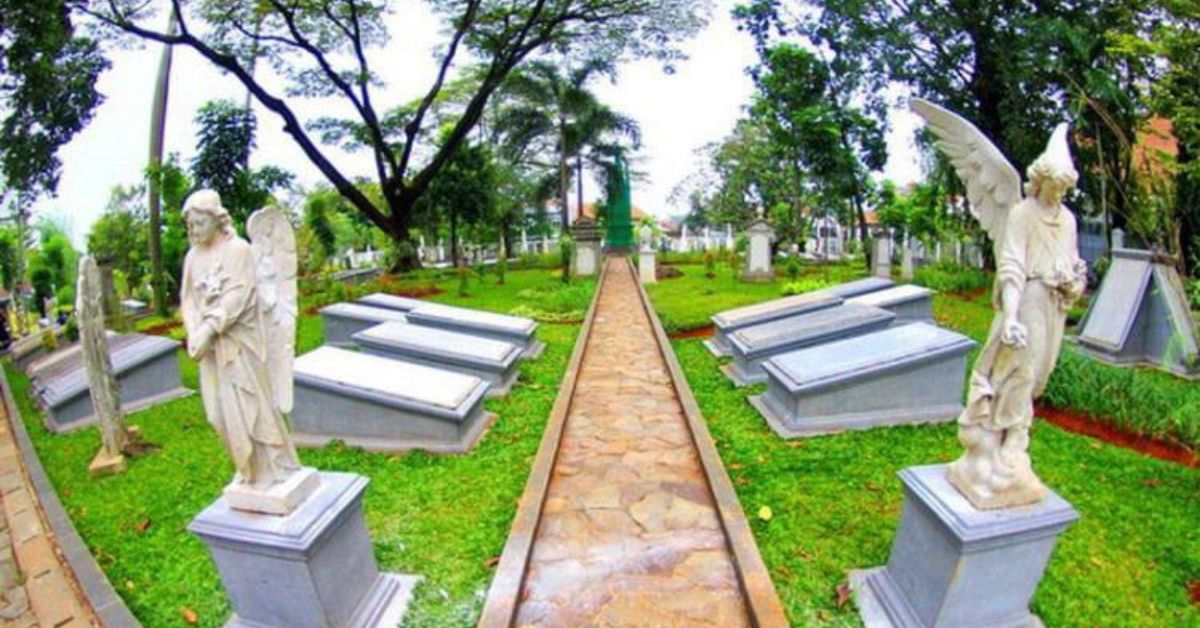
Behind the Grandeur of Batavia: The Little-Known Story of the “European Cemetery”
Writer: Safina Annaja
Student of the Islamic History and Civilization Study Program
Faculty of Adab and Humanities
UIN Syarif Hidayatullah Jakarta
Batavia is a familiar name in Indonesian history. The city, which later became the origin of Jakarta, was once the center of government and trade of the VOC (Vereenigde Oostindische Compagnie) in Asia for centuries. With its grand European-style buildings, neatly arranged canals, and bustling trade activities, Batavia was portrayed as a symbol of Dutch colonial glory in the Nusantara. However, behind this grandeur lies a historical fact that is rarely known by the public. From the 17th to the 18th century, Batavia was known as the “Cemetery of Europeans” (Het Kerkhof der Europeanen), due to the high death rate among Europeans who lived in the city.
This nickname did not appear without reason. After successfully seizing Jayakarta in 1619, Jan Pieterszoon Coen built Batavia as the administrative and trade center of the VOC in Asia. The city was designed to resemble cities in the Netherlands, with canals connecting various areas. These canals functioned not only as transportation routes but also as drainage networks. At the beginning of its development, this concept was considered a symbol of progress and modernity. However, Batavia’s tropical climate was very different from that of the Netherlands. High rainfall, hot temperatures, and extensive swamps caused the canals to turn into dirty and poorly maintained stagnant waters.
This unhealthy environment became a breeding ground for various tropical diseases. Diseases such as malaria, dysentery, cholera, typhoid, and dengue fever spread very quickly. At that time, medical science was still very limited, so the causes of disease were not fully understood. Available treatments were also unable to deal with the outbreaks that continued to occur. As a result, the death rate in Batavia increased sharply, especially among Europeans who had just arrived from the Netherlands and had no immunity to tropical diseases.
Many VOC employees, soldiers, merchants, and colonial officials died only a few months after setting foot in Batavia. Several VOC governors-general also died while serving in the city. This condition forced the VOC to continuously send new employees from Europe to replace those who had died. Historians note that in the 18th century, Batavia was one of the cities with the highest death rates for Europeans. Due to the large number of deaths, a French writer, Bruzen de la Martinière, referred to Batavia as the “Cemetery of Europeans,” a nickname that later became widely known in historical records.
In addition to tropical diseases, poor sanitation worsened the situation. The canals, which were originally built as transportation facilities, gradually became dumping sites for household waste and garbage. The stagnant water produced unpleasant odors and became a source of mosquitoes and disease-causing bacteria. At the same time, population density inside the city walls caused diseases to spread even faster. People at that time did not yet understand the importance of environmental cleanliness as it is understood today.
Climate was also a factor behind the high death rate. Europeans who were used to living in temperate regions had to face Batavia’s hot and humid weather throughout the year. This drastic environmental change weakened their physical condition, making them more vulnerable to disease. Many European travel records even described Batavia as a beautiful city that was dangerous to health. The beauty of its magnificent colonial buildings hid an invisible threat.
Seeing the high death rate, the colonial government eventually made several efforts to improve the city’s condition. One of them was moving European residential areas to higher ground that was considered to have better air quality, such as Weltevreden, which today includes the Gambir and Menteng areas. This area was considered healthier than Old Batavia, which was located in a lowland area and often suffered from floods and stagnant water. This relocation gradually reduced the risk of disease transmission that had haunted Batavia for many years.
Today, Batavia is known as Jakarta Old Town. Colonial-era buildings still stand firmly and have become one of the most visited historical tourism destinations. Fatahillah Museum, Bank Indonesia Museum, Wayang Museum, and various old buildings bear witness to the long journey of this city from the colonial period to becoming part of Indonesia’s capital. Although it now appears as a beautiful tourist area, the dark history behind the nickname “Cemetery of Europeans” remains an important part that should not be forgotten.
The story of Batavia teaches us that the progress of a city is not only determined by grand buildings or busy trade activities, but also by the quality of its environment, sanitation, and public health. The nickname “Cemetery of Europeans” proves that the VOC’s success in building one of the largest trade centers in Asia came at the cost of a high death rate caused by disease and poor environmental conditions. Therefore, understanding the history of Batavia is not only about remembering the past, but also about learning the importance of maintaining environmental health as the foundation of urban life.
References:
Blackburn, S. (2011). Jakarta: Sejarah 400 Tahun. Masup Jakarta.
Hanna, W. A. (2001). Hikayat Jakarta. Yayasan Obor Indonesia.
Lombard, D. (2008). Nusa Jawa: Silang Budaya (Vol. 1). Gramedia Pustaka Utama.
Paramitha, D. (2026, April 7). Once, Batavia was one of the deadliest cities in the world. Seasia.
Image: The atmosphere of the colonial cemetery area at Museum Taman Prasasti, Central Jakarta. Photo: Java Travel.