AI Literacy Talk: FAH UIN Jakarta Discusses the Challenges and Opportunities of AI in Academia
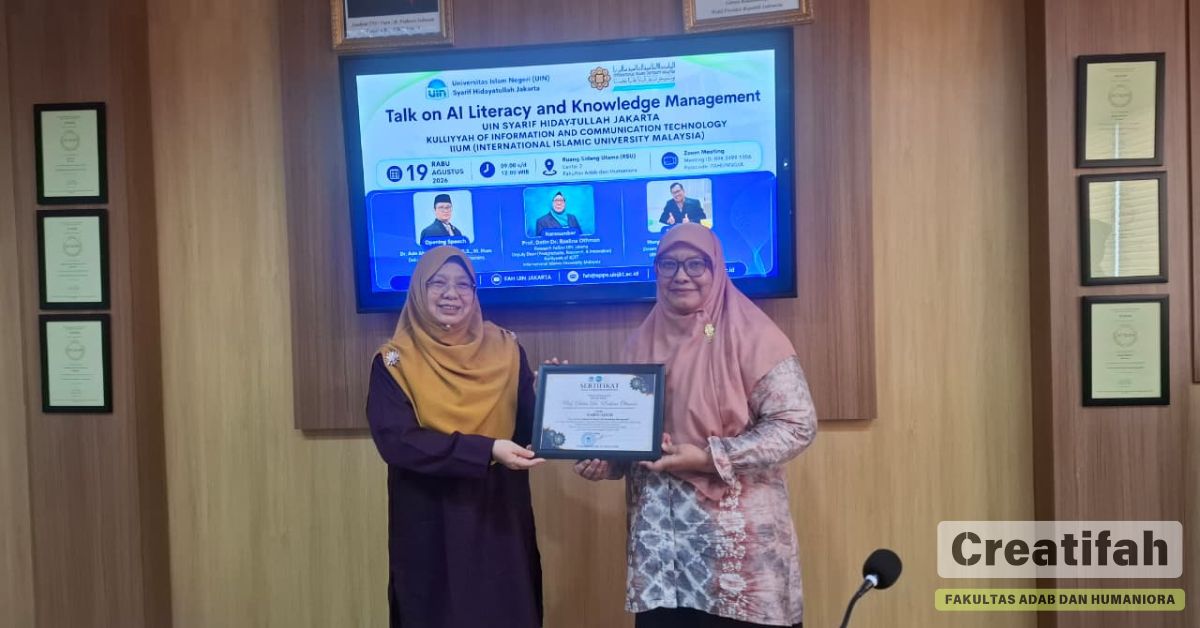
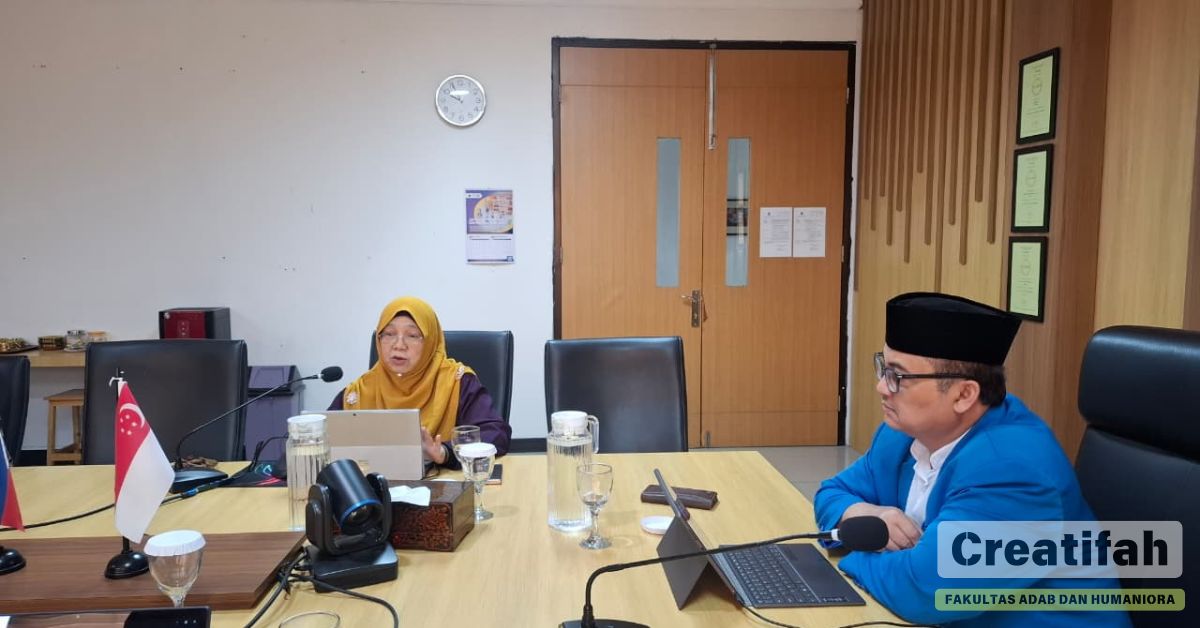
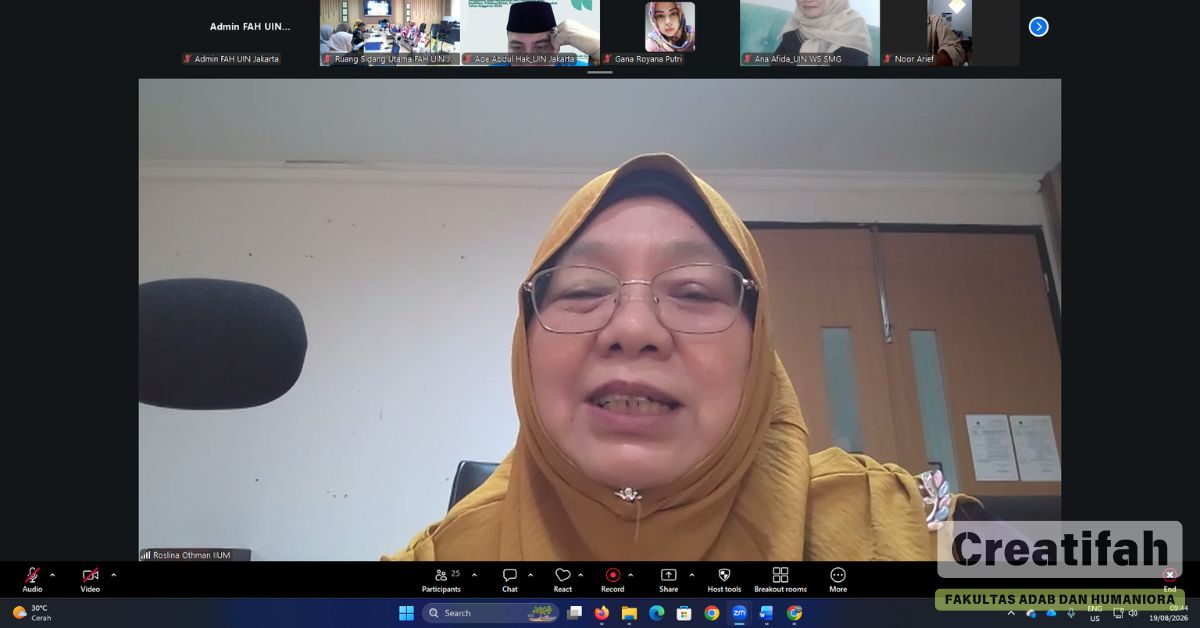
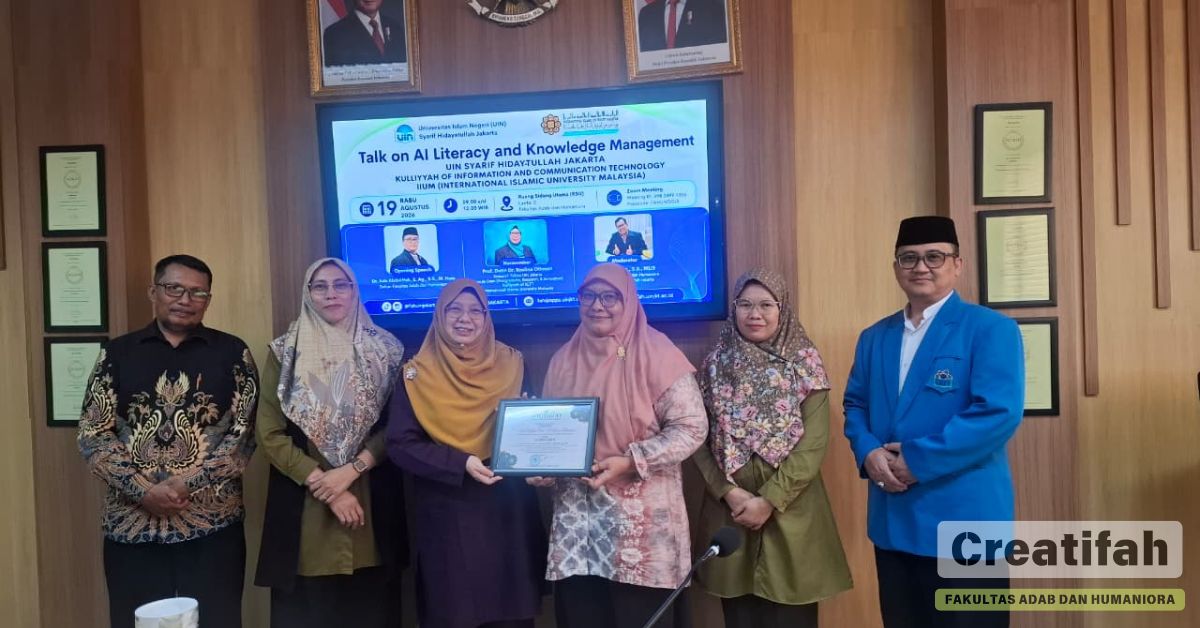
Tangerang Selatan, FAH News Online – The Faculty of Adab and Humanities (FAH) of UIN Syarif Hidayatullah Jakarta, in collaboration with the Kulliyyah of Information and Communication Technology (KICT), International Islamic University Malaysia (IIUM), held a “Talk on AI Literacy and Knowledge Management” on Wednesday (August 19, 2026). The event was conducted in a hybrid format at the Main Senate Room (RSU), 2nd Floor, FAH UIN Jakarta, and via Zoom Meeting.
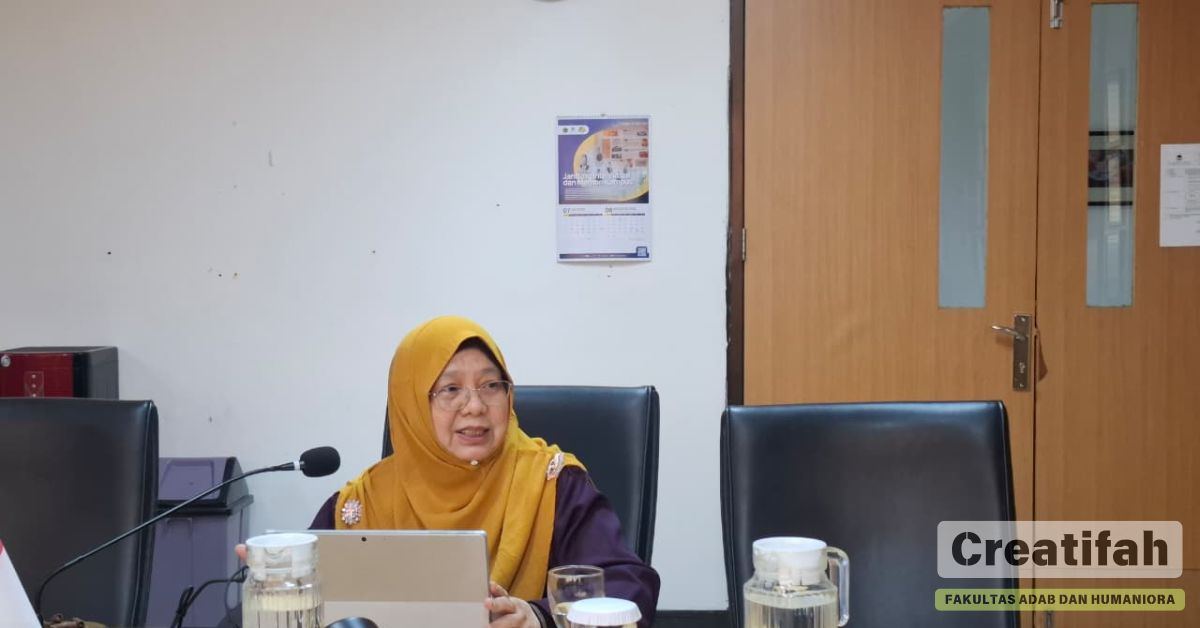
The event featured Prof. Datin Dr. Roslina Othman, a Research Fellow at UIN Jakarta and Deputy Dean (Postgraduate, Research, & Innovation) of the Kulliyyah of ICT, International Islamic University Malaysia, as the keynote speaker. The session was moderated by Nuryudi, S.Ag., S.S., MLIS, a lecturer in the Library Science Study Program at FAH UIN Syarif Hidayatullah Jakarta.
The event opened with remarks by the Dean of FAH UIN Jakarta, Dr. Ade Abdul Hak, S.Ag., S.S., M.Hum. In his remarks, the Dean highlighted the growing importance of artificial intelligence (AI) in education, particularly within the Library Science Study Program.
According to him, the development of AI has increasingly become part of students’ academic activities. Its use is no longer limited to information retrieval but has also extended to various learning activities, including completing assignments, taking final semester examinations, and supporting the preparation of scholarly works.
“The use of AI, particularly in the Library Science Study Program, has become part of various academic activities, ranging from assignments and final semester examinations to the completion of scholarly works,” he said.
In light of these developments, the Dean of FAH raised the question of how AI literacy should be positioned within the curriculum of the Library Science Study Program. He suggested that consideration should be given to whether AI should be offered as a dedicated course or developed as a competency integrated across various courses.
“The question is, should AI be introduced as a dedicated course, or should it instead be integrated across various courses?” he said.
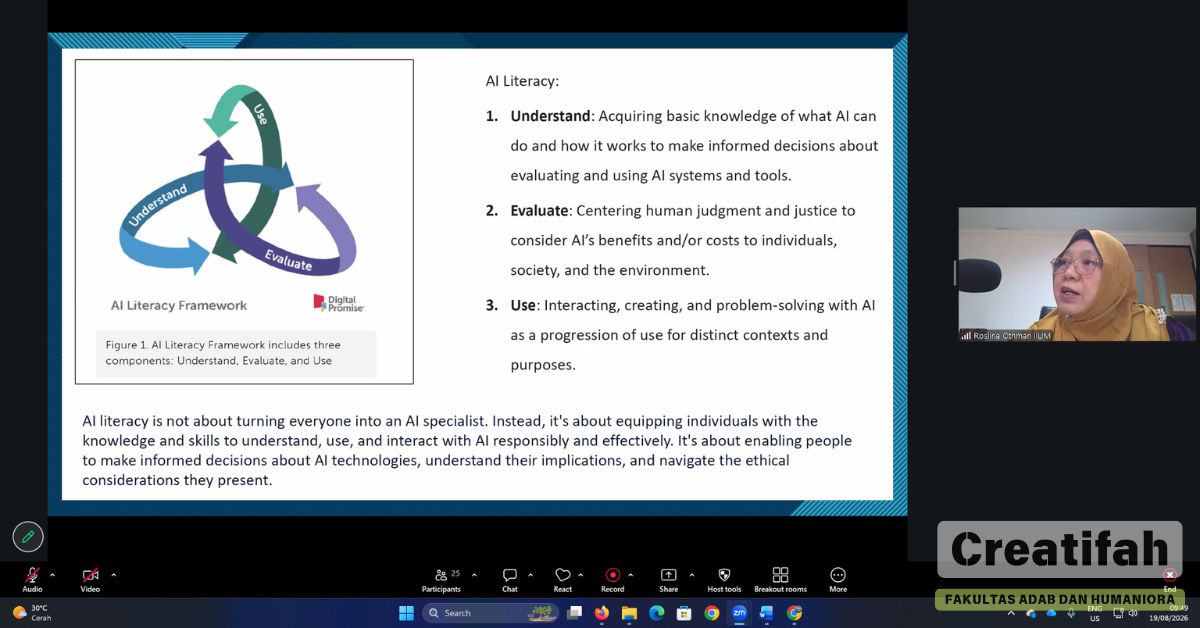
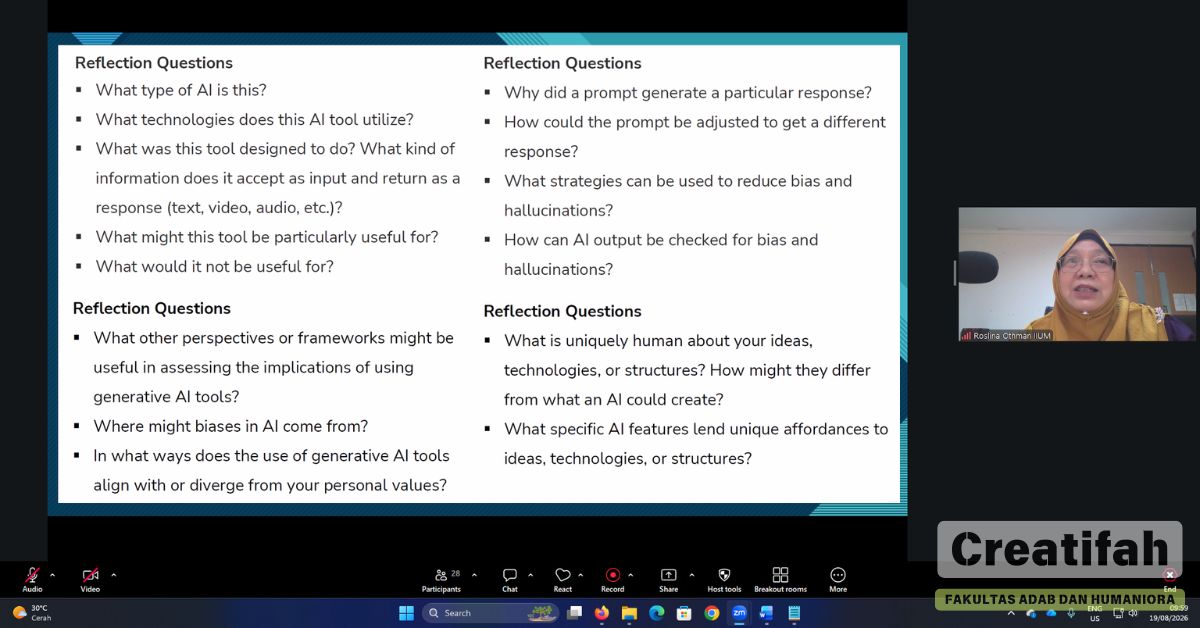
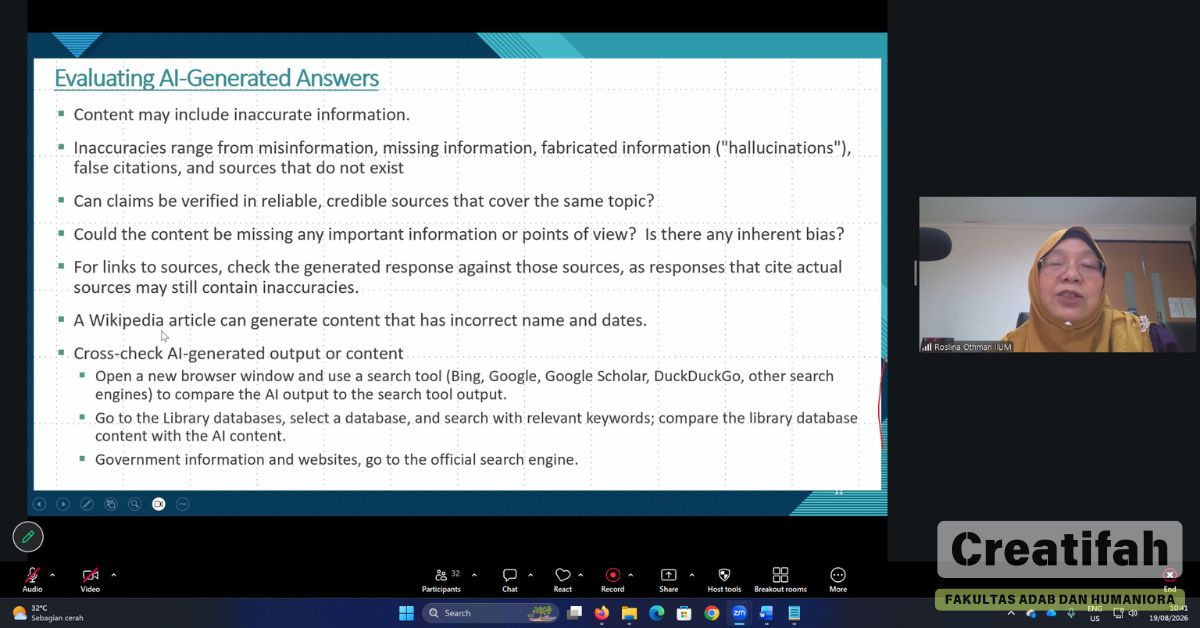
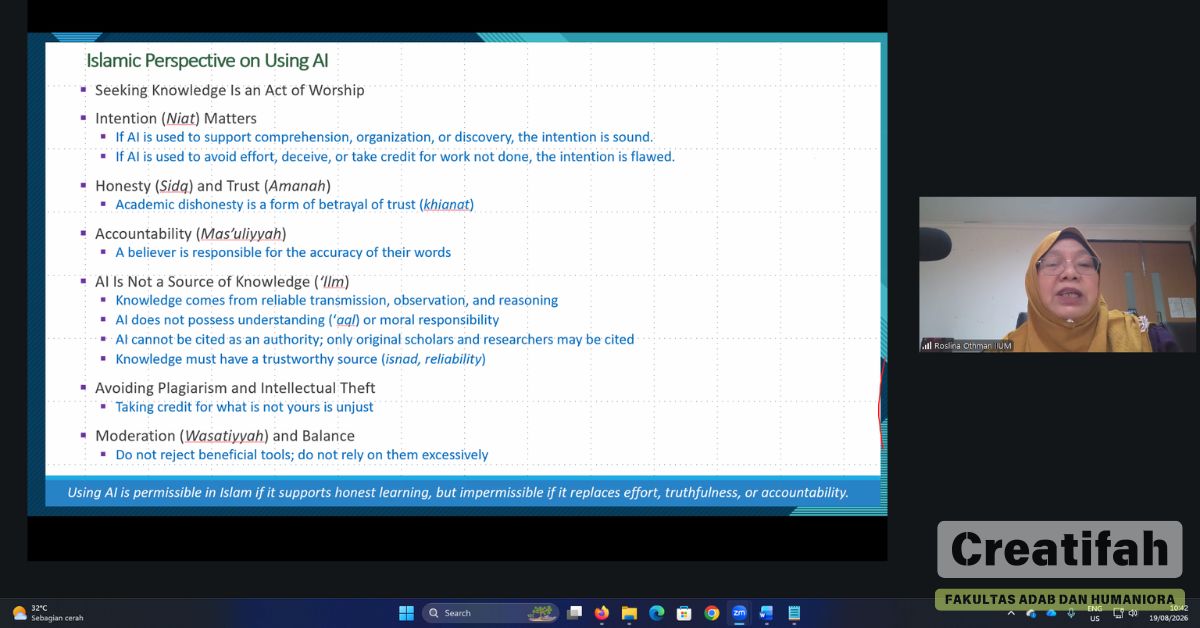
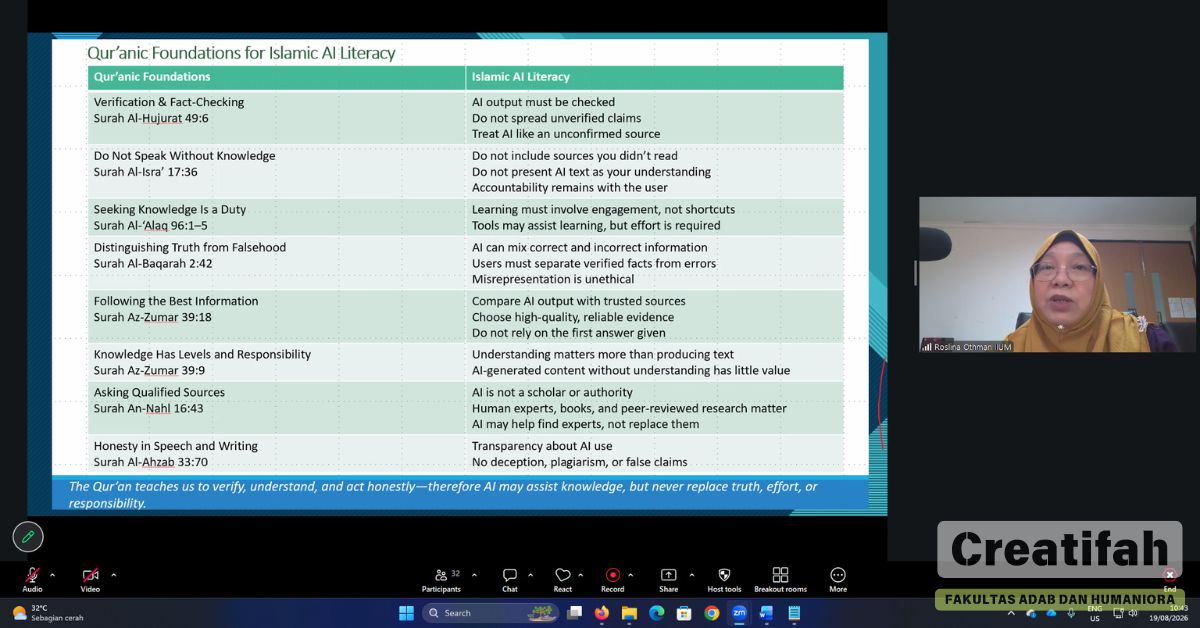
In her presentation, Prof. Datin Dr. Roslina Othman explained that the development of artificial intelligence (AI) has brought significant changes to education, research, and information management. AI can be utilized to support a wide range of academic activities, from information retrieval and data processing to academic writing, research, and scholarly publication. However, AI use must be accompanied by critical thinking skills. Students and academics need to verify AI-generated information, rely on credible sources, and understand the limitations and risks associated with its use. AI should serve as a tool to enhance productivity rather than replace human thinking and creativity.
In addition to AI literacy, Prof. Roslina emphasized the importance of knowledge management in managing the diverse forms of knowledge that continue to develop within society. Knowledge does not come solely from books, journals, and academic sources; it is also embedded in traditions, experiences, cultures, and local wisdom. Such local knowledge needs to be properly documented, preserved, and managed so that it is not lost and can be passed on to future generations. In the context of library and information science, technological developments, including AI, can be utilized to support knowledge management while continuing to uphold ethical principles, information authenticity, and the rights of communities as custodians and owners of their knowledge.
The Talk on AI Literacy and Knowledge Management provided a relevant forum for discussion amid the rapid development of artificial intelligence and the increasingly complex need for knowledge management. Through this event, the academic community is expected to develop a more critical understanding of AI while recognizing its potential to contribute to the advancement of knowledge and information management.
Furthermore, the event served as part of efforts to strengthen academic collaboration between FAH UIN Syarif Hidayatullah Jakarta and the International Islamic University Malaysia. The exchange of knowledge and experience through academic forums such as this is expected to create broader opportunities for collaboration in education, research, scholarly publication, and innovation in information and technology.
By strengthening AI literacy and knowledge management, the Library Science Study Program is expected to prepare graduates who possess not only strong competencies in information management but also the ability to adapt to technological developments and an appreciation of the rich body of knowledge embedded within society.
Written by: Kasih Nur/Deny Saputra
Documentation: