Gathering and Halal Bihalal of the SPI Study Program at UIN Jakarta with Parents of the 2025 Cohort
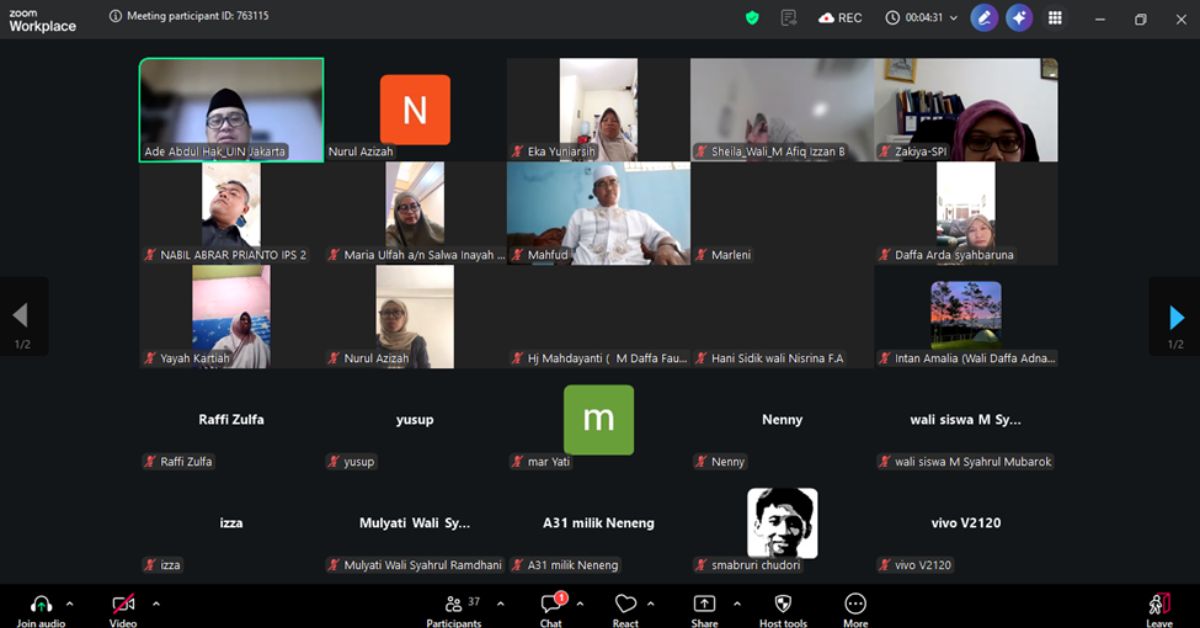
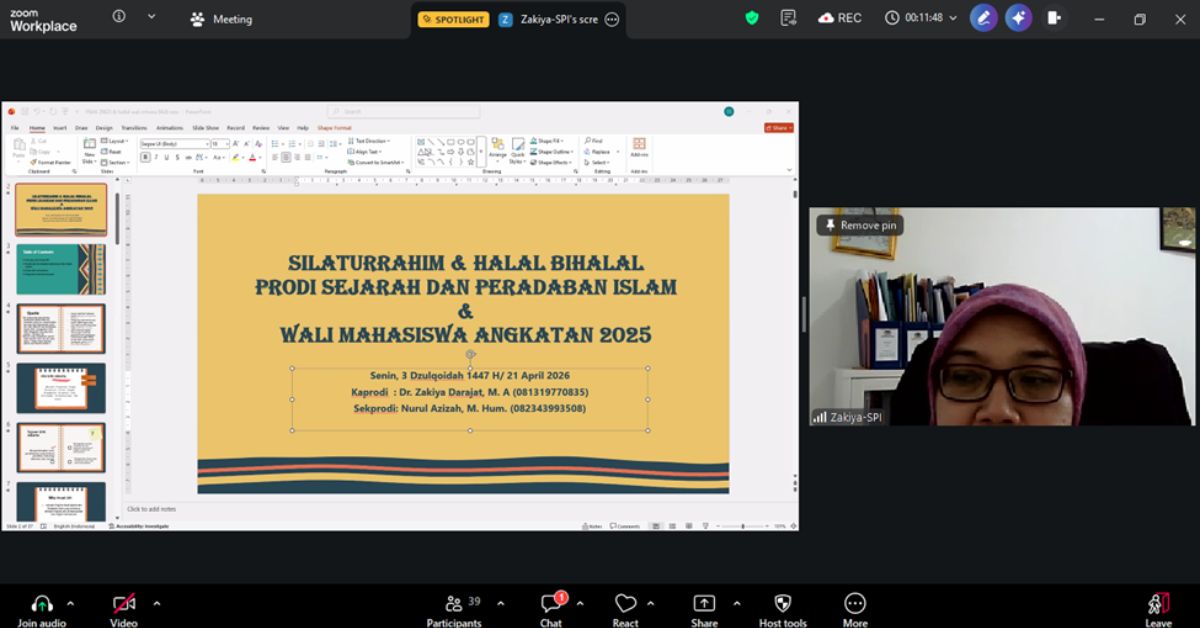
Jakarta, FAH Online News — The Islamic History and Civilization Study Program (SPI), Faculty of Adab and Humanities, UIN Syarif Hidayatullah Jakarta, organized a gathering and halal bihalal event with the parents/guardians of the 2025 cohort on Monday, 3 Dzulqaidah 1447 H / April 20, 2026, from 10:00 to 12:00 WIB.
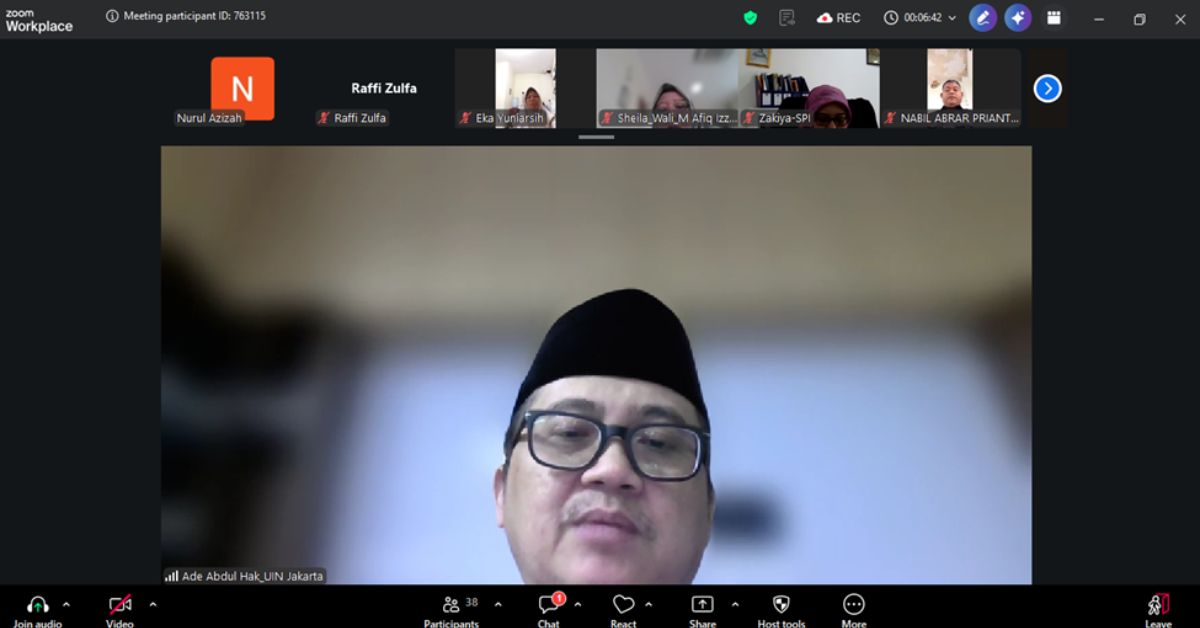
The event, held online, was opened by the Dean of the Faculty of Adab and Humanities, Dr. Ade Abdul Hak, S.S., M.Hum., who in his remarks emphasized the importance of collaboration between the university and parents in supporting students’ academic success, particularly in ensuring timely graduation.
Subsequently, the Head of the SPI Study Program, Dr. Zakiya Darojat, M.A., delivered a presentation on the vision and mission of the study program, as well as an academic introduction. She explained that in the 2025 academic year, the SPI Study Program admitted 219 students, accounting for approximately 22 percent of the total new students in the Faculty of Adab and Humanities.
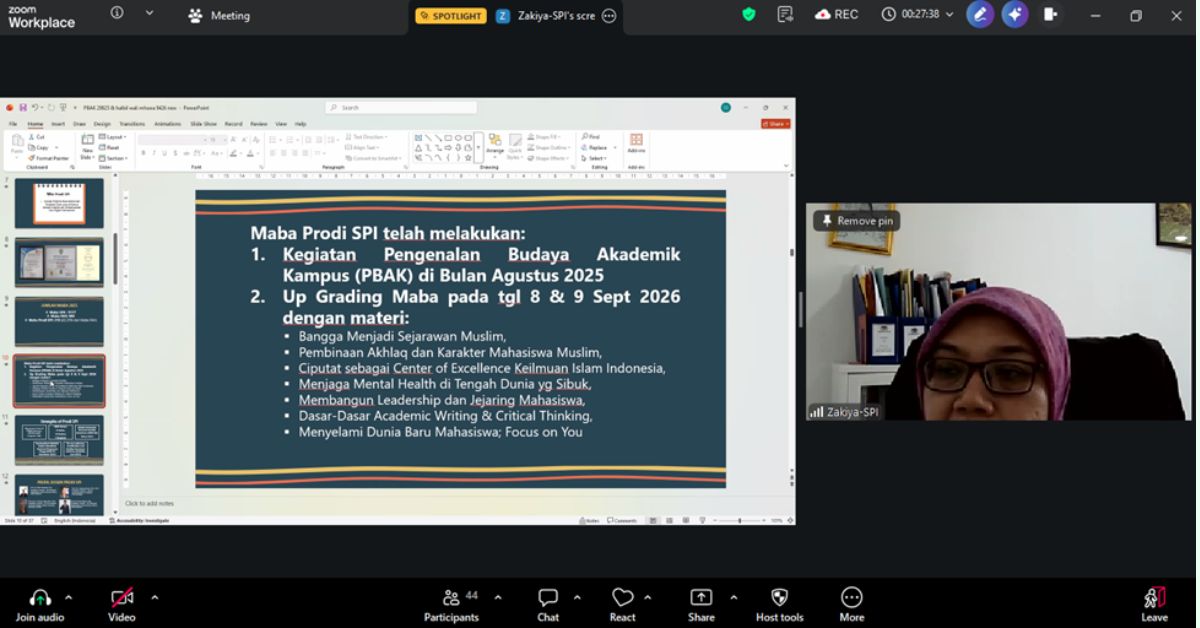
Students of the 2025 cohort have participated in initial academic activities, such as the Introduction to Academic Culture (PBAK) and a new student upgrading program held on September 8–9, 2025. In addition, this cohort has begun implementing the 2025 Curriculum.
To encourage timely graduation, students signed a stamped commitment at the beginning of their studies to complete their education within eight semesters. In the sixth semester, students are also given the opportunity to participate in internship programs under the Merdeka Belajar Kampus Merdeka (MBKM) scheme.
Furthermore, students are encouraged to achieve cum laude distinction by graduating within eight semesters, not repeating any courses, and maintaining a minimum Grade Point Average (GPA) of 3.5. In addition to academic achievements, students are also encouraged to actively participate in various organizations, including student activity units and both intra- and extra-campus organizations, to develop non-academic skills.
In her presentation, the Head of the Study Program also emphasized that students are agents of social change. Therefore, they are expected to make the most of their study period to develop soft skills, hard skills, and various life skills.
The next session was delivered by the Secretary of the SPI Study Program, Nurul Azizah, M.Hum., who explained the student code of ethics. She stated that violations are categorized into three levels: minor, moderate, and severe. Sanctions range from verbal and written warnings, temporary suspension of academic rights, to dismissal (drop out) and revocation of academic degrees for severe violations.
Sanctions are determined by the faculty leadership for minor and moderate violations, and by the rector for severe violations, based on recommendations and official reports from the Ethics Court established at the faculty and university levels.
The event continued with an interactive question-and-answer session. Various questions were raised by parents, including those related to scholarships, internship placements, and TOEFL and TOAFL test schedules. Although time constraints prevented all questions from being addressed, the study program emphasized that communication with parents will remain open.
The study program also stressed that students’ academic success is the result of collaboration between students, the study program, the university, and families. Therefore, strong synergy and effective communication among all parties are essential. The event concluded with a group photo session.
Author: Nurul azizah/ Kasih Nur / Deny Saputra
Documentation: