
Contemporary Islamic Historiography: Rewriting History from an Indonesian Perspective
By: Maia Az Zahra
Introduction
For many years, the writing of Islamic history in Indonesia has been influenced by Middle Eastern (Arab-centric) centralist bias. This approach tends to position Islam outside the Arab world, including Southeast Asia, as a peripheral variant or “marginal Islam” considered less authentic. However, within the landscape of contemporary Islamic historiography, a critical awareness has emerged to rewrite Islamic history from an Indonesian perspective. This new approach no longer views Islam in Indonesia merely as a passive recipient of external influences, but rather as an active subject that has shaped a distinctive, cosmopolitan, and tolerant Islamic civilization.
A Paradigm Shift: From Arab-Centrism to Local-Centrism
From the colonial era through the early years of independence, narratives of Islamic history in Indonesia were largely dominated by Western scholars (Orientalists), who employed philological approaches and textual-contextual perspectives rooted in the Middle East. Consequently, local manifestations of Islam, rich in syncretism and cultural accommodation, were often labeled as “deviations” or considered a second-class form of Islam.[1]
Contemporary historiography reverses this perspective by adopting a multidimensional approach encompassing social history, anthropology, and sociology. Contemporary historians recognize that the process of the indigenization of Islam (Islamization of Java/Sumatra/Sulawesi) was an egalitarian and dialogical process.[2] Islam did not eliminate local identities; rather, it enriched them, giving rise to new cultural entities that were firmly established and highly resilient against radicalism.
Characteristics of Indonesian-Oriented Islamic Historiography
The rewriting of Islamic history from an Indonesian perspective is characterized by several key areas of focus:
Local Agency: Highlighting the roles of the Wali Songo (Nine Saints), Nusantara scholars, and networks of santri (Islamic boarding school students) not merely as religious propagators, but also as social architects who designed socio-political integration among the kingdoms of the Indonesian archipelago.[3]
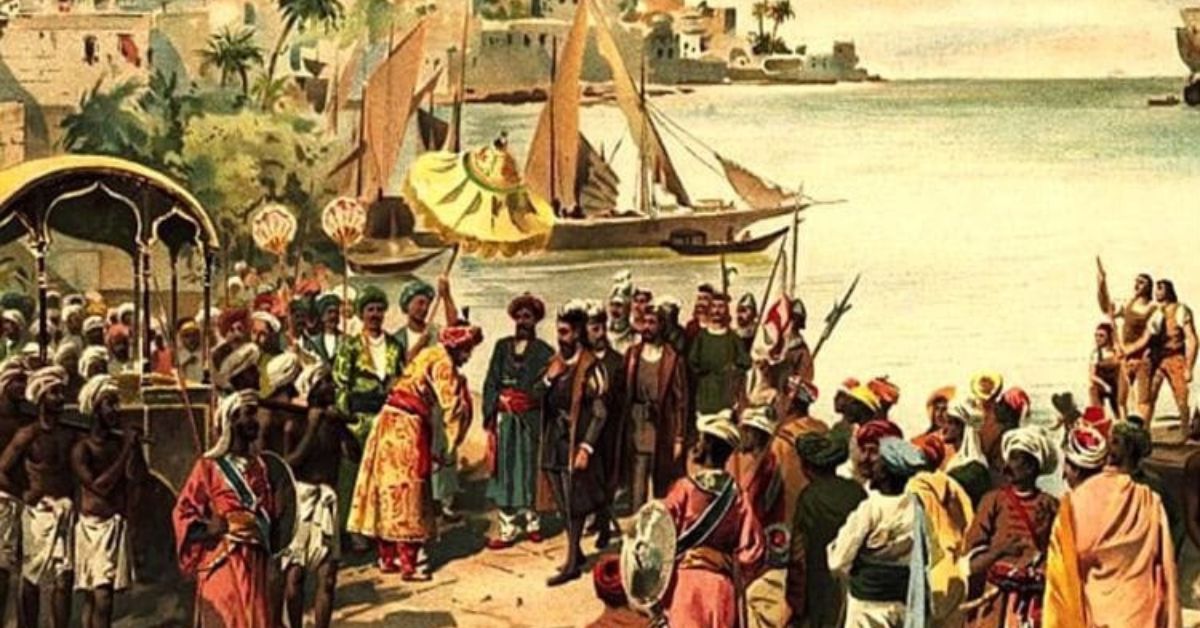
The Cosmopolitanism of the Spice Routes: Islam in Indonesia spread not through military expansion or conquest, but through peaceful maritime trade networks. The Spice Routes transformed Nusantara ports such as Malacca, Aceh, Demak, and Makassar into global cosmopolitan centers where various civilizations converged.[4]
Moderate Islam (Wasathiyah) as a Historical Identity: Contemporary historical studies demonstrate that the moderate, inclusive, and adaptive character of Islam in Indonesia is not a recent phenomenon that emerged after independence. Rather, it represents a historical framework that had already been established since the thirteenth century.[5]
Contemporary Relevance and Challenges
Rewriting Islamic history from an Indonesian perspective is highly relevant to strengthening national integration and countering transnational narratives that seek to create divisions between Islamic identity and Indonesian national identity. The greatest challenge facing this historiography is the limited availability and fragmented nature of local sources, such as babad, hikayat, and serat, which are often intertwined with myths. These sources therefore require rigorous source criticism (heuristics) and comparative methodologies involving external sources, including Chinese, Arab, and European records.[6]
Conclusion
Contemporary Islamic historiography with an Indonesian-oriented perspective has successfully deconstructed the myth of the inferiority of Nusantara Islam. By positioning Indonesia as a new epistemic center in global Islamic studies, this historical approach demonstrates that being a devout Muslim and being a patriotic Indonesian citizen are two identities that historically and fundamentally reinforce one another.
Image Source: https://www.ruangguru.com/blog/4-teori-masuknya-islam-ke-nusantara
References
[1] Azra, Azyumardi. (1994). Jaringan Ulama Diponegoro dan Jaringan Ulama Timur Tengah Abad XVII dan XVIII. Bandung: Mizan. pp. 23–25.
[2] Ricklefs, M. C. (2012). Islamisation and Its Opponents in Java: A Political and Social History, c. 1930 to the Present. Honolulu: University of Hawai‘i Press. pp. 12–15.
[3] Abdullah, Taufik. (1987). Sejarah dan Masyarakat: Lintasan Sejarah Islam di Indonesia. Jakarta: Pustaka LP3ES. p. 45.
[4] Reid, Anthony. (2014). Asia Tenggara dalam Kurun Niaga 1450–1680: Tanah di Bawah Angin. Jakarta: Yayasan Pustaka Obor Indonesia. pp. 112–118.
[5] Misrawi, Zuhairi. (2010). Hadramaut: Episentrum Integrasi Islam dan Budaya Nusantara. Jakarta: Compass. p. 89.
[6] Kuntowijoyo. (2003). Metodologi Sejarah (Second Edition). Yogyakarta: Tiara Wacana. pp. 67–70.